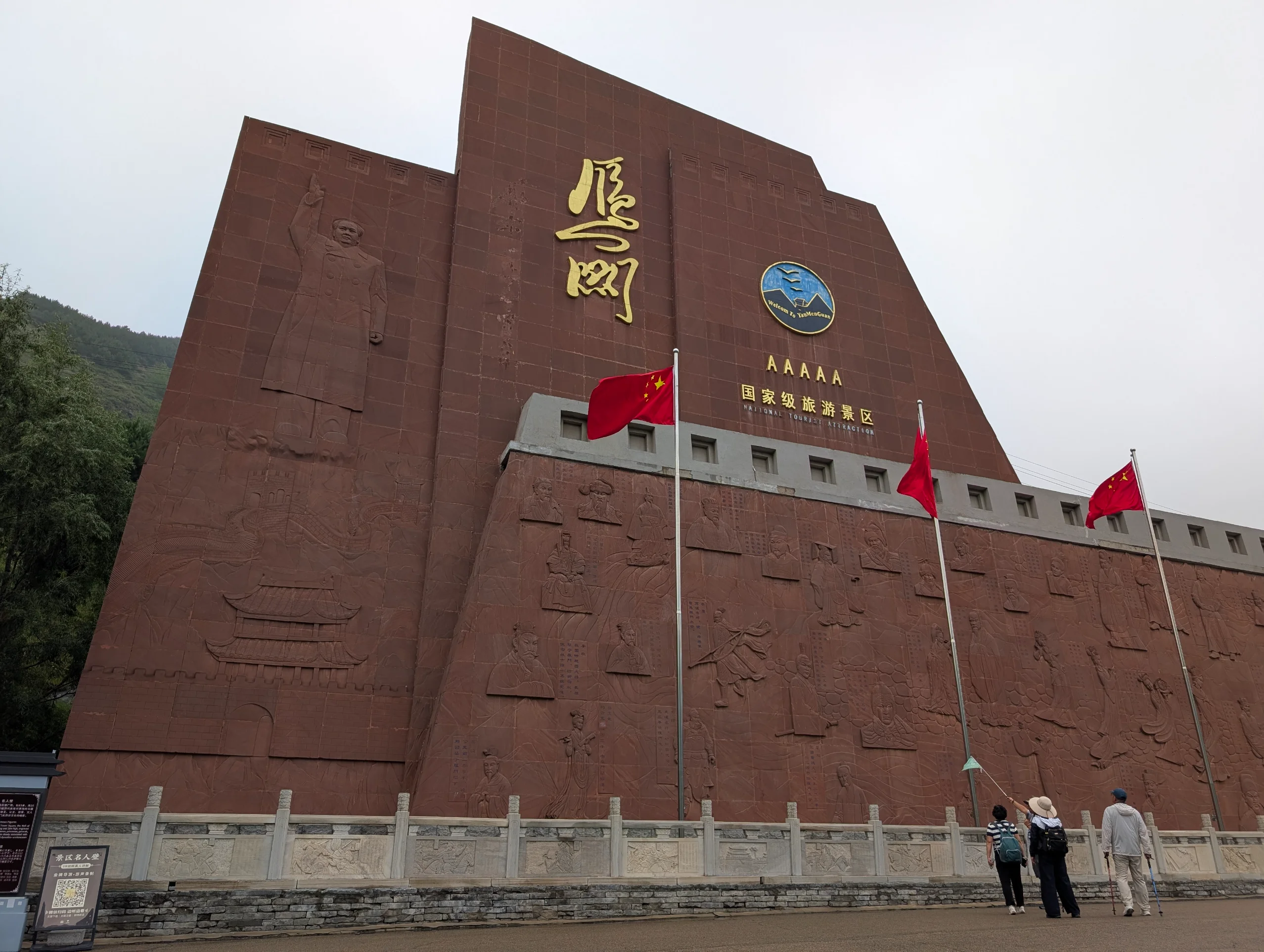
We moved on to our next major sightseeing spot: The Great Wall of China! Since we didn’t want to make the detour to Beijing, we went to Xinzhou instead, which was right on our route. The first attraction was quite impressive… let’s just say tastes are individual.
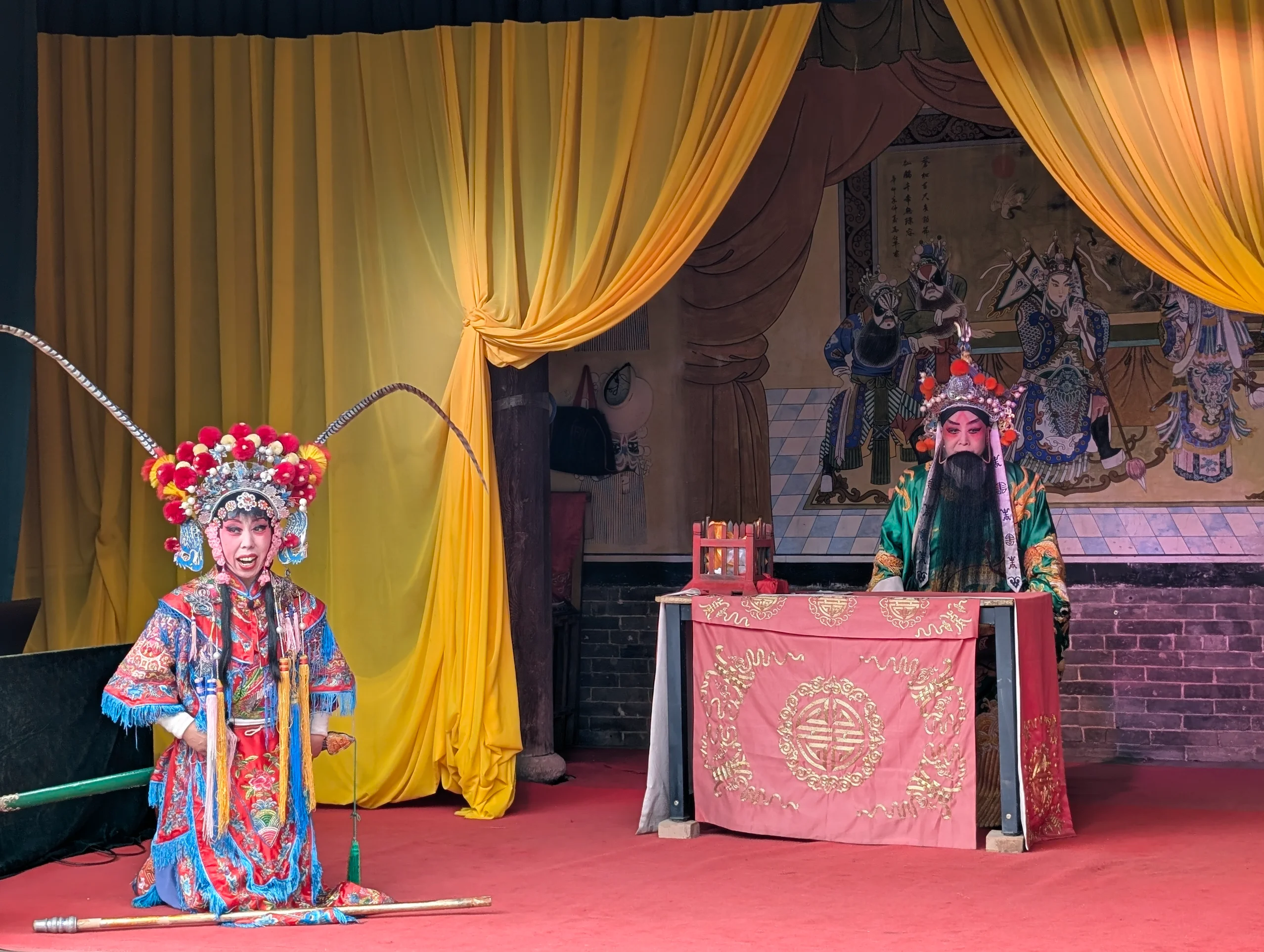
After the massive stone structure, we caught this interesting little theatrical performance.
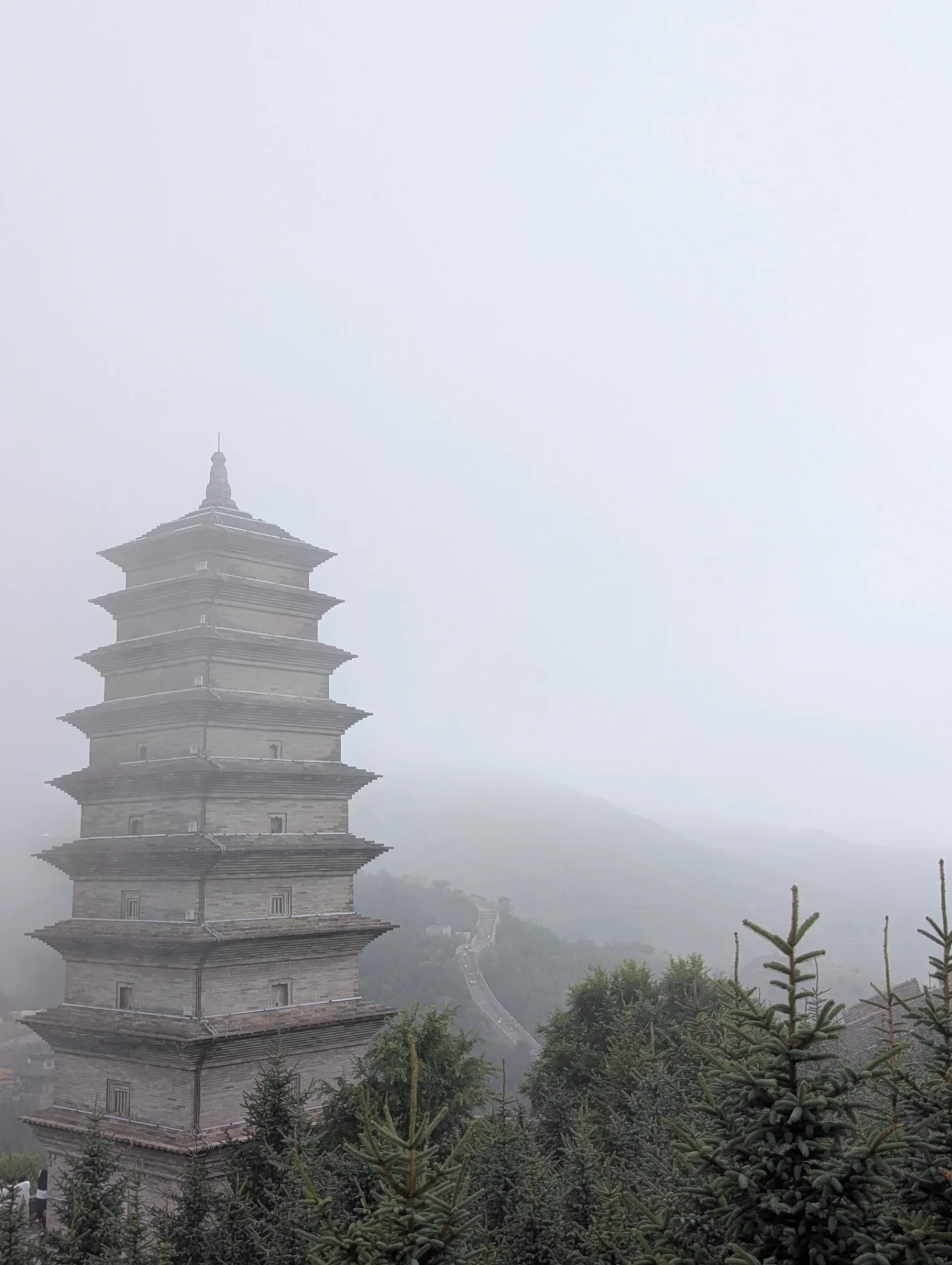
At first, we weren’t particularly impressed with our visit to the Great Wall because we couldn’t really see it—it was completely swallowed in fog.
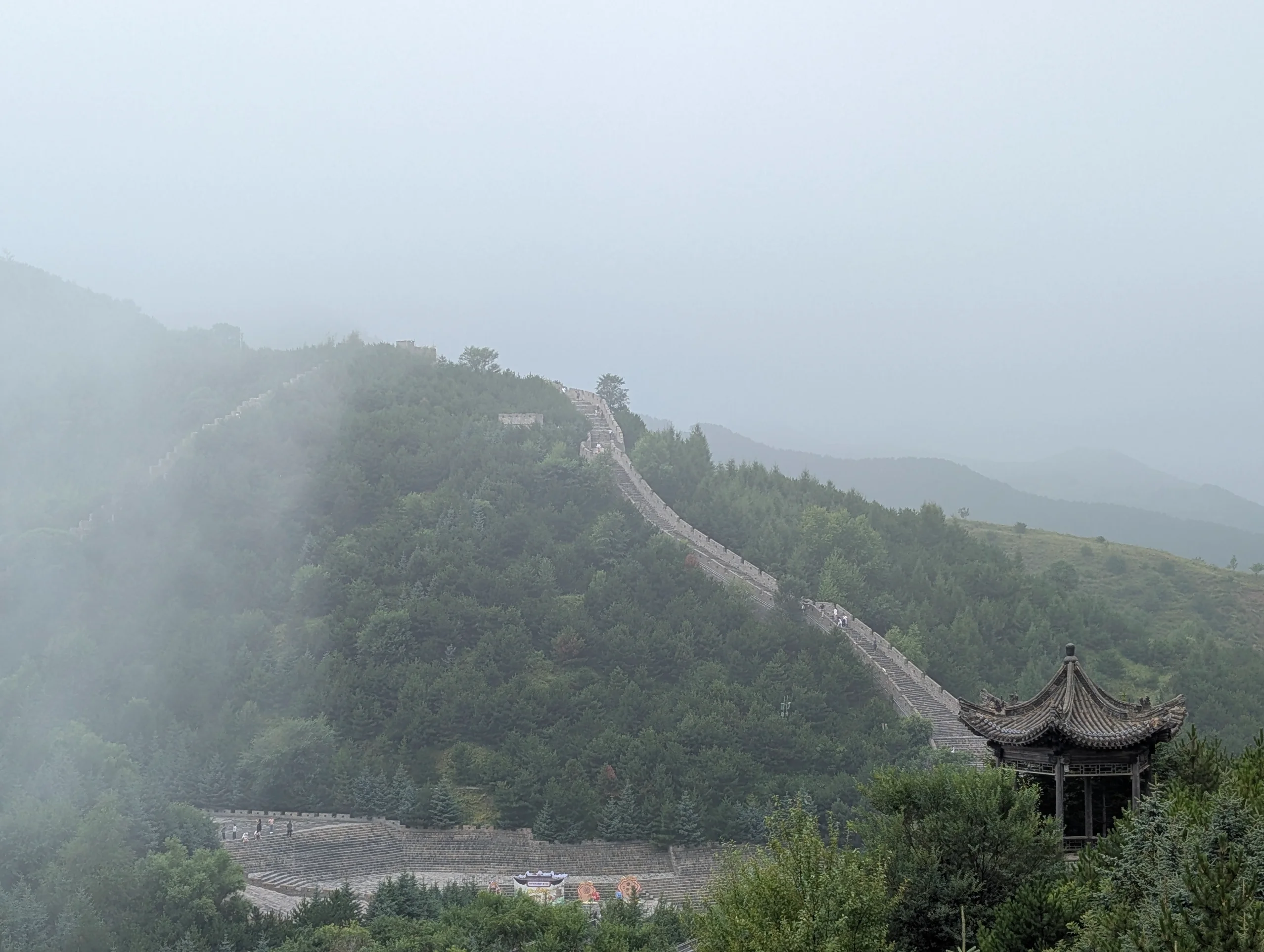
Gradually, however, the fog began to recede.
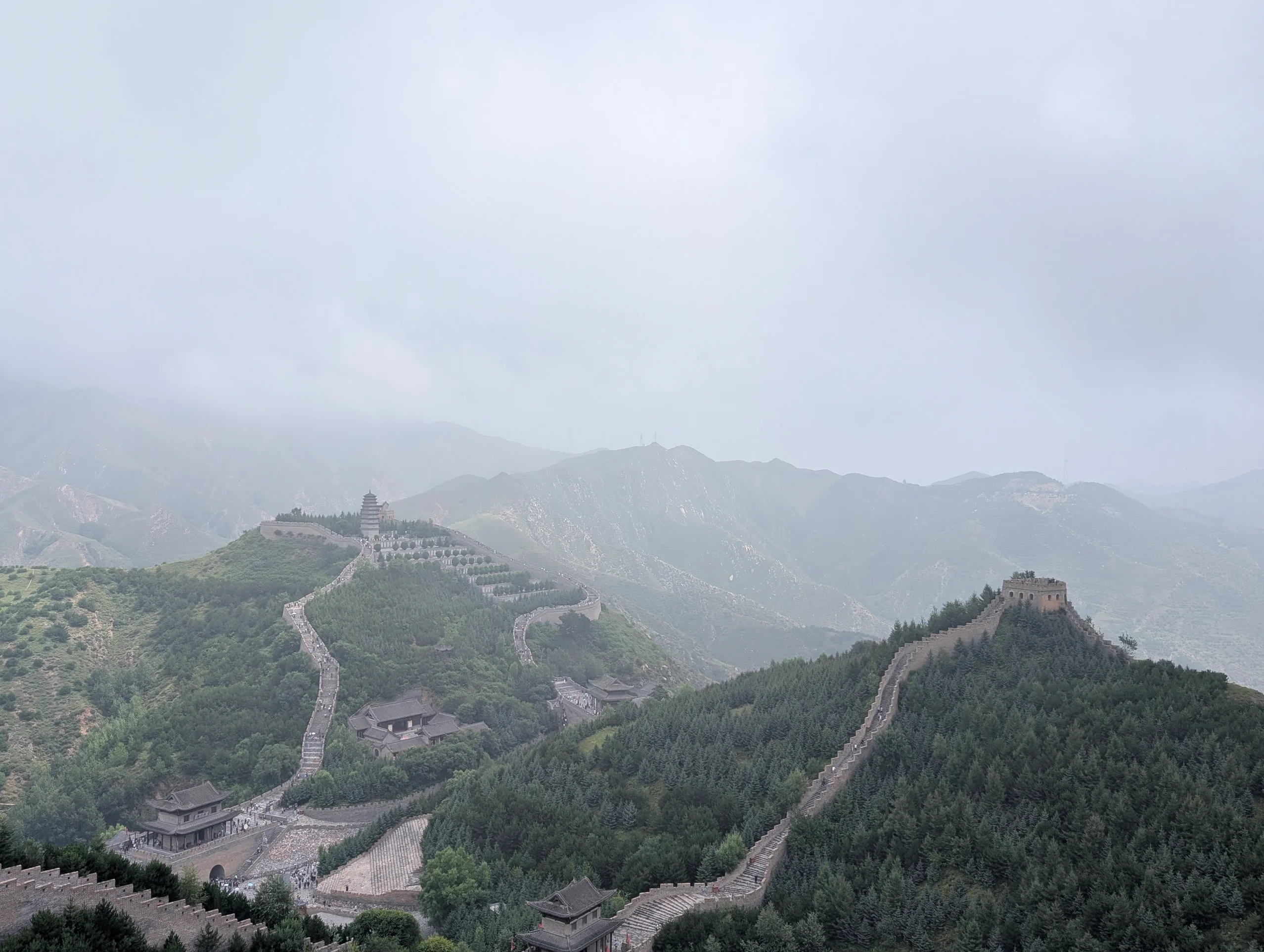
And we really enjoyed walking along this restored section of the wall, talking about what life must have been like back then, marveling at how long the wall actually is, and reading up on its history. It’s a mind-blowing story.
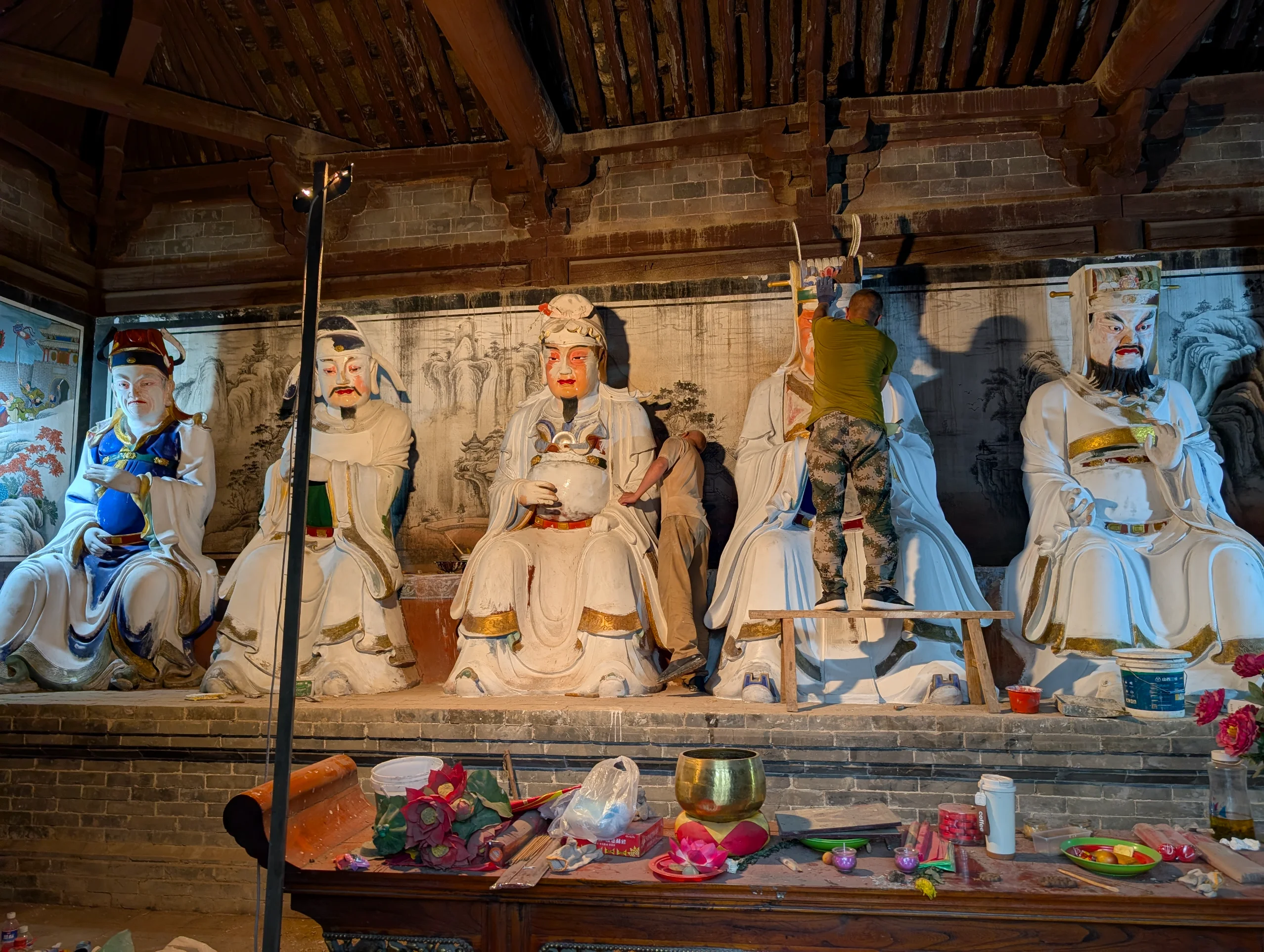
The restoration work seems like a never-ending process.
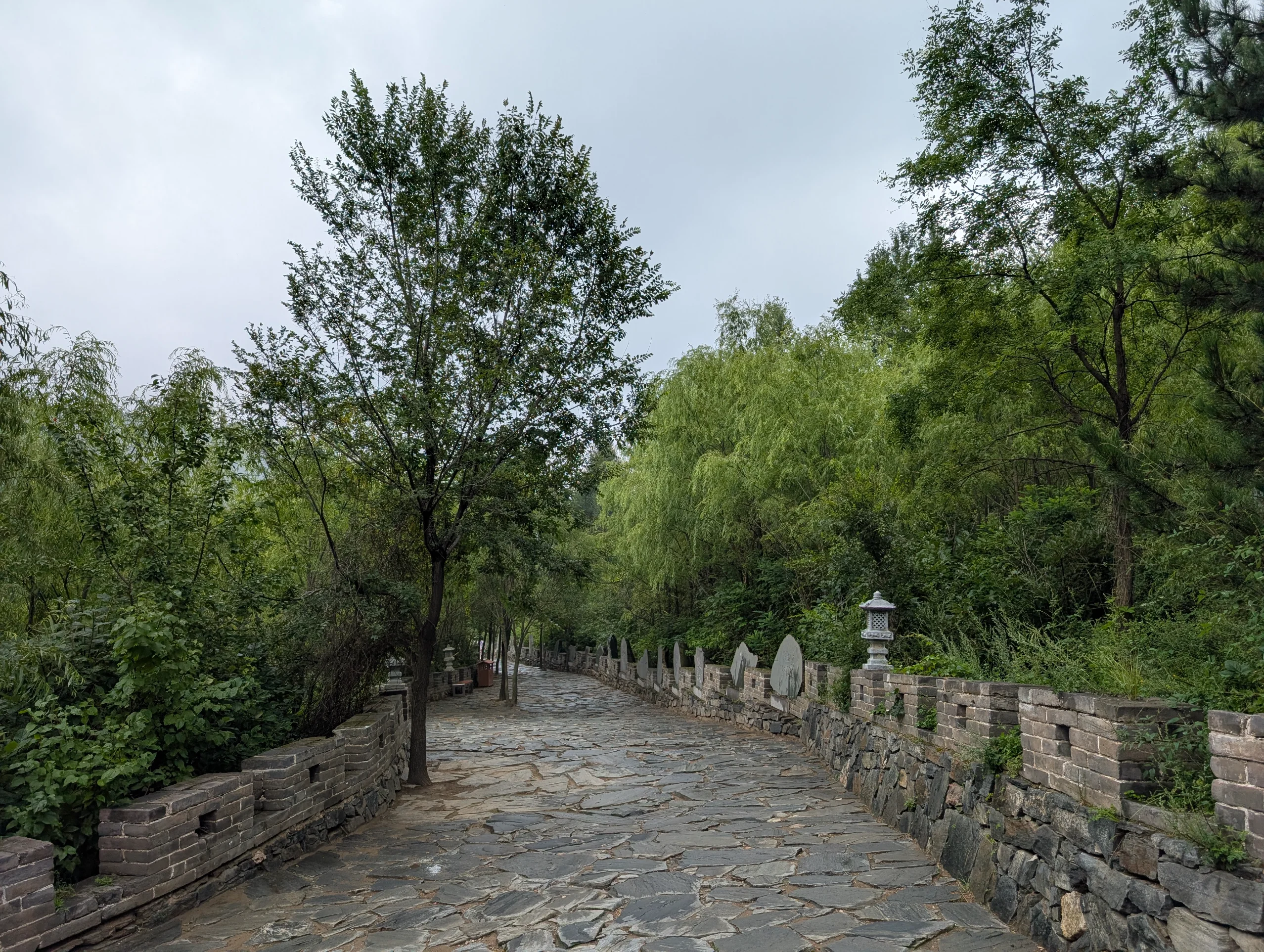
We also took a short hike along the historic and restored merchants’ trail.
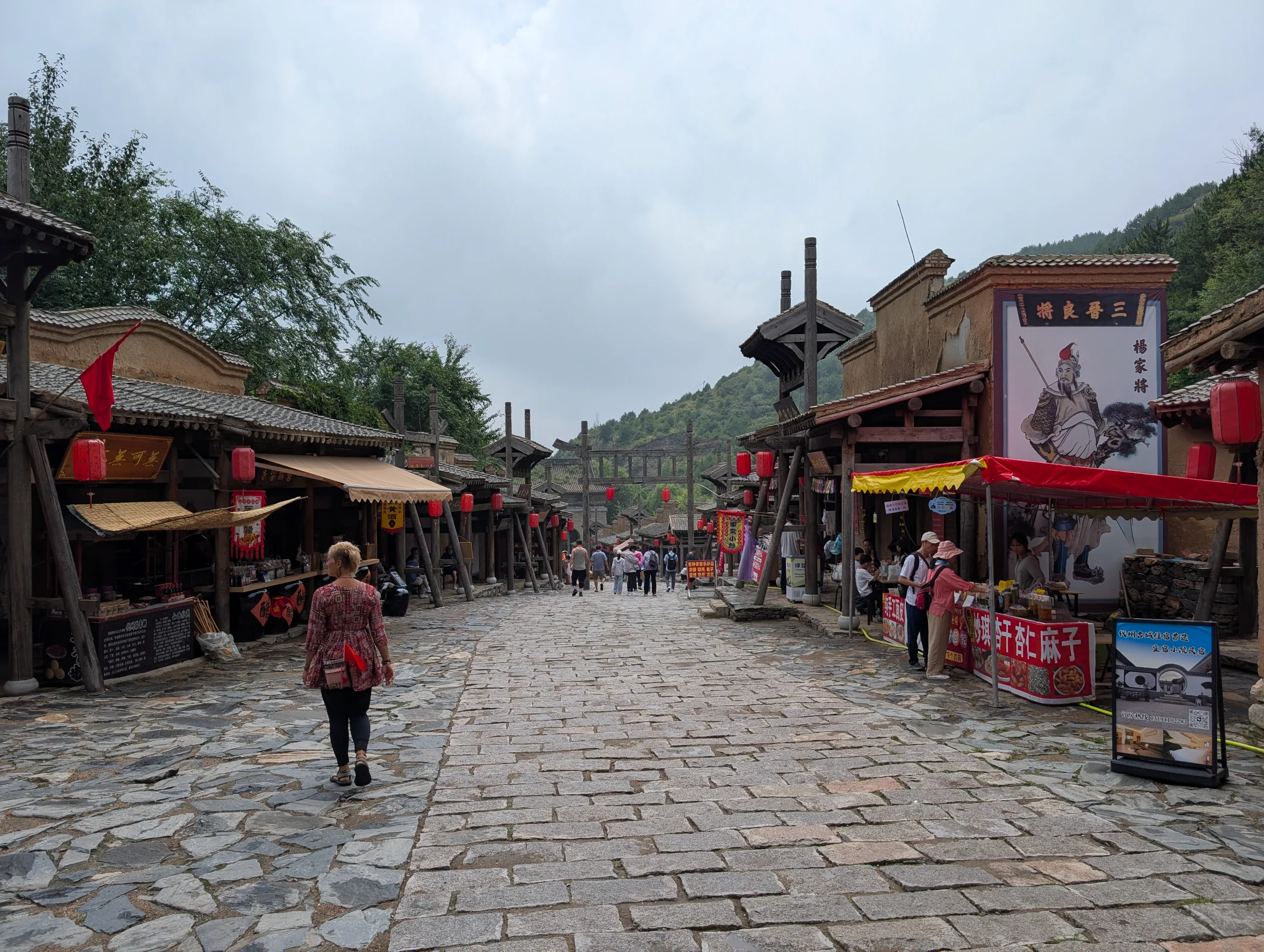
We made it to the other side of the scenic area, believing that a shuttle bus would take us back to our parking area as usual. But a very friendly local explained that there was no bus running there. So, we hiked all the way back to Rosinante.
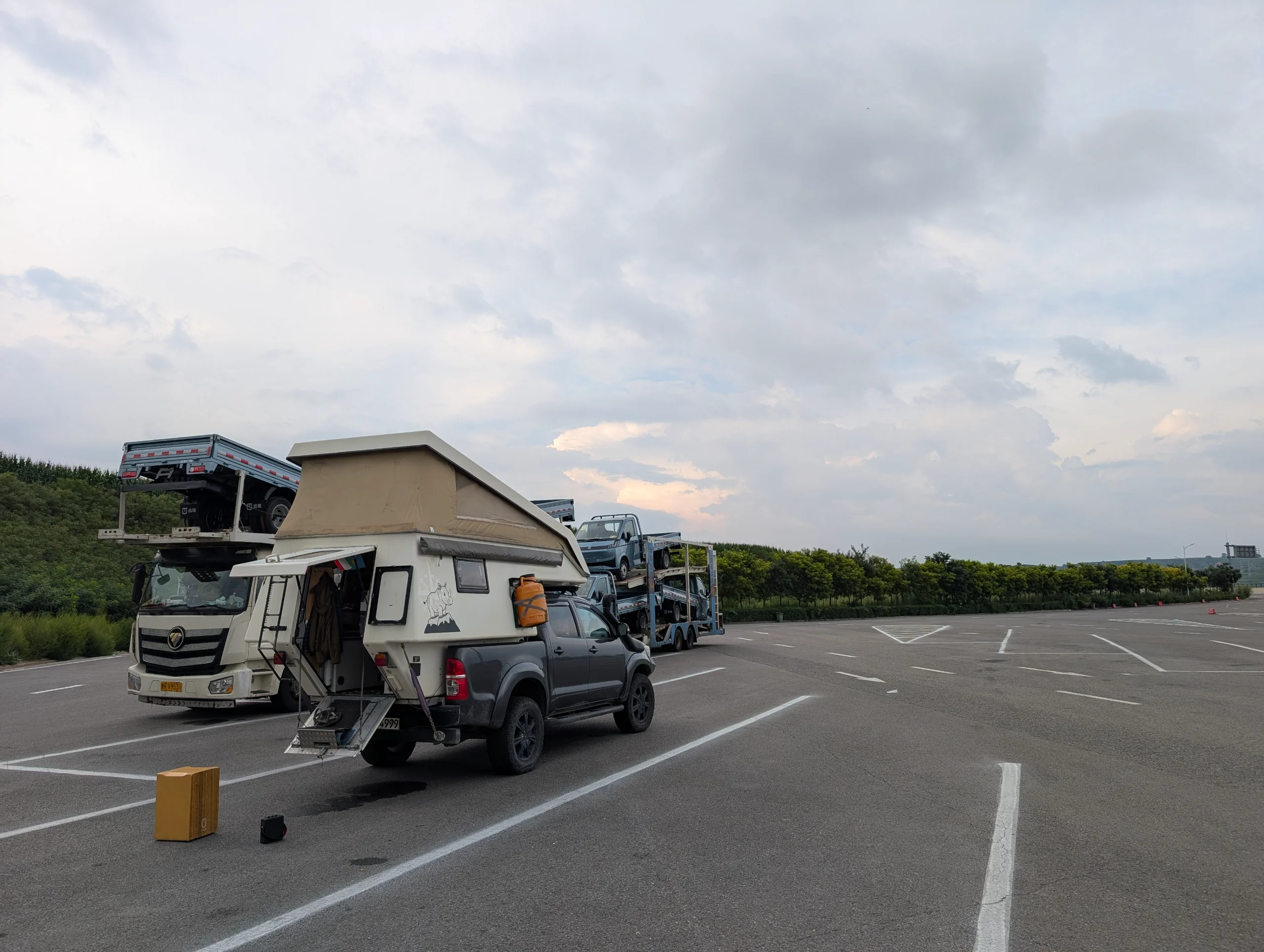
On the way to our next destination, we tested what it’s like to spend a night at one of the expressway truck stops. It’s definitely not recommended with a pop-up camper!
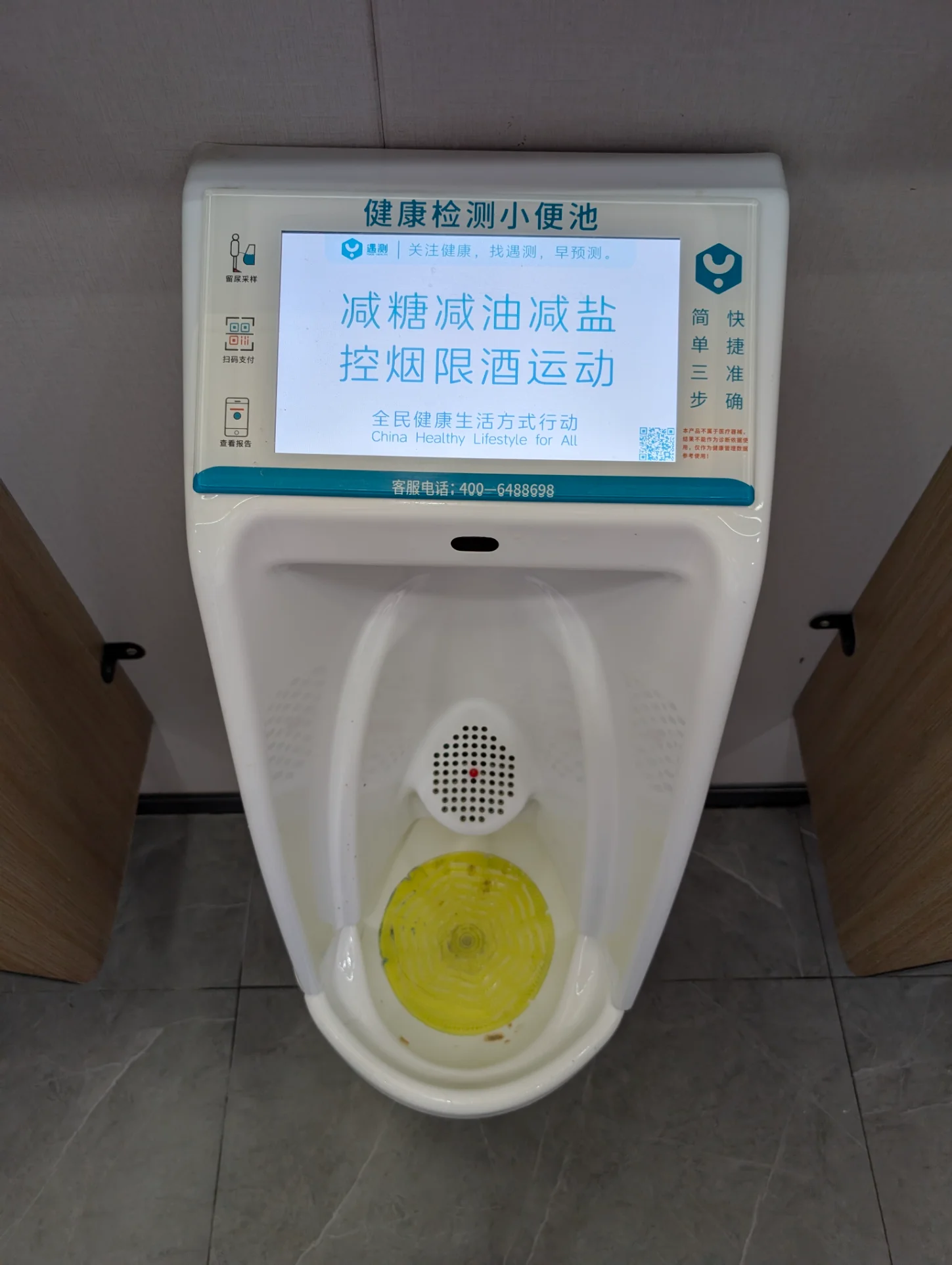
A urinal that tests your urine automatically.
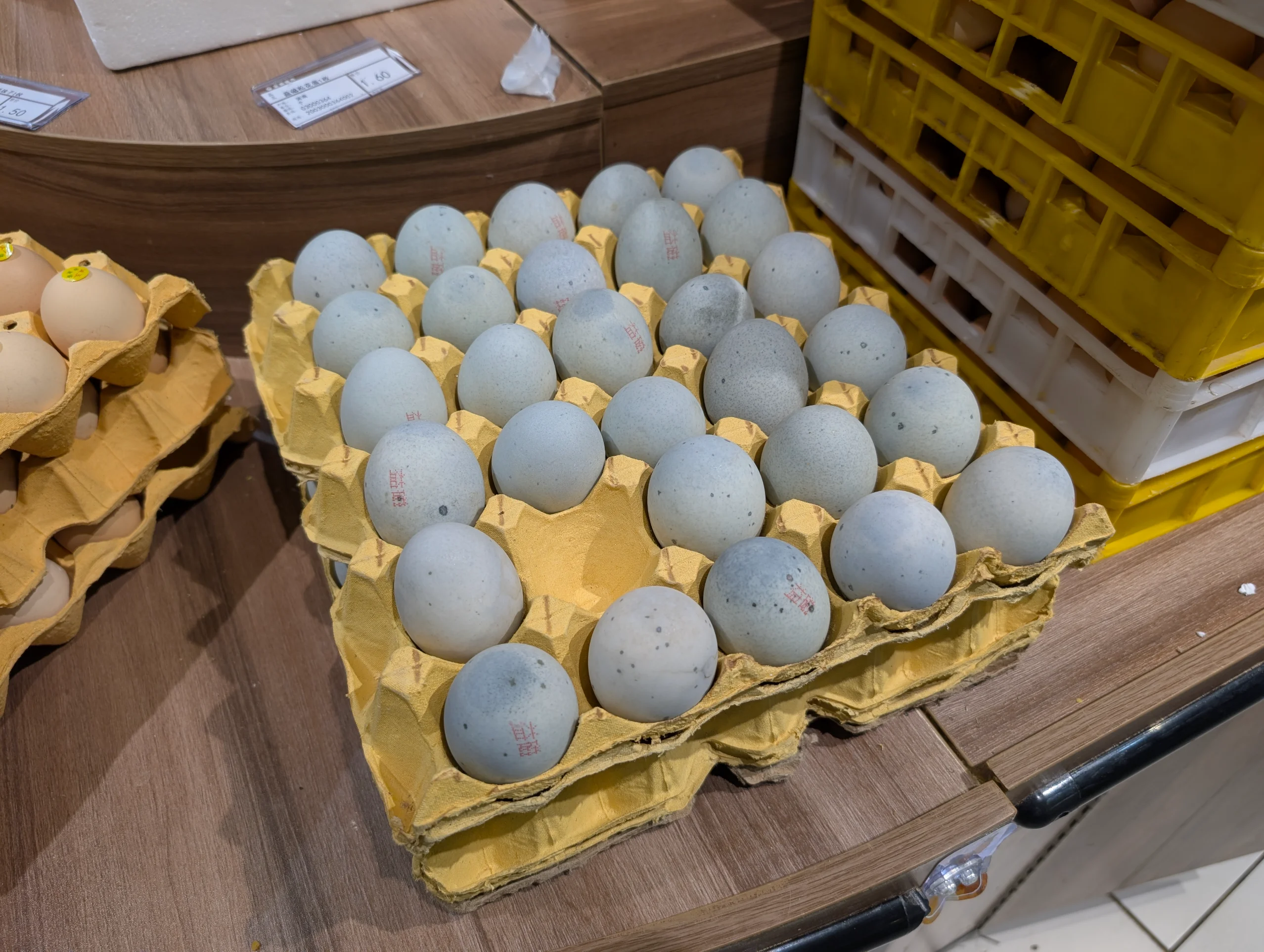
Century eggs in the supermarket.
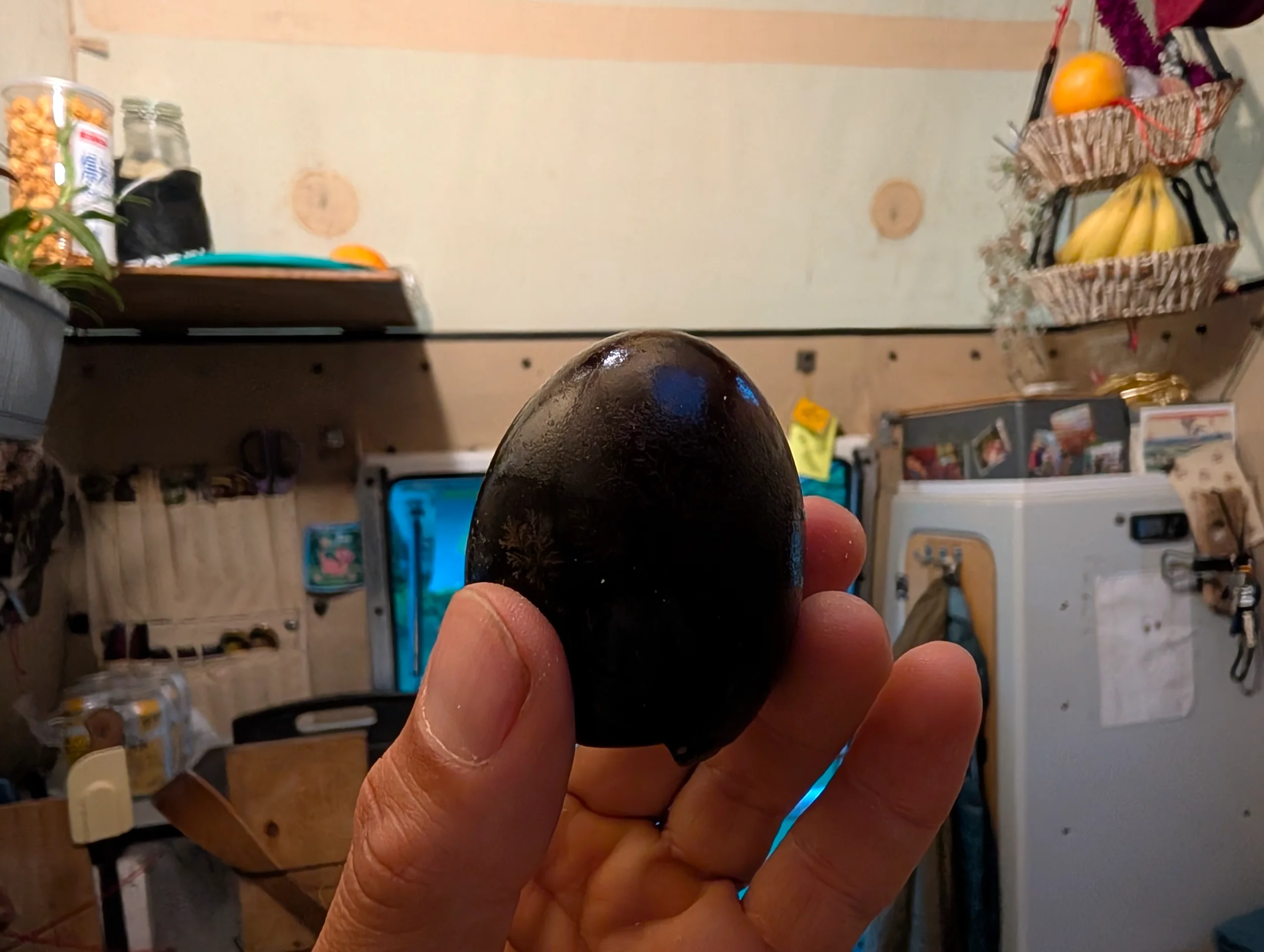
A century egg out of its shell. I didn’t think the taste was too bad, but I certainly didn’t become a fan. Racki refused to try it.
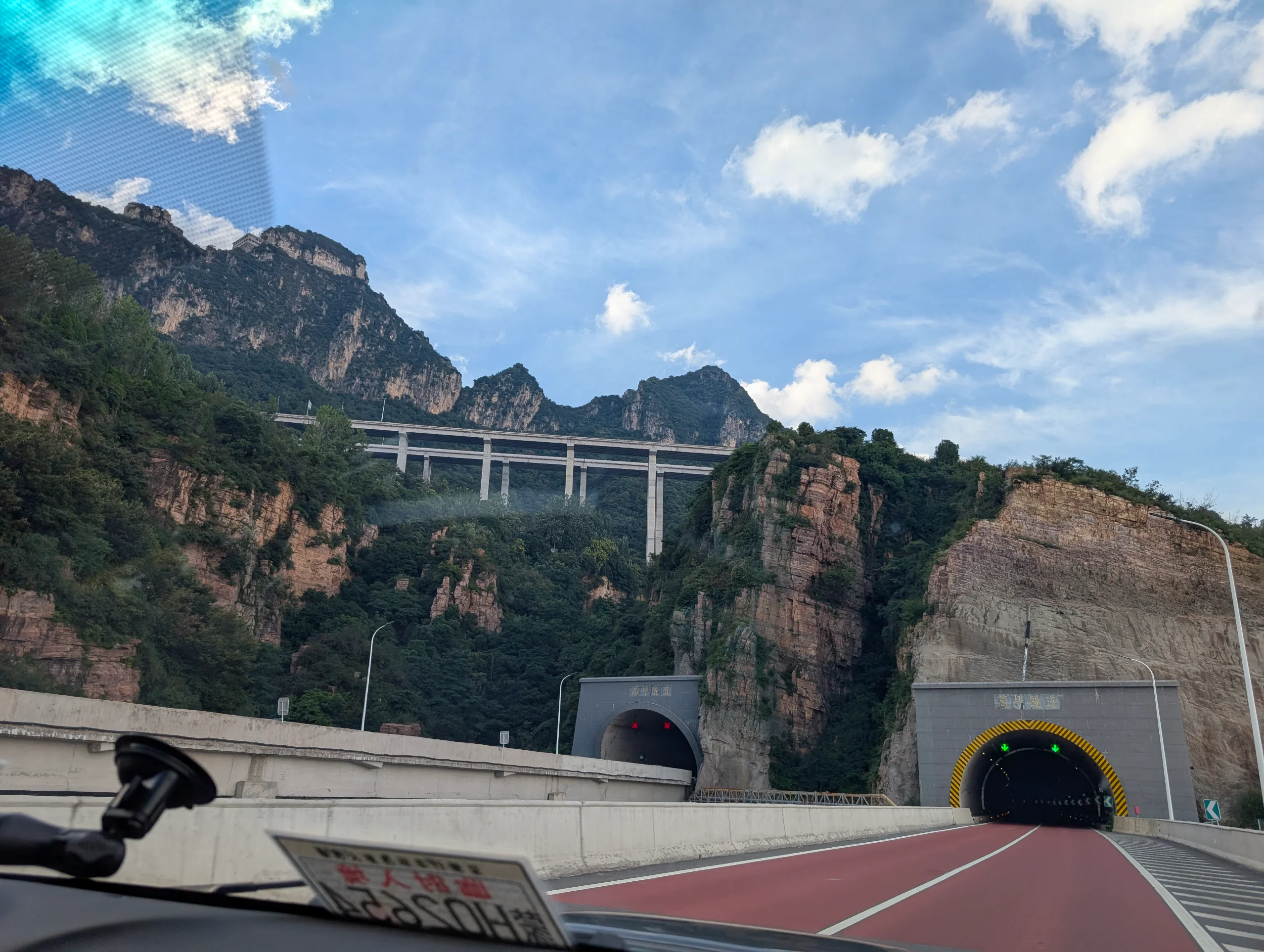
We continued into the Wanxian Mountains for our first rock climbing session in China! As always, the Chinese expressways were stunning engineering feats—built seamlessly around and through the mountains.
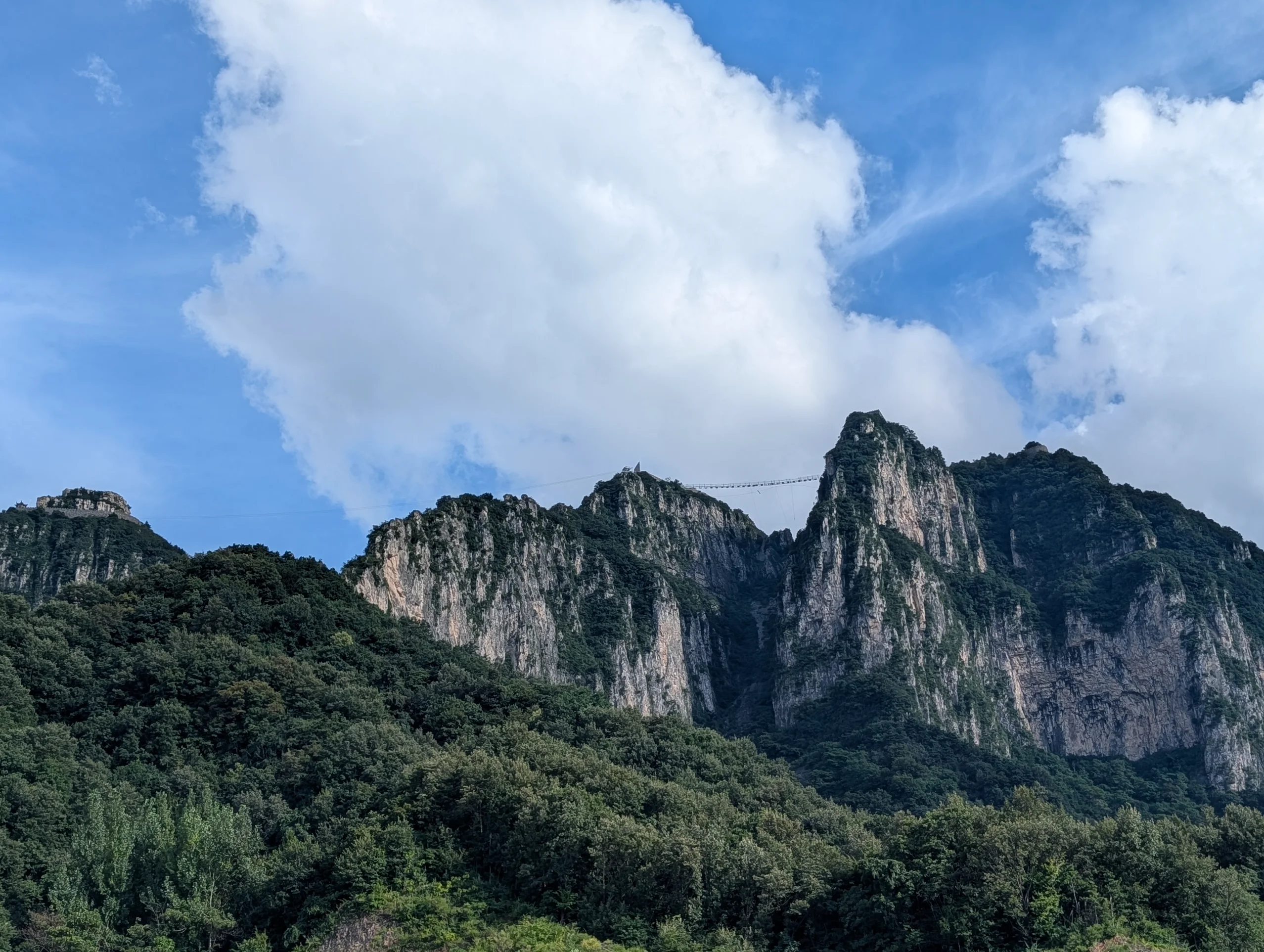
And the rock formations looked incredible!
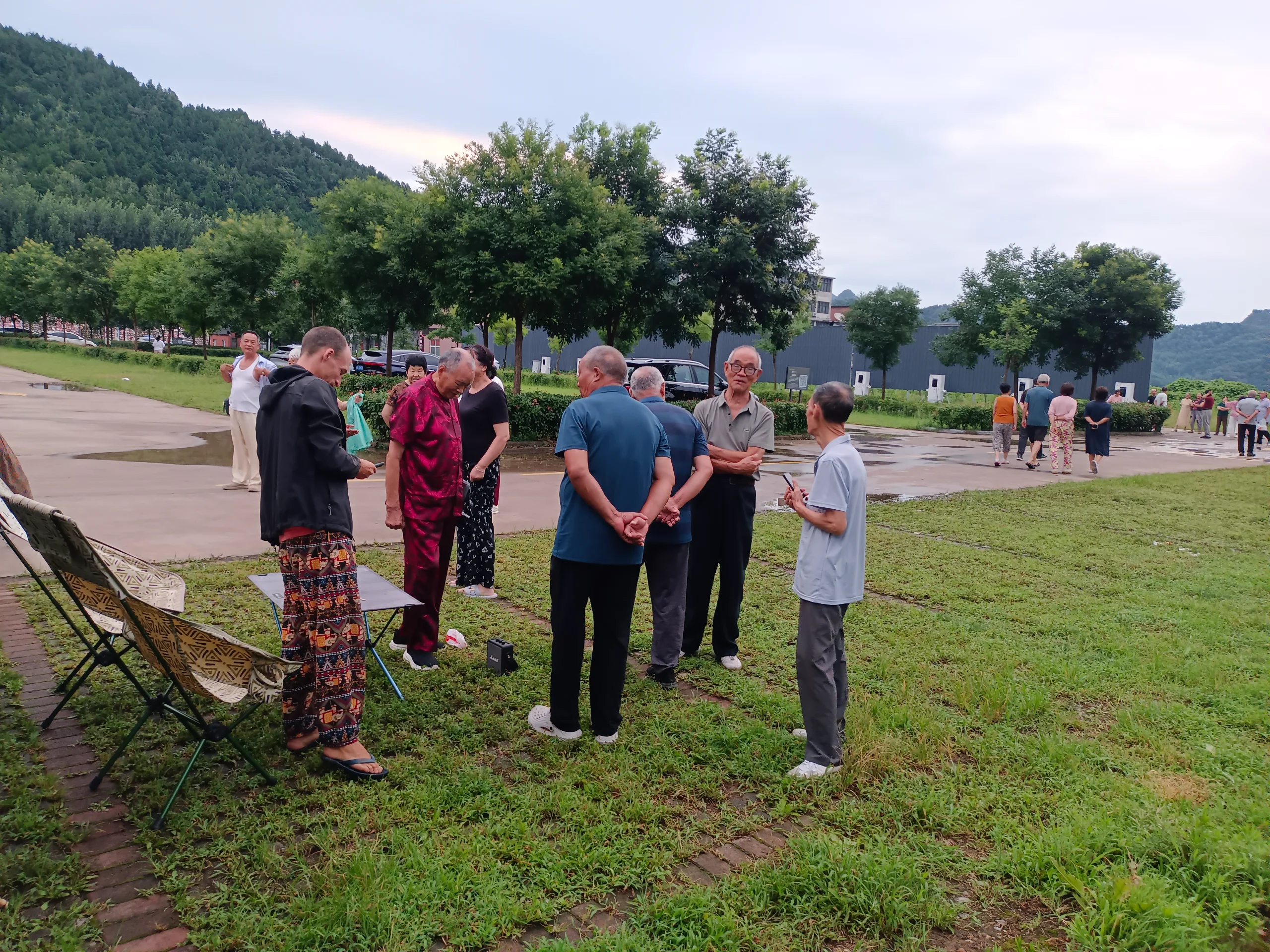
When we reached the climbing sector, I was a bit disappointed: we couldn’t park Rosinante near the crag and had to stay at a large, albeit beautiful, parking lot instead.
To actually reach the climbing area, we had to pay an entrance fee for the national park plus a shuttle bus ticket to get inside.
There were many Chinese visitors at the national park and parking area, and quite a few were very curious about us, asking where we were from and what we were up to.
We did our best to communicate using Google Translate, which worked remarkably well. We had heard from other travelers that locals in China might not respect personal privacy at all, but that wasn’t our experience at all. Everyone was extremely friendly, respectful, curious, and welcoming.
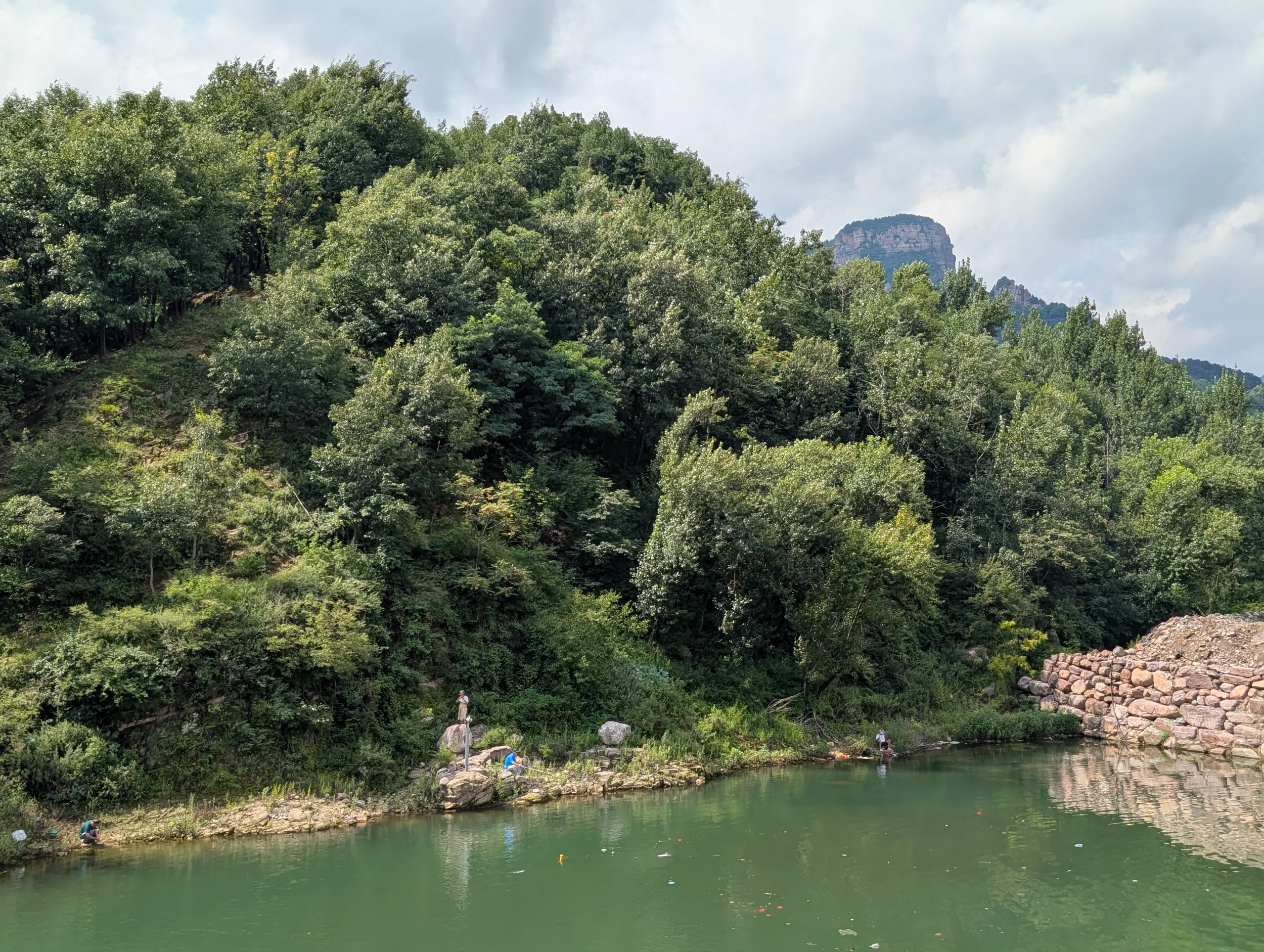
Right next to the parking lot was a small pond with a bit of trash floating in it. The locals didn’t seem to mind, bringing their fishing gear to enjoy a good time fishing, practicing Tai Chi, and playing bamboo flutes.
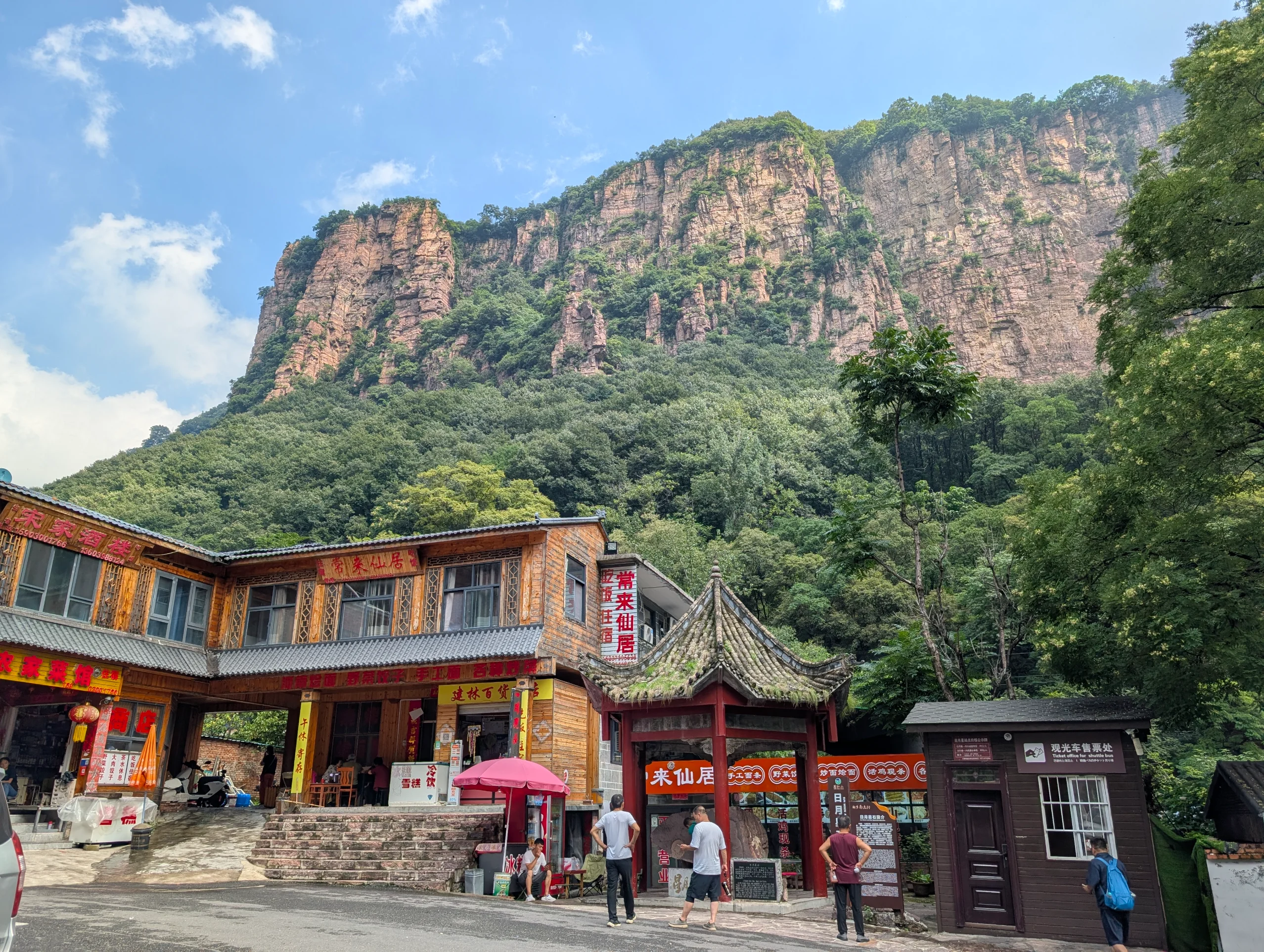
We paid the entrance and bus fees and headed into the national park.
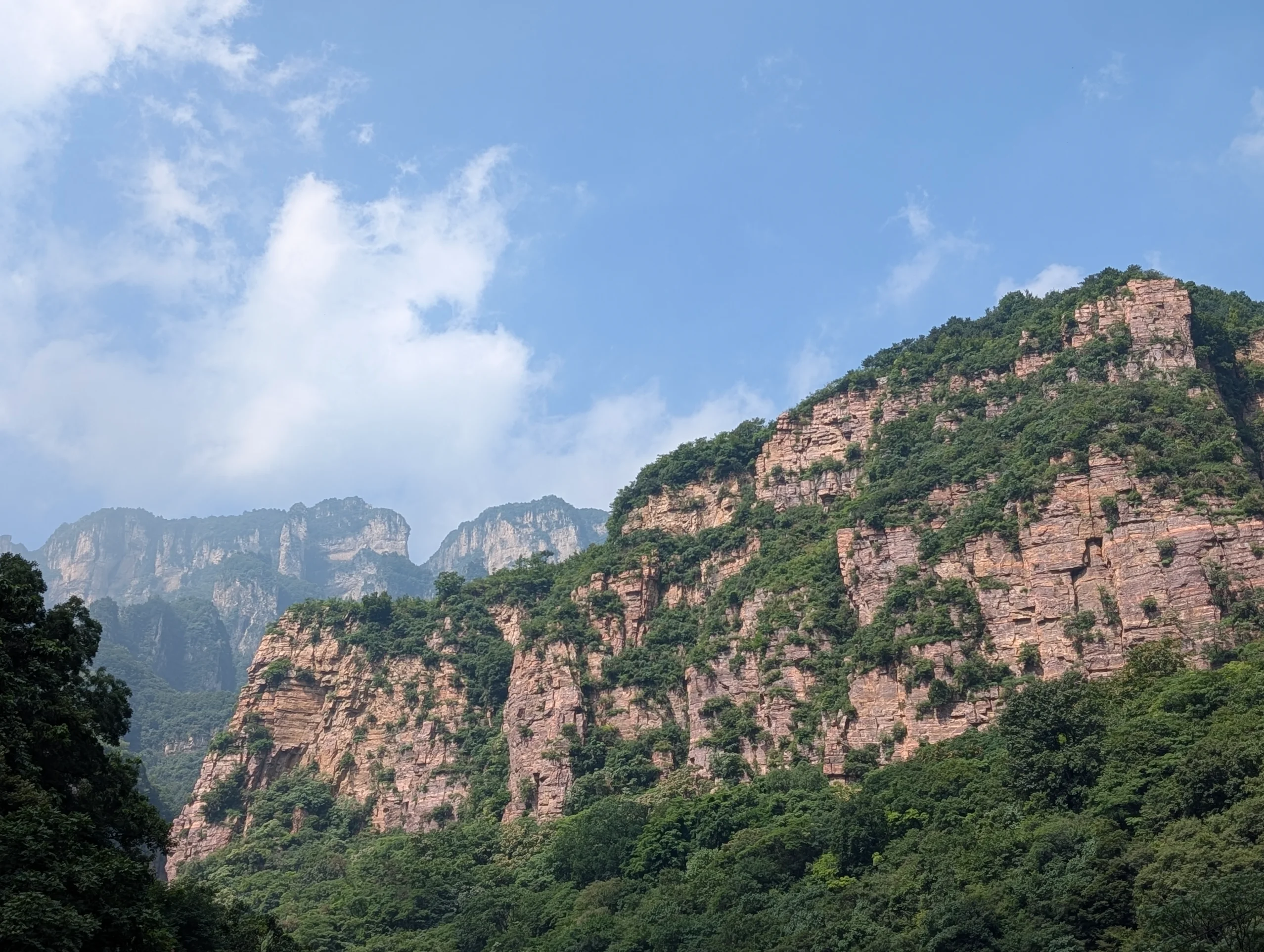
The cliffs were absolutely spectacular!
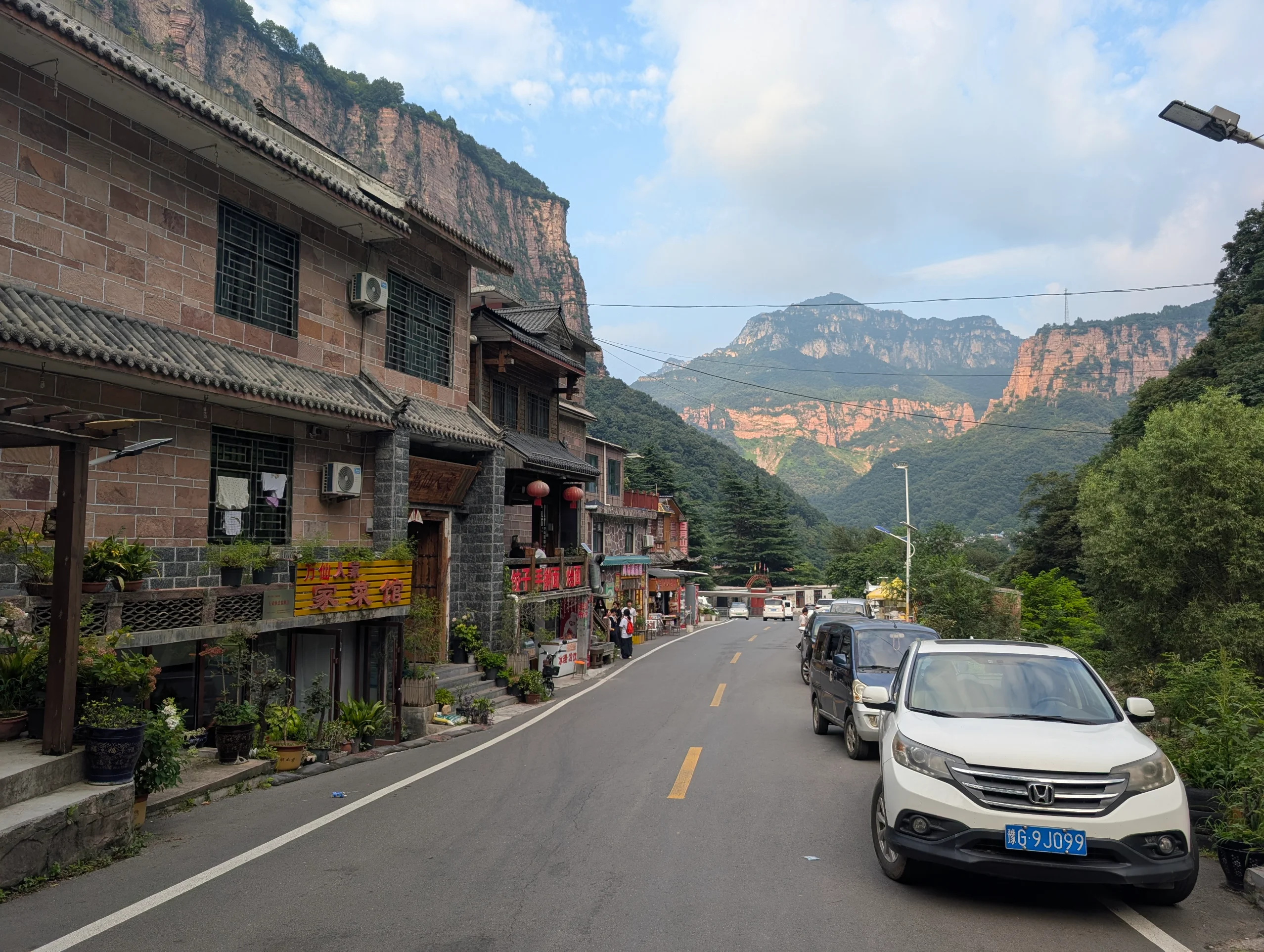
Small roads wound their way through the national park.
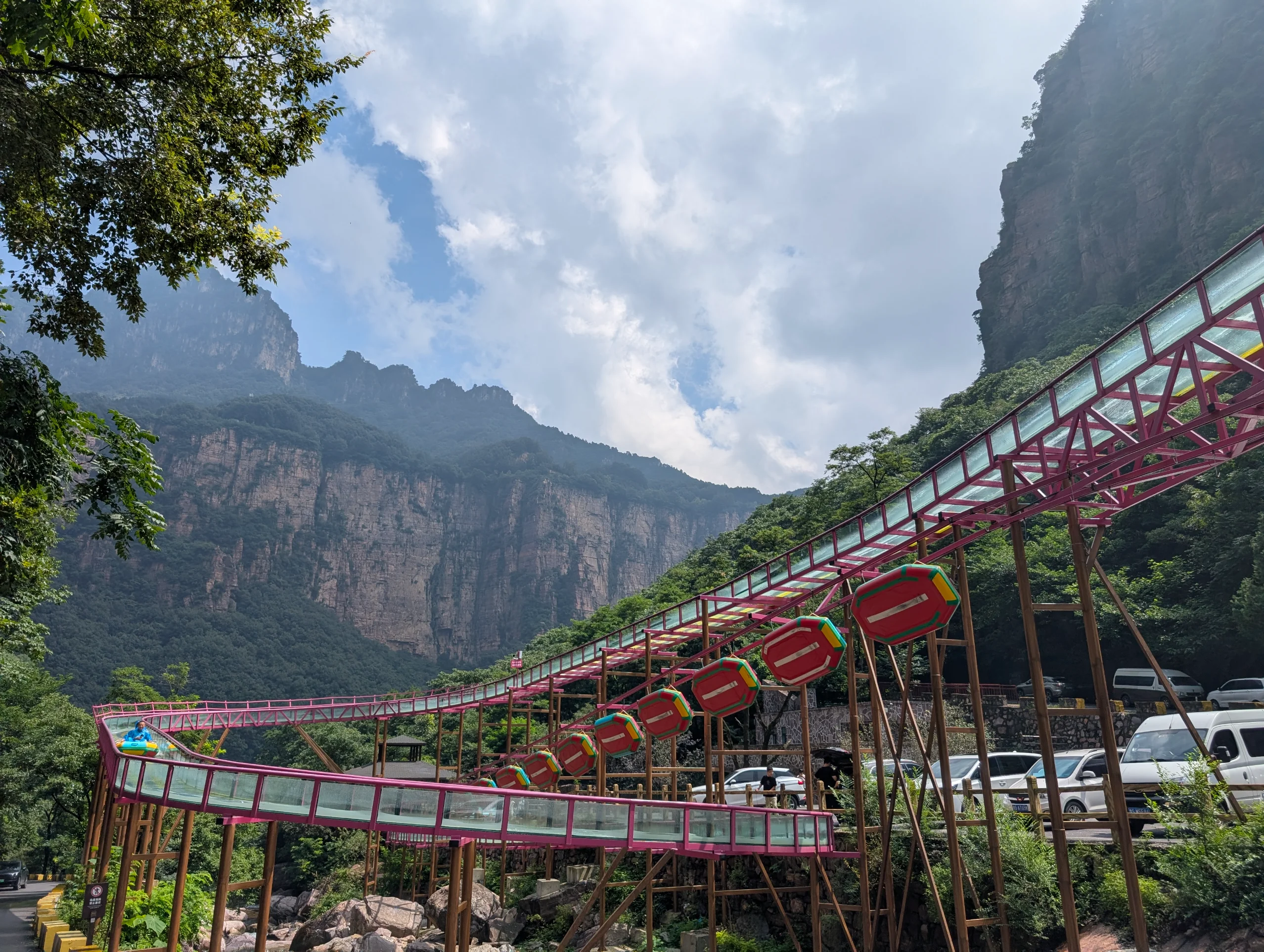
There were plenty of attractions along the way, such as these massive, highly artificial, but extremely safe-looking water slides.
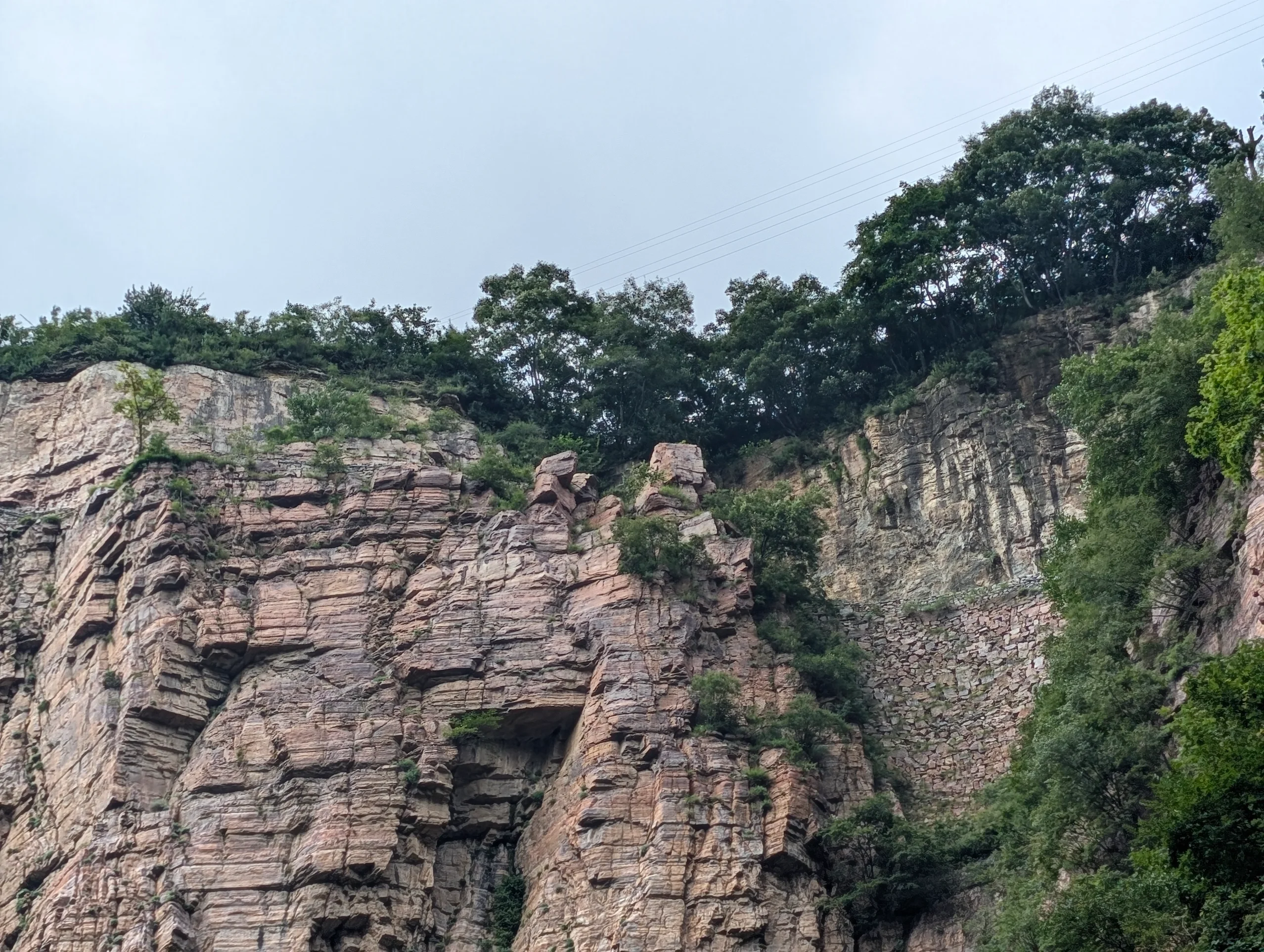
After some searching, we finally located our first Chinese climbing crag!
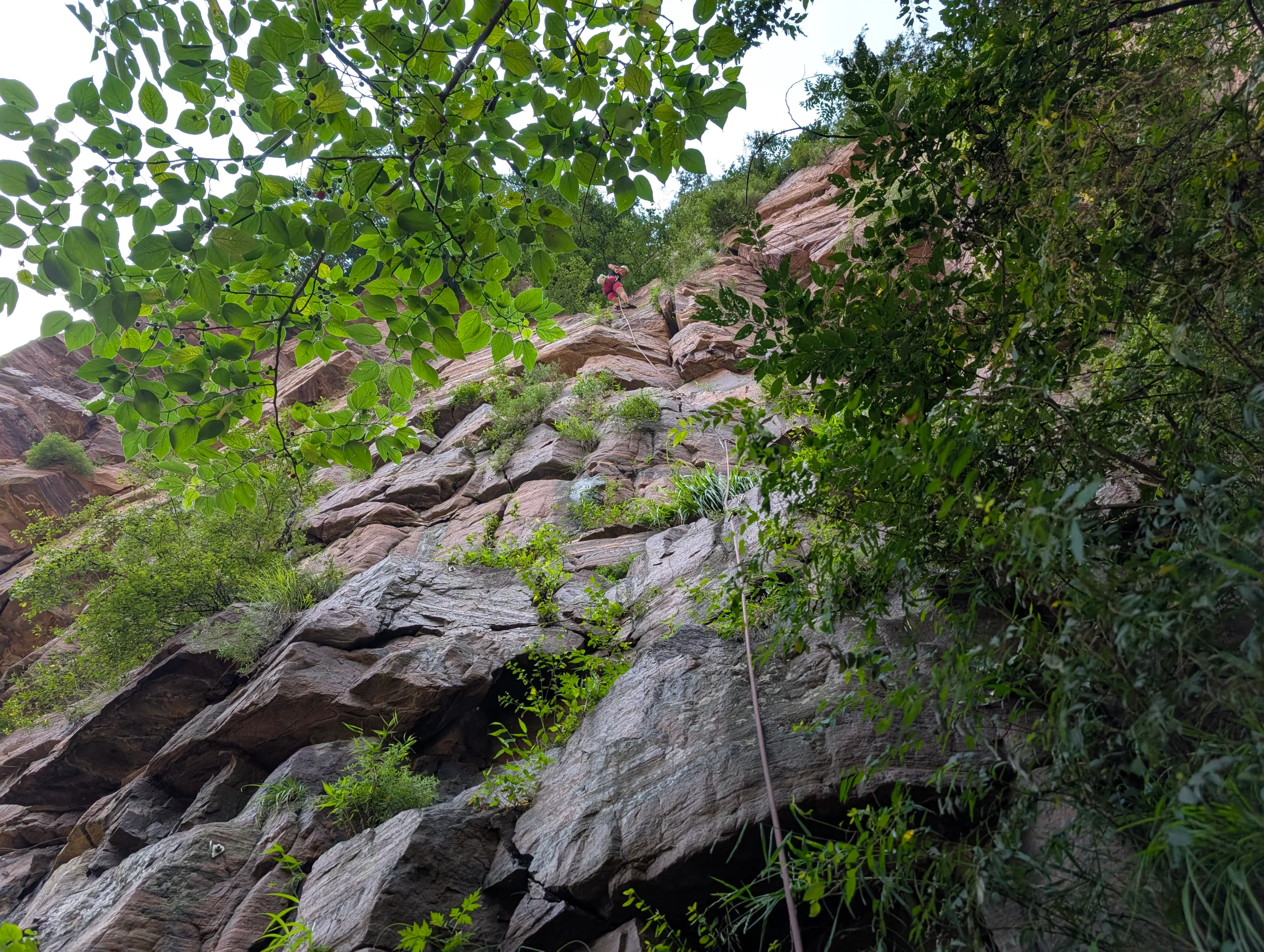
Climbing! We enjoyed it a lot. See details about the Wanxian Mountains climbing area on thecrag.com.
Yet, it felt both strange and a bit disappointing. The area seemed to have been very popular in the past, but didn’t look frequently climbed anymore. We did several routes in the sector we found, but discovered two other sectors were completely inaccessible due to landslides. On the approach to the last sector we wanted to try, we decided to turn around because it was getting late and we didn’t have a machete to clear the overgrown path.
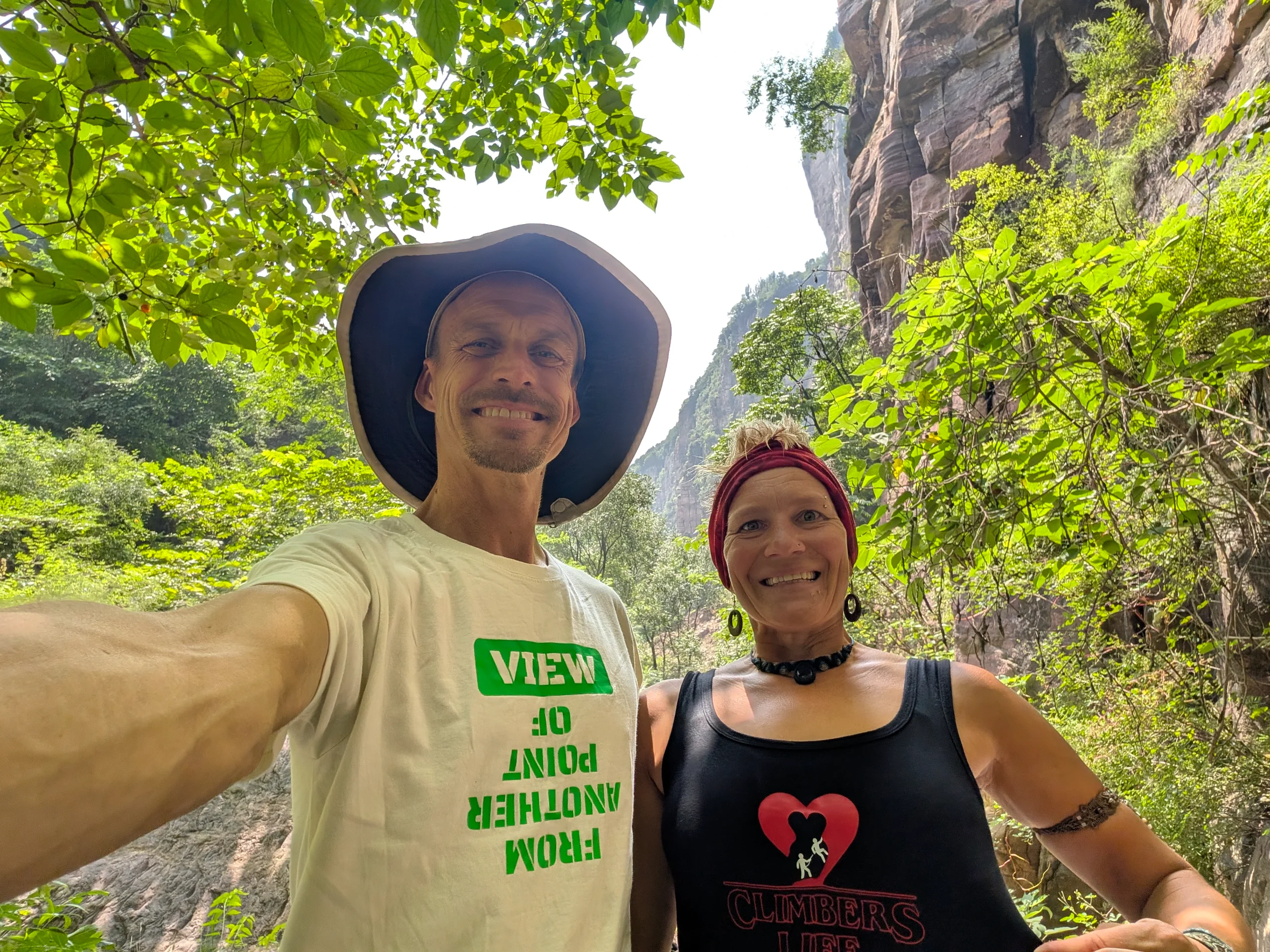
Still, we thoroughly enjoyed the climbing and wore our custom-printed t-shirts: Climber’s Life for Racki, and From Another Point of View for me.
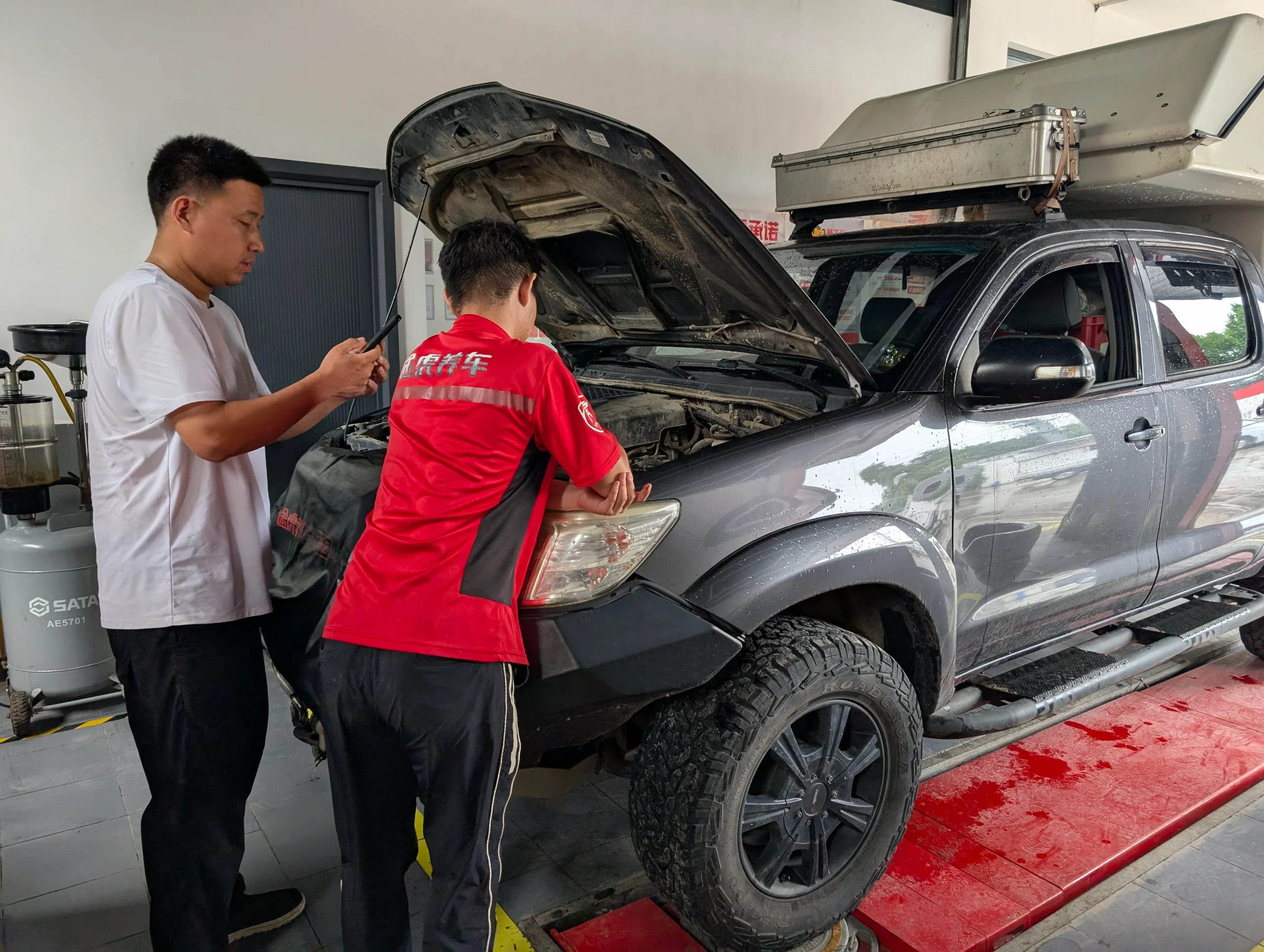
After a day of climbing, we left the parking lot and headed south to try the next climbing spot. Along the way, it was time to give Rosinante an engine oil change. Other overlanders had warned us that certain maintenance tasks can be tricky in China because mechanics aren’t accustomed to diesel passenger vehicles—they know diesel trucks well, but diesel cars, not so much. At the first shop, the staff were visibly relieved when we left after they did not manage to find an appropriate oil for Rosinante in their software database (even though we tried pointing out that one of their oils met our specs).
The second garage didn’t rely on software to select oil, but only stocked unknown local brands.
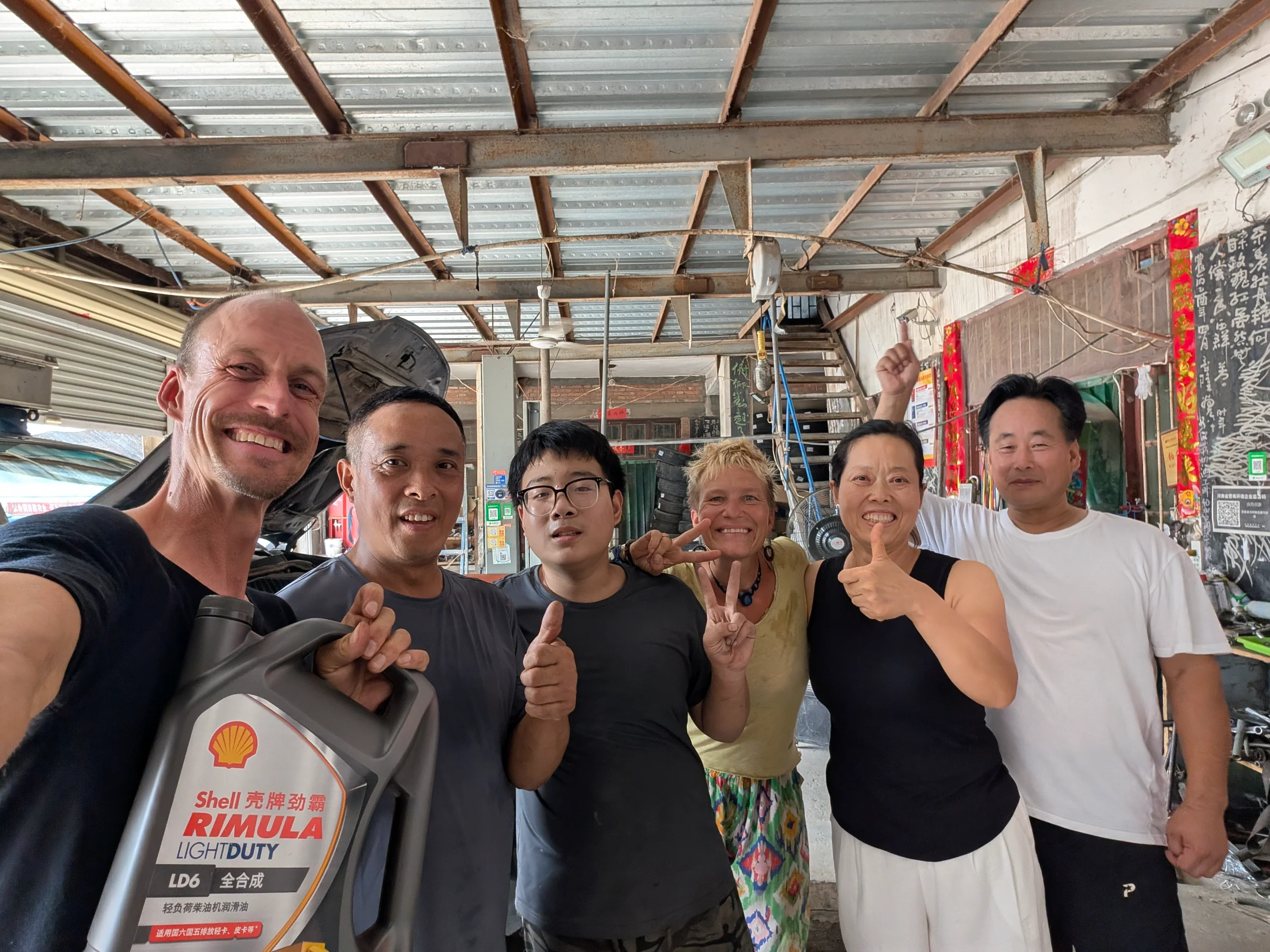
The third garage, however, had a good oil. It was a lovely, family-run shop, and we had a great time with them.
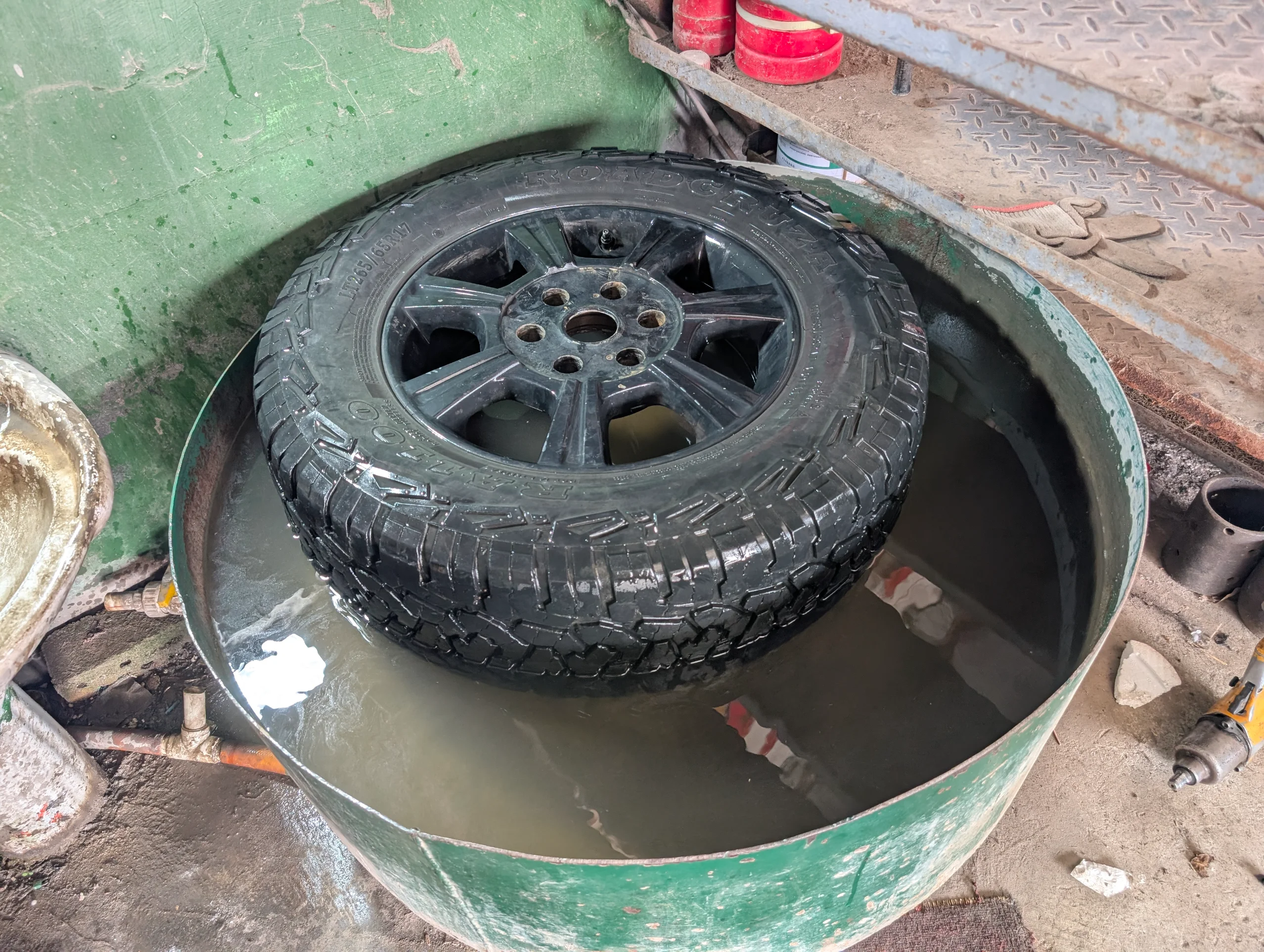
We also inspected one of ours tyres because it had gone flat after parking Rosinante at the national park for a few days. Fortunately, the tyre checked out completely fine, no punctures or holes found…