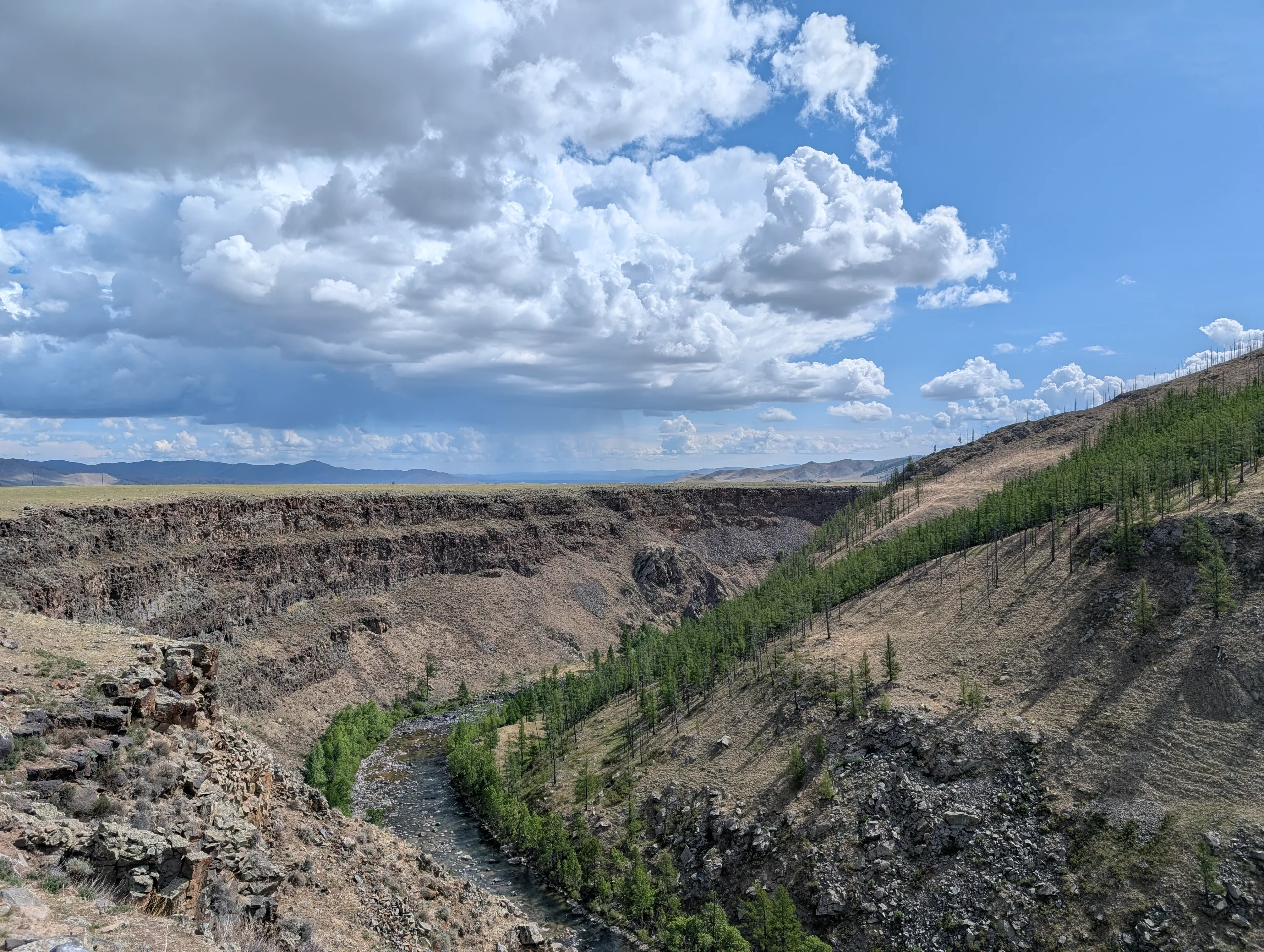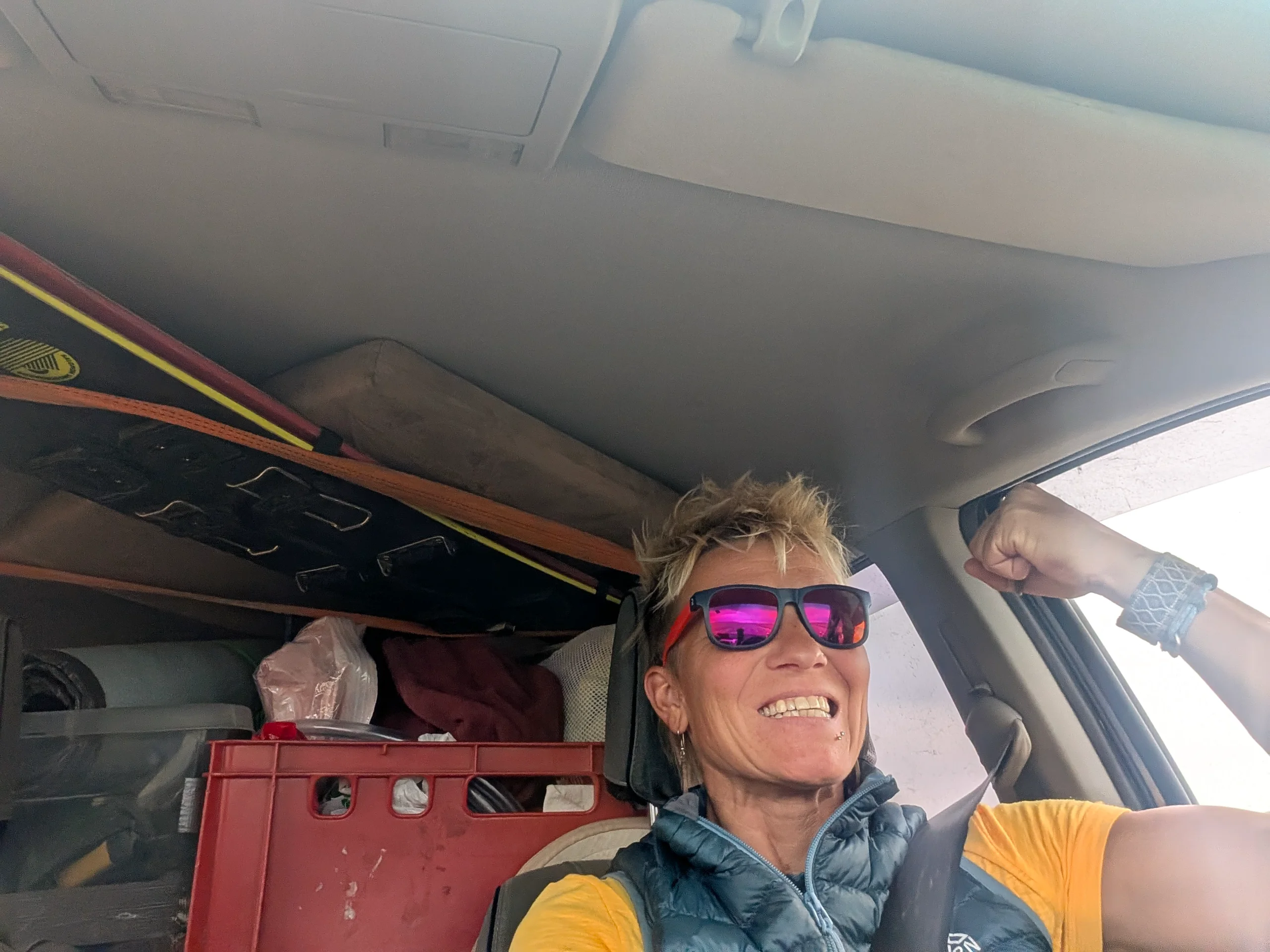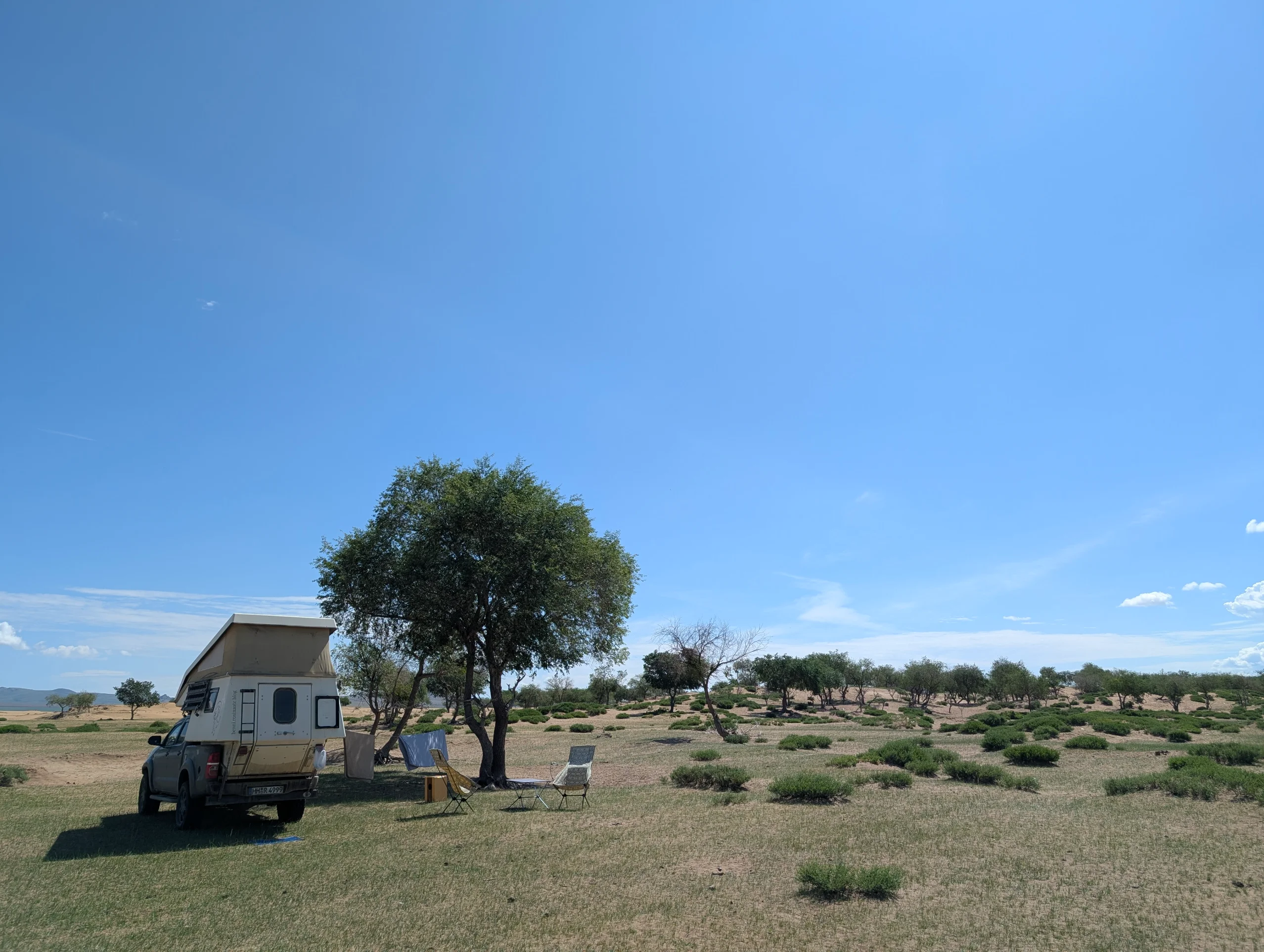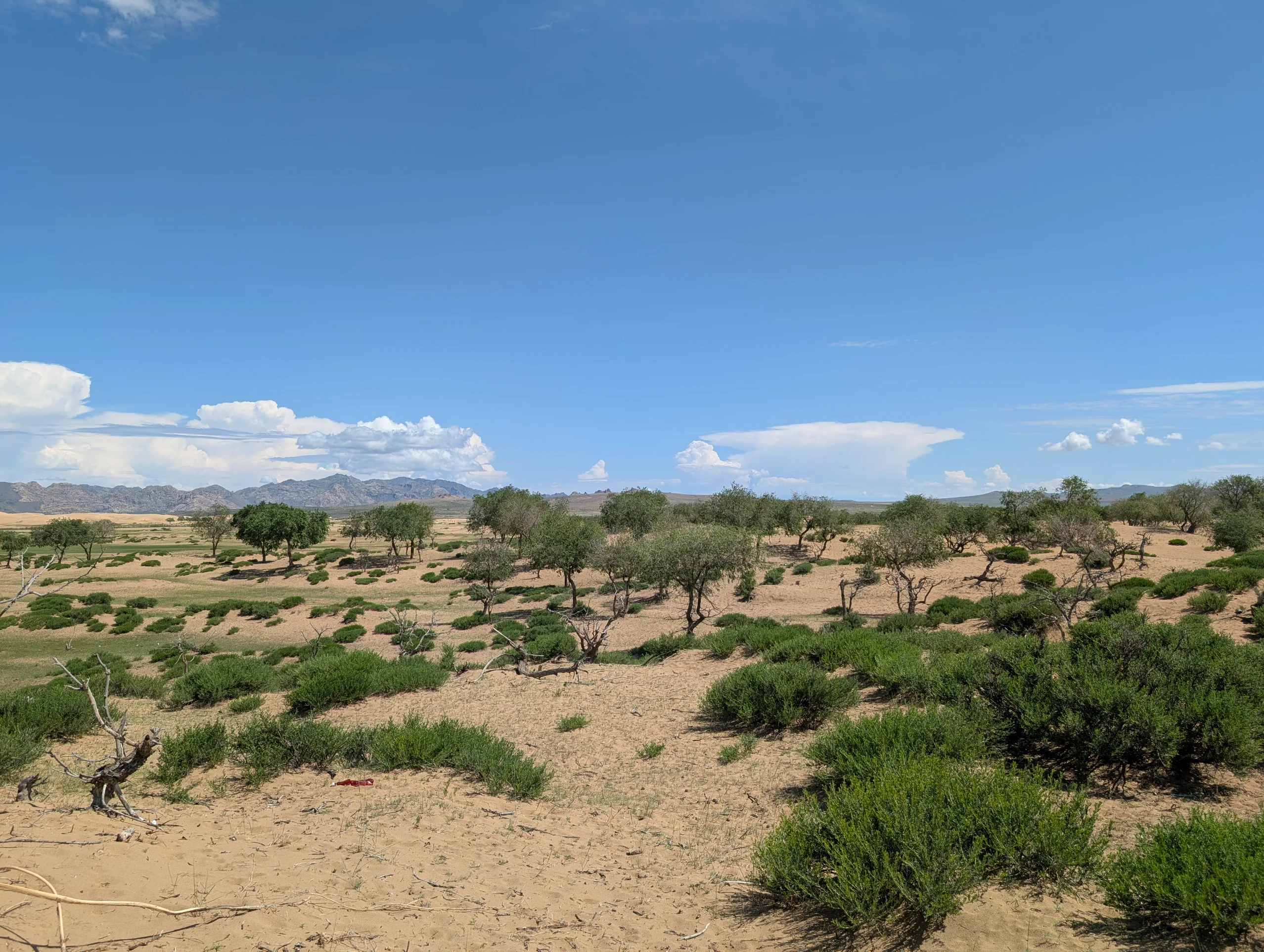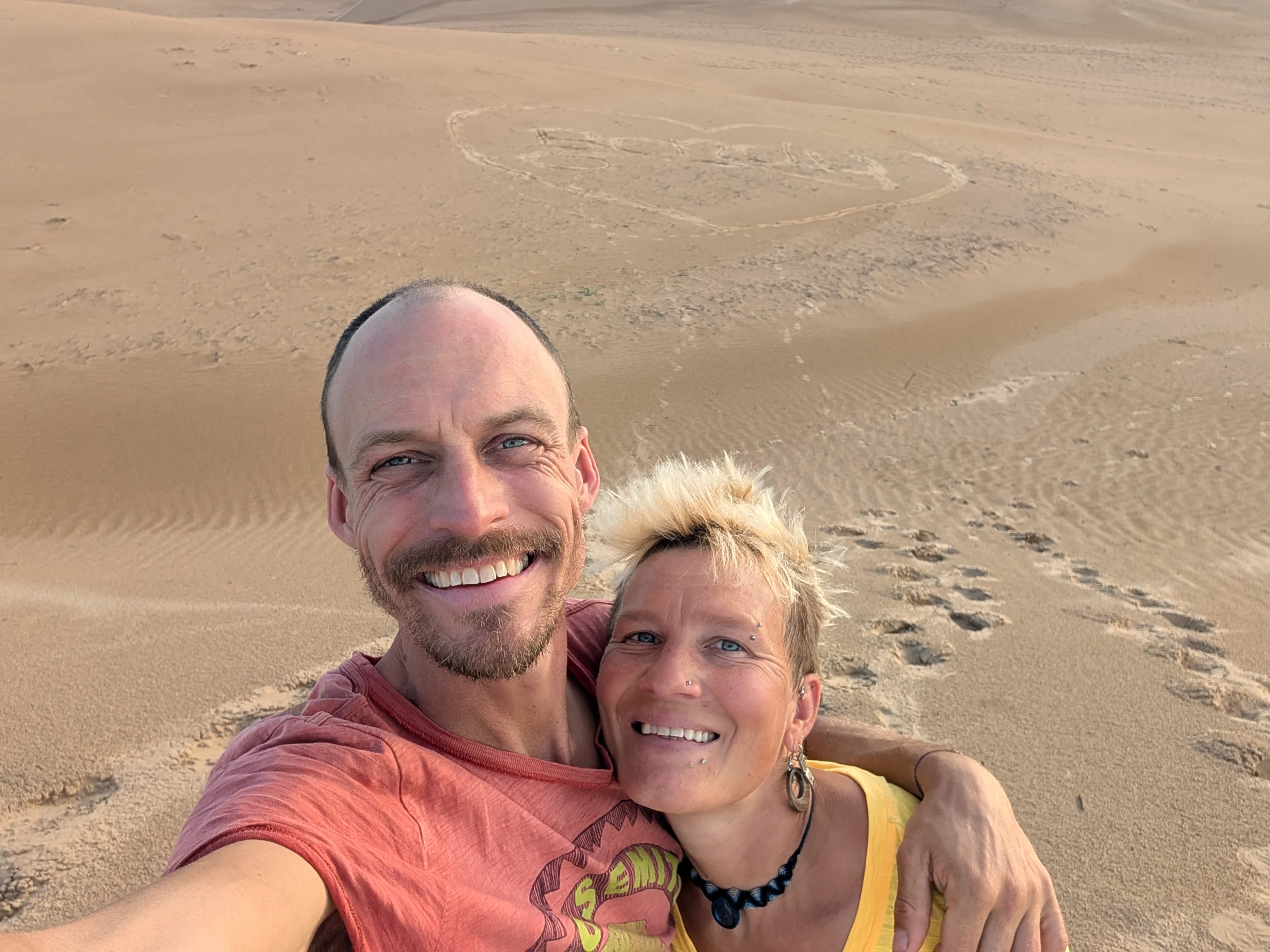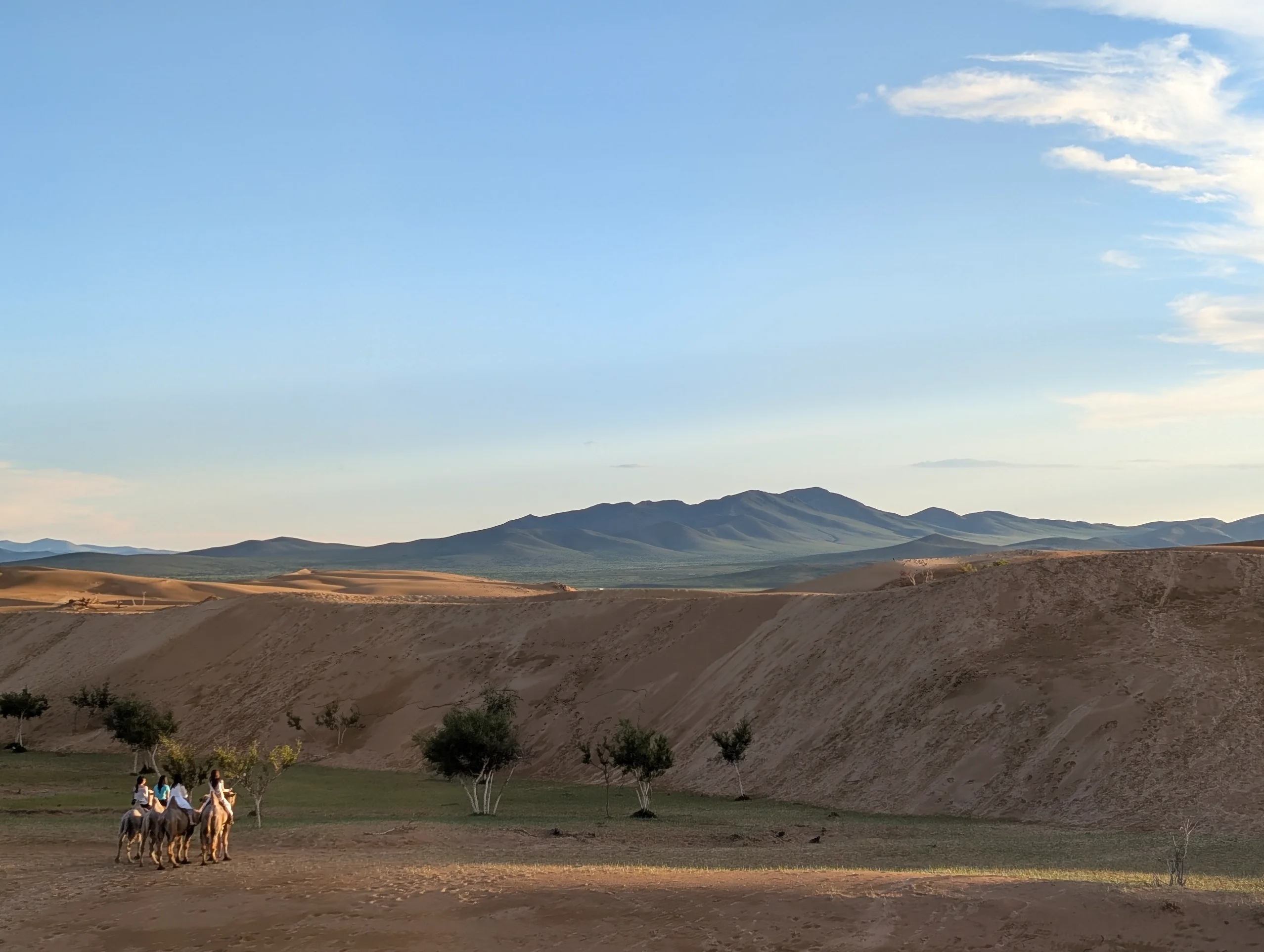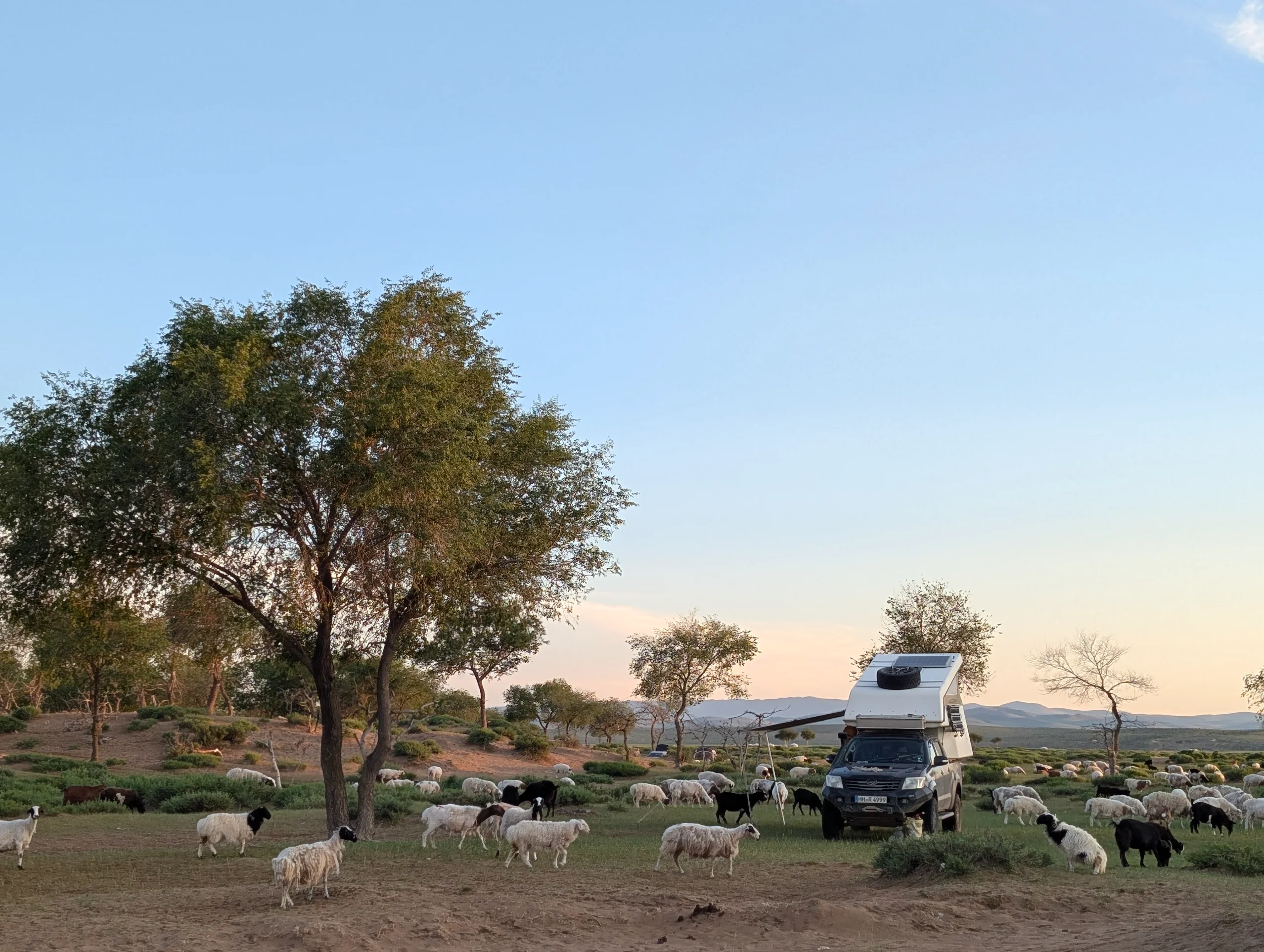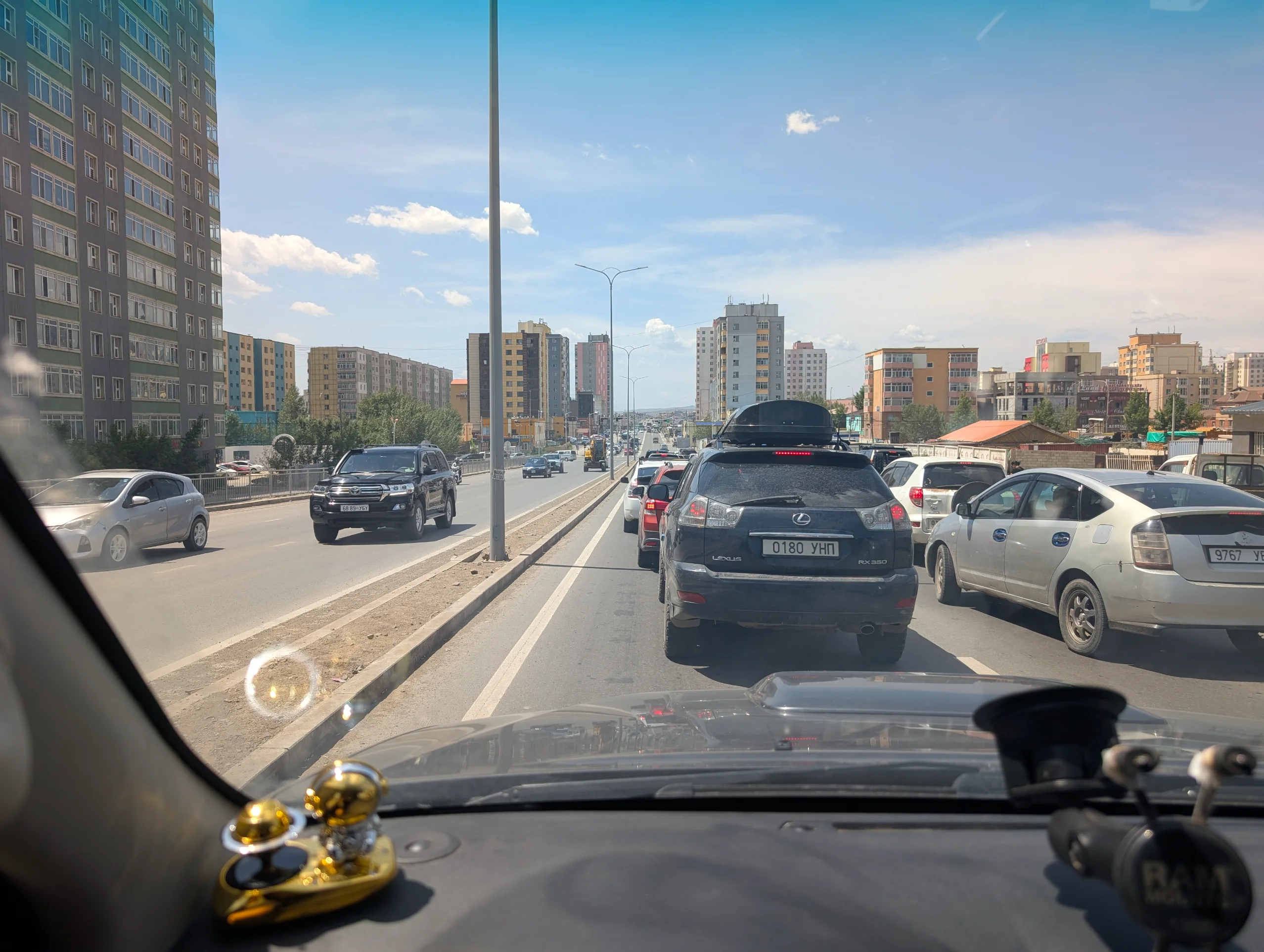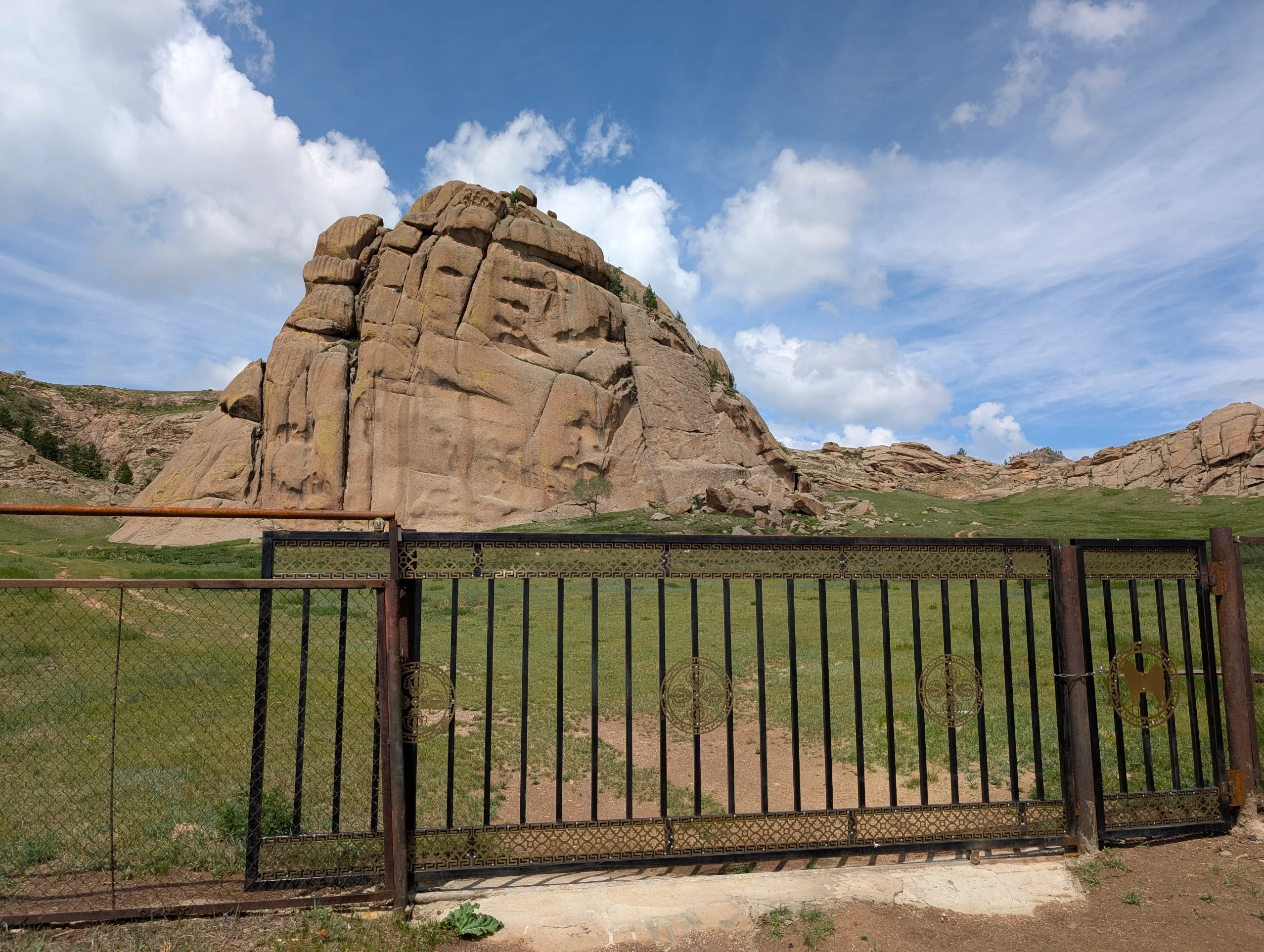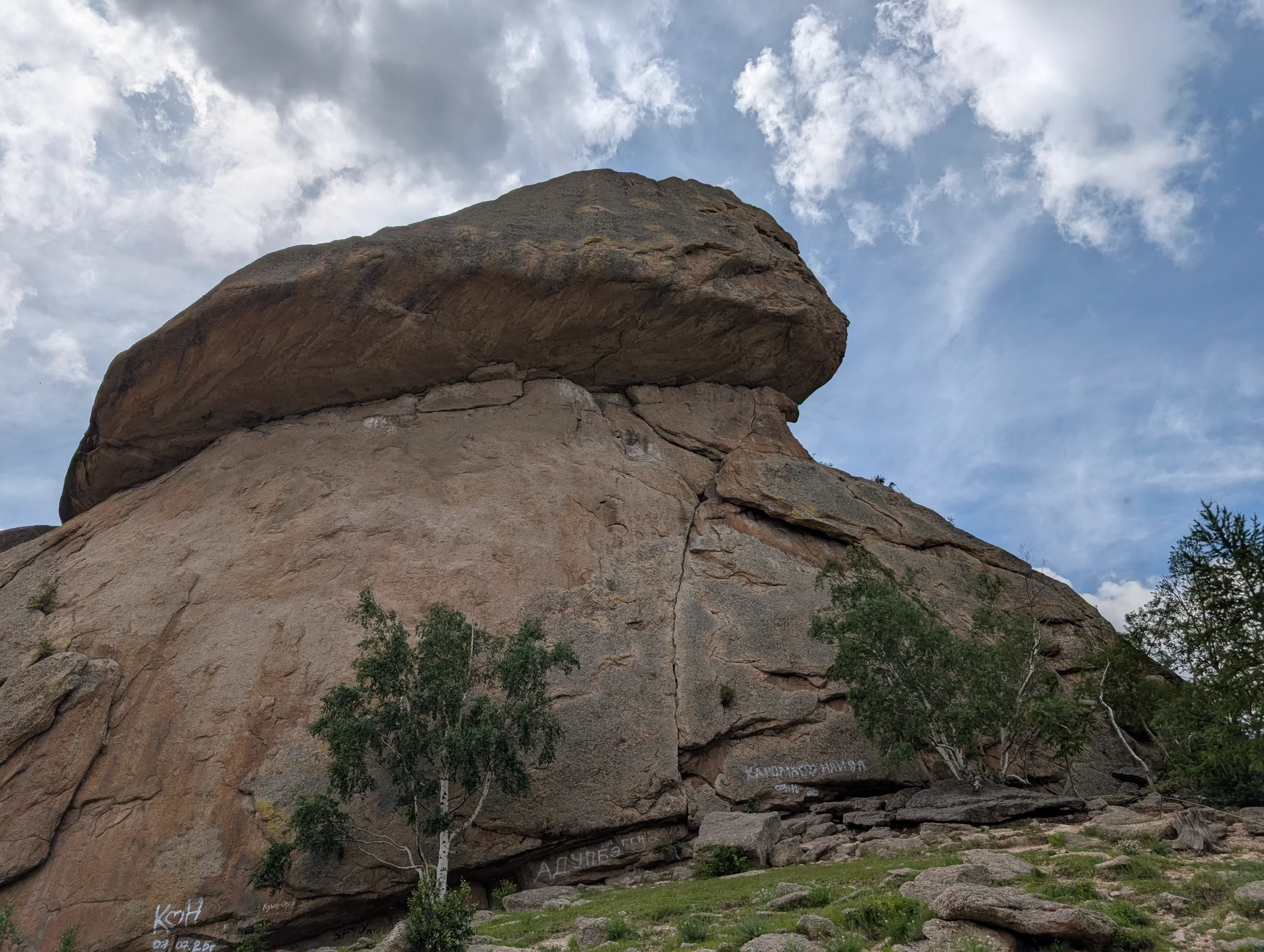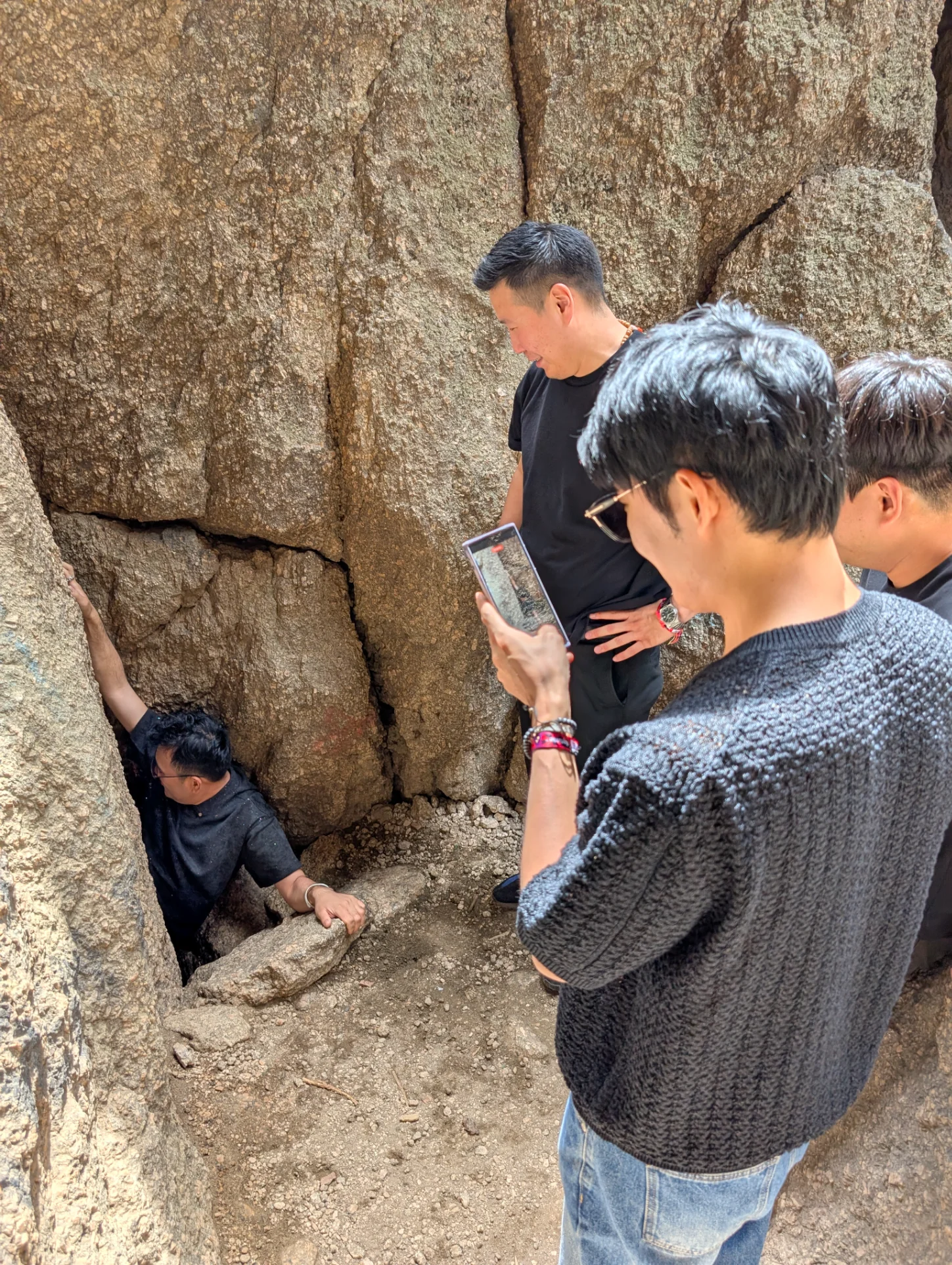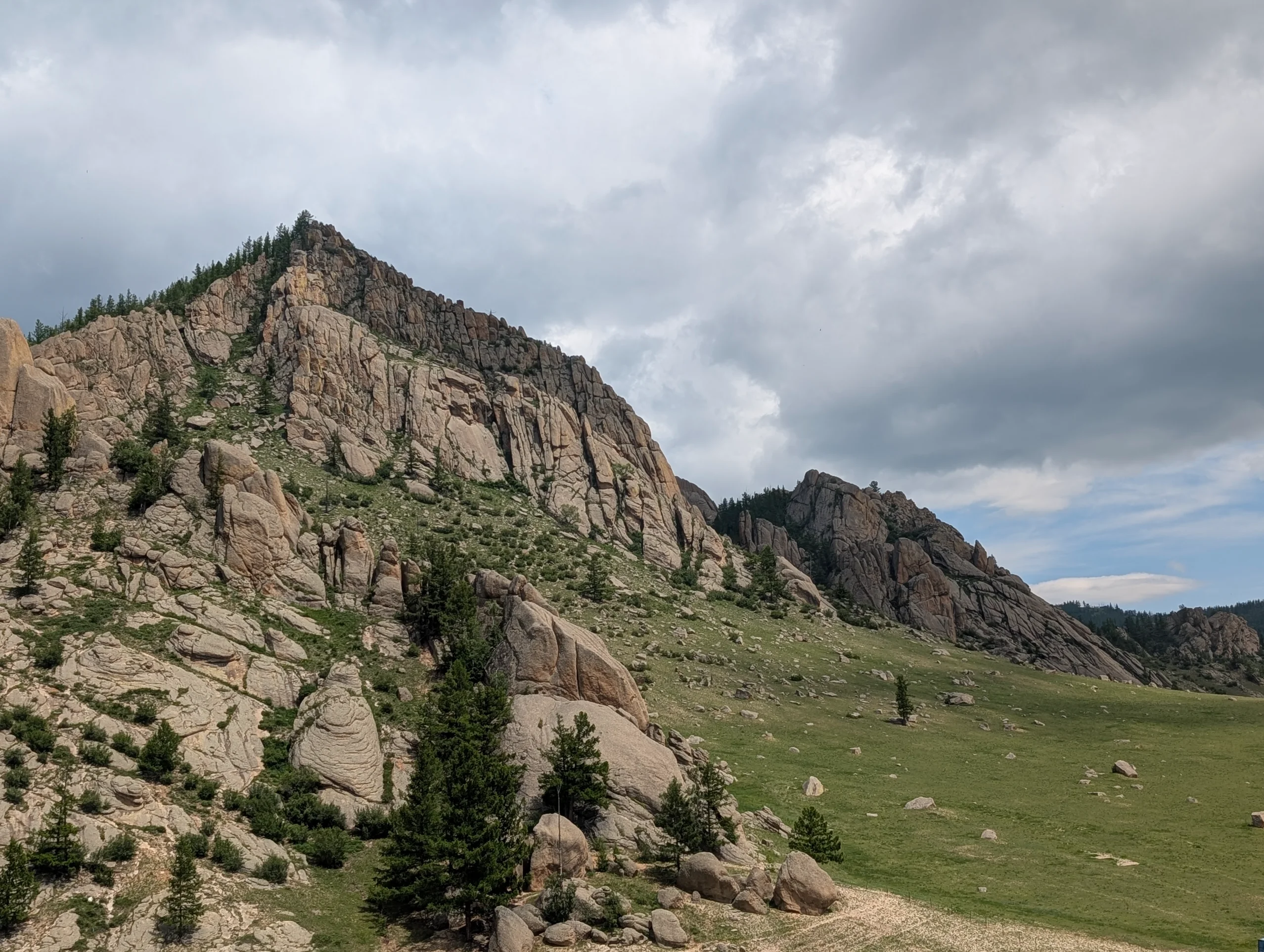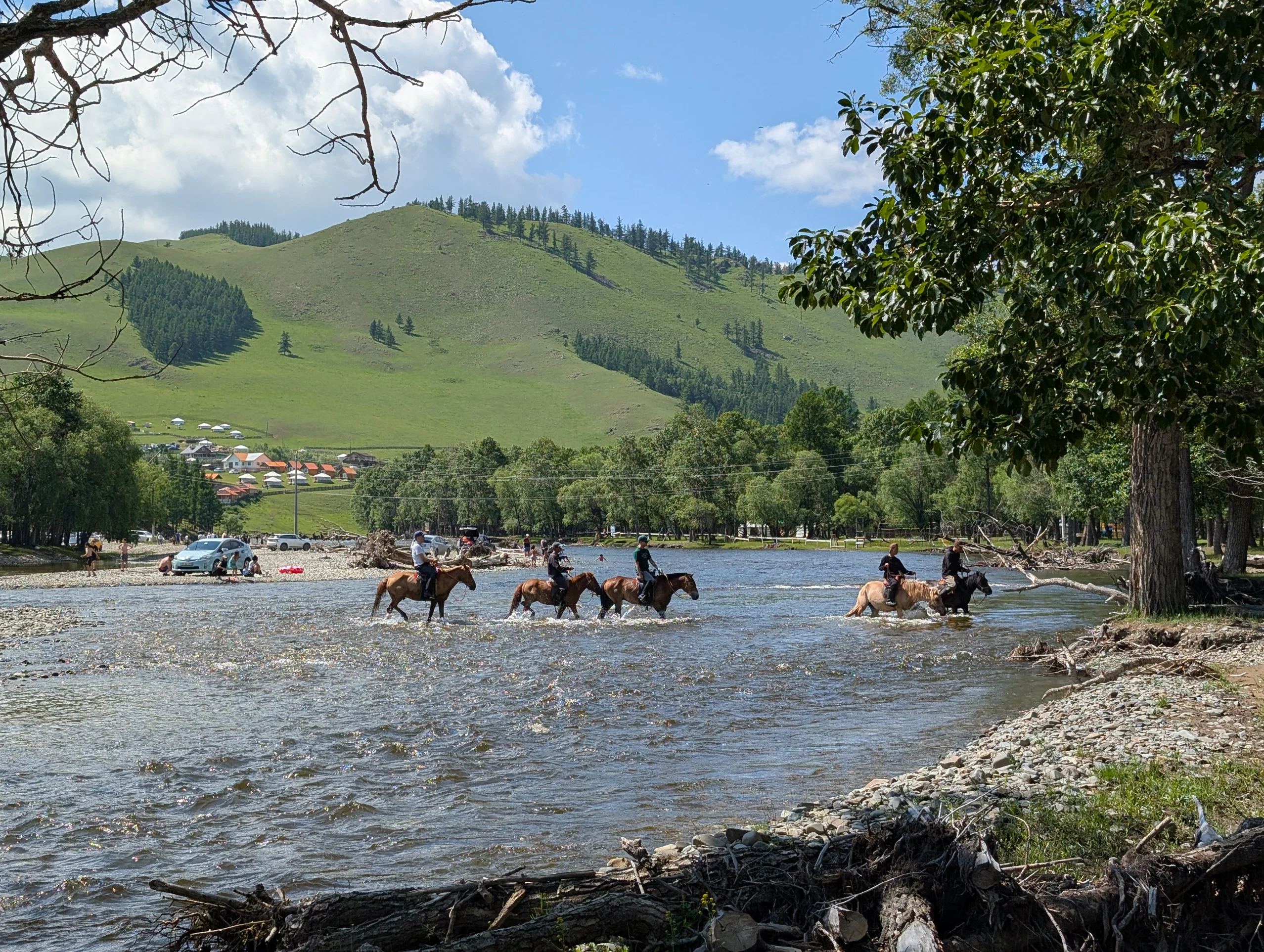
Disappointed that we could not go climbing and that this national park close to Ulaanbaatar was so crowded and that we couldn’t find a nice camp spot, we continued driving north. We ended up driving for very long, and at some point, the nice asphalt road ended and turned into a dirt road which partly became pretty Mongolian (bumpy, potentially car-breaking).
I got more and more frustrated, though Racki was doing not too bad. But for me, all these shitty broken roads added to the stress I felt about our differential problem. More and more, Mongolia became a place to me that I wanted to leave as soon as possible. The negative aspects of this wild country became more and more heavy, and I just wanted to park somewhere and try to relax.
But there was no nice place to park. No option to relax. There was only driving in Mongolia…
We found a nice camp spot on iOverlander which was located on the other side of a river, and when we reached that river, I should have known…
A lot of cars were parked on the shore of the river. I realized that and instantly felt that this is not very Mongolian. Mongolians tend to go everywhere with their cars, no matter what car they have.
Driving a bit further, we saw only the old Russian jeeps and trucks passing us, and from our experience, this always means: shit, the track is going to be wild, offroad, and mostly not desirable for Rosinante. I realized this as well and even told Racki…
When we came to a halt in front of the river, I felt so tired, stressed, exhausted, and so desperate to find a place to rest and relax that I just engaged the low gear and drove into the thirty-meter-wide river crossing without checking it or watching another car do it first.
It went fine at first, then it got deeper. The water came over Rosinante’s hood, and we lost momentum at an alarming rate. I felt the wheels slipping, the water caught Rosinante from the side, and I felt her moving sideways. I countersteered, pushed harder, more water hit the hood, we got slower, and finally we reached the other side and made it out of that river.
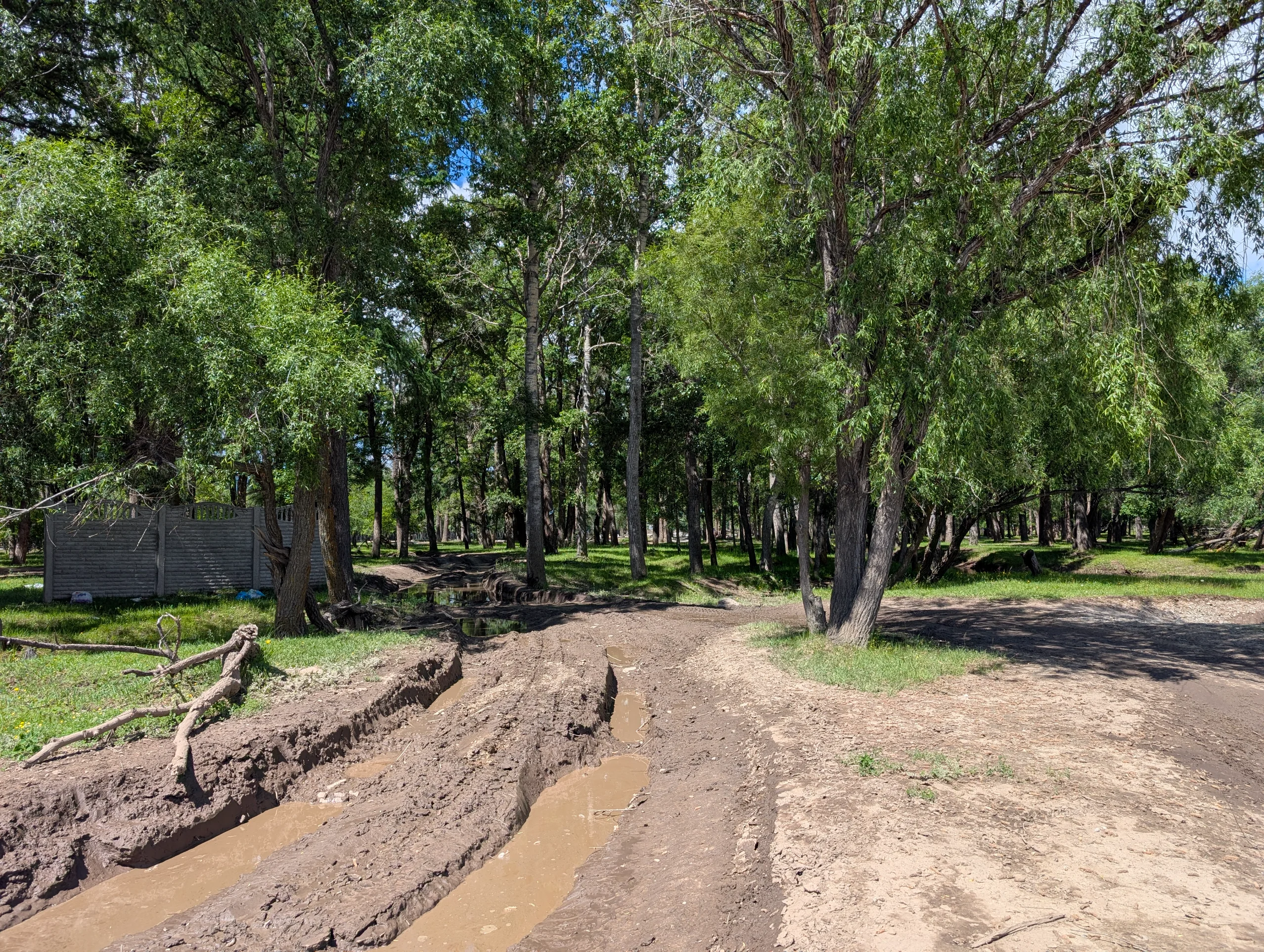
We made it through a small, muddy forest and quickly realized that there were not many options to go back. I could not just park; I wanted to know if there was an easy way out of this. So we took a walk down the river, only to find out that further down, the river crossing was much worse.
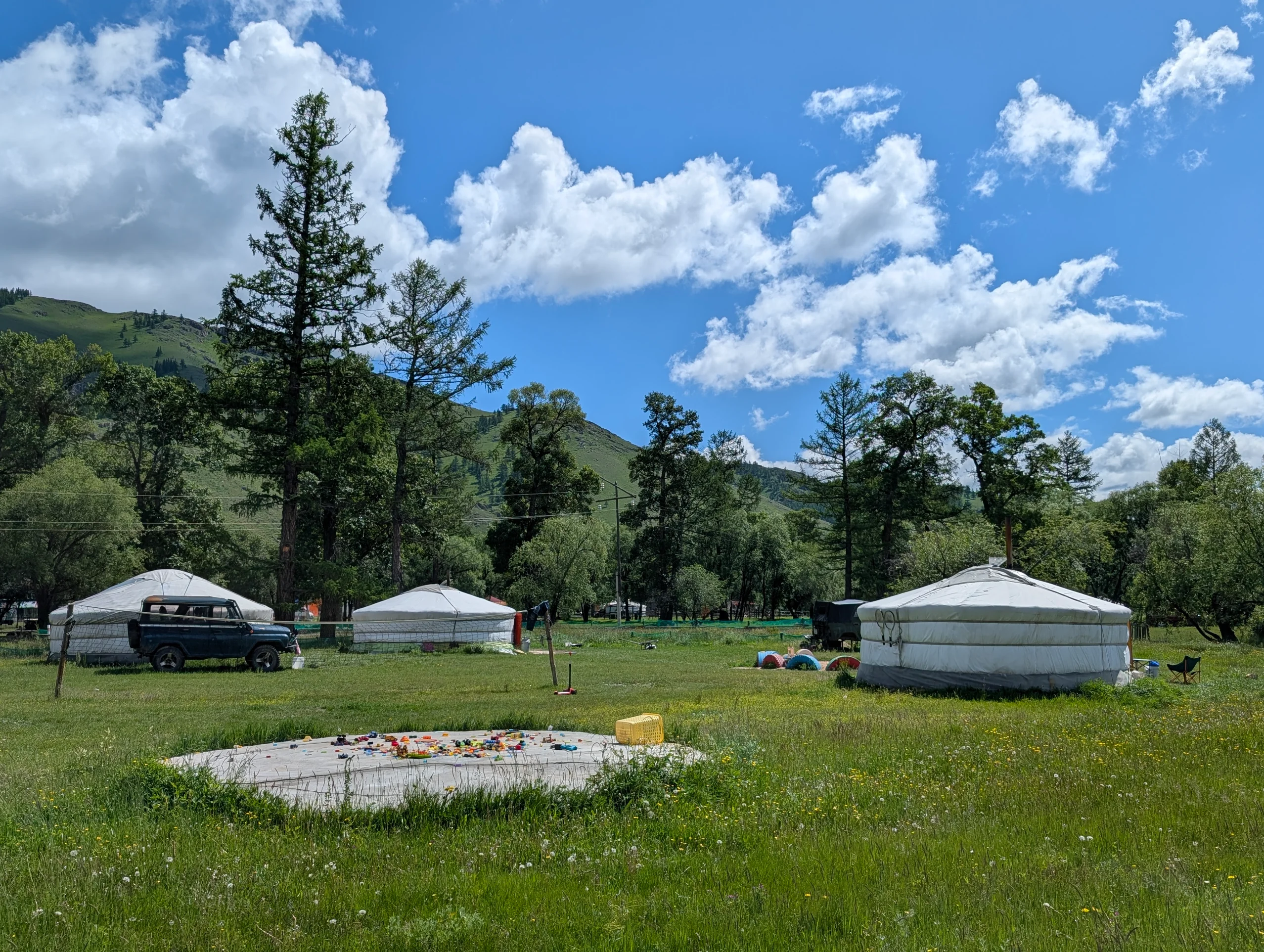
So we were trapped on the other side of the river with a lot of camps, but we found a nice, pretty quiet place in the forest.
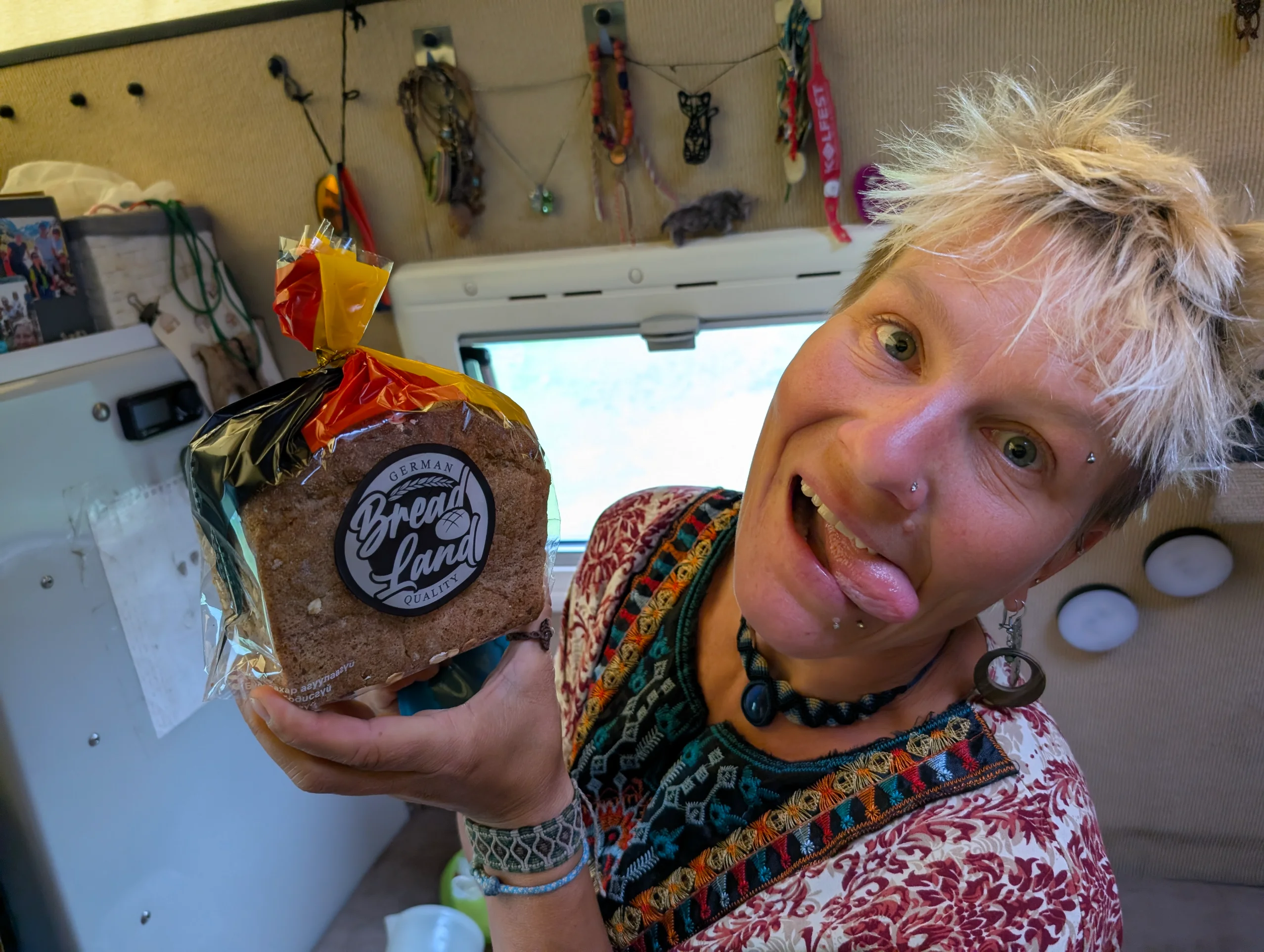
Racki was happy because we had some ok bread with us.
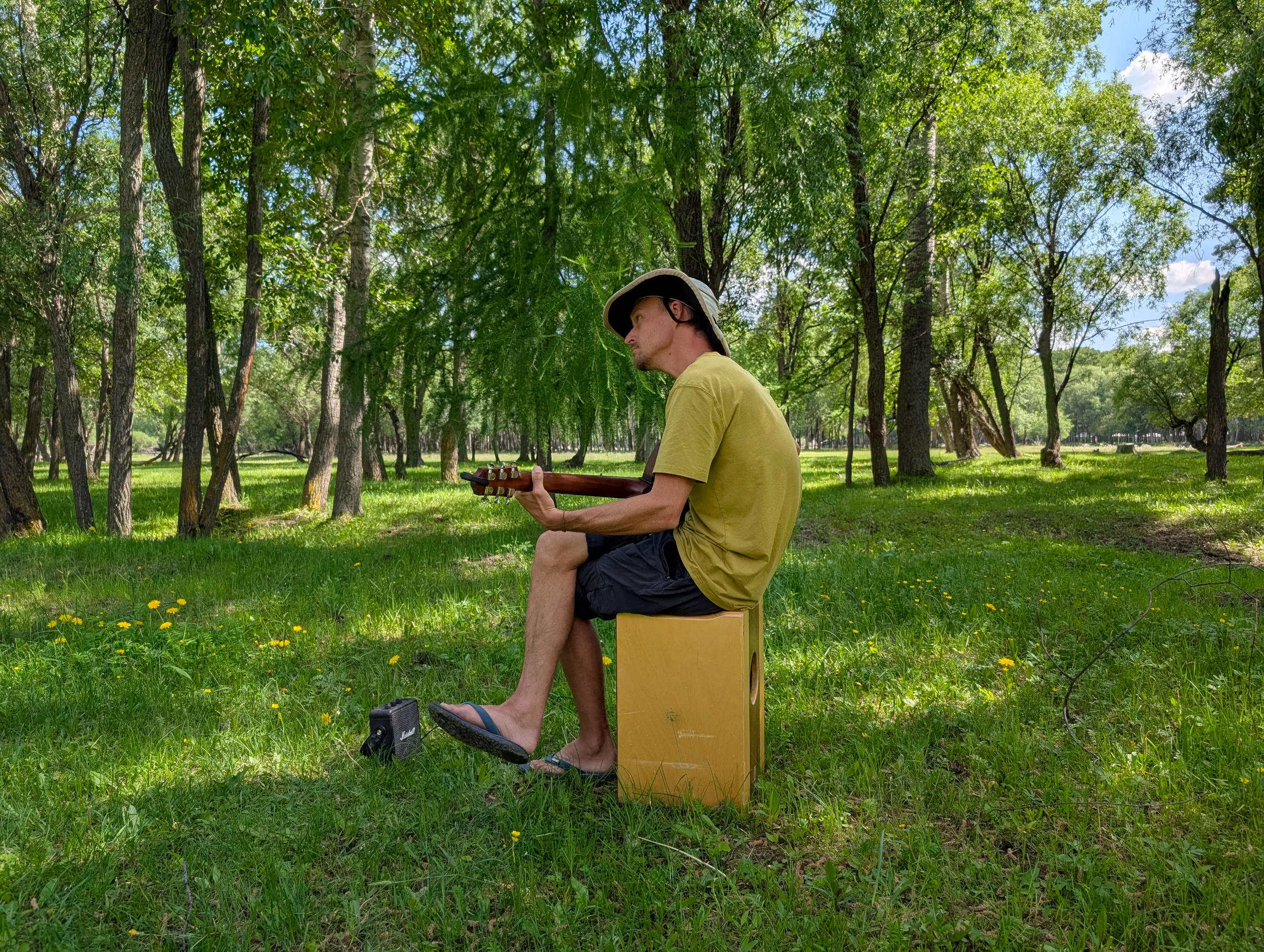
I tried to enjoy that nice, calm place… with the differential topic in the back…
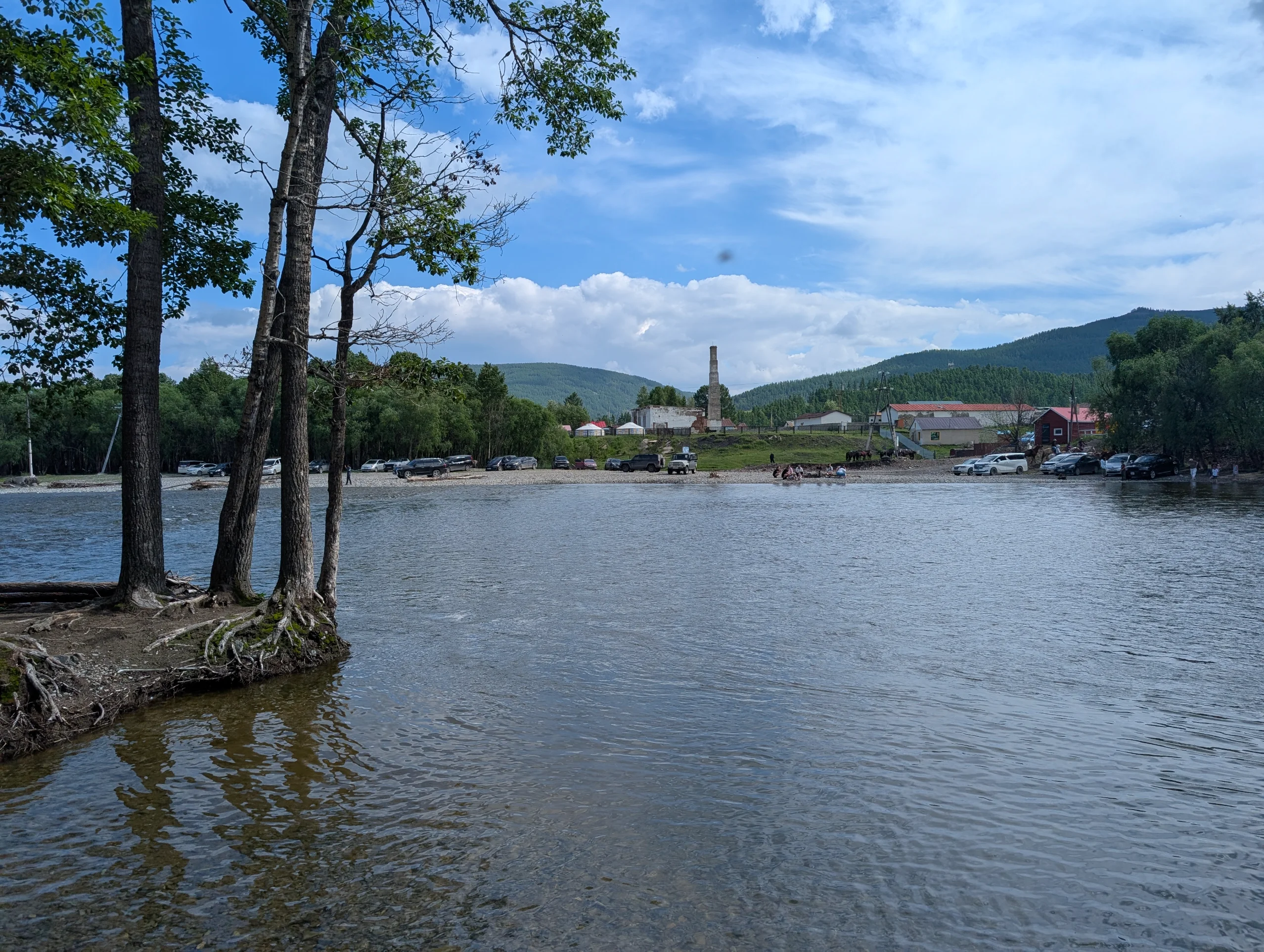
…and with the big, big river in front.
We checked this crossing, which was way longer than the one we took.
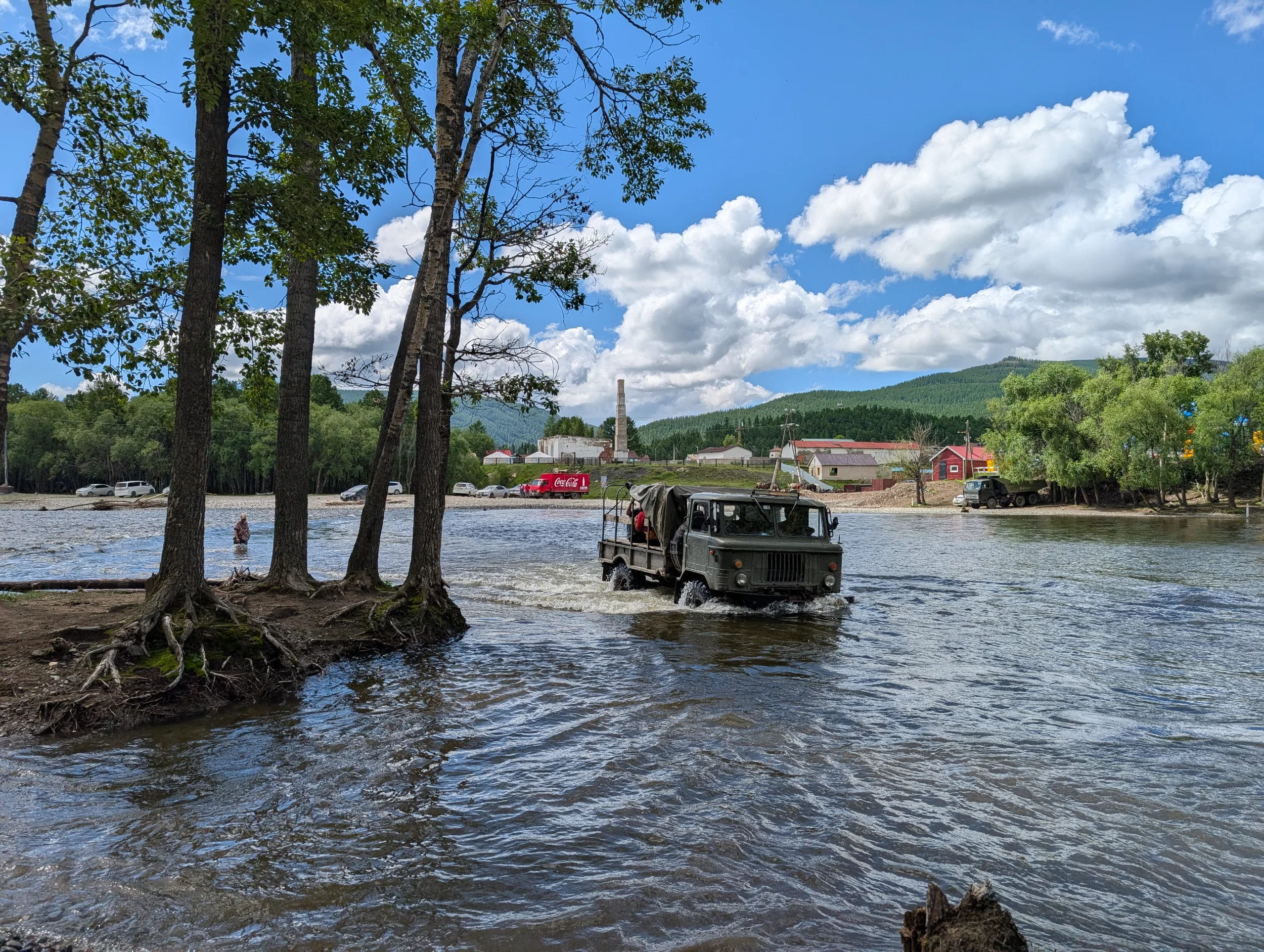
The Russian trucks made it easily. But it was deep as well. Maybe even deeper than the other one.
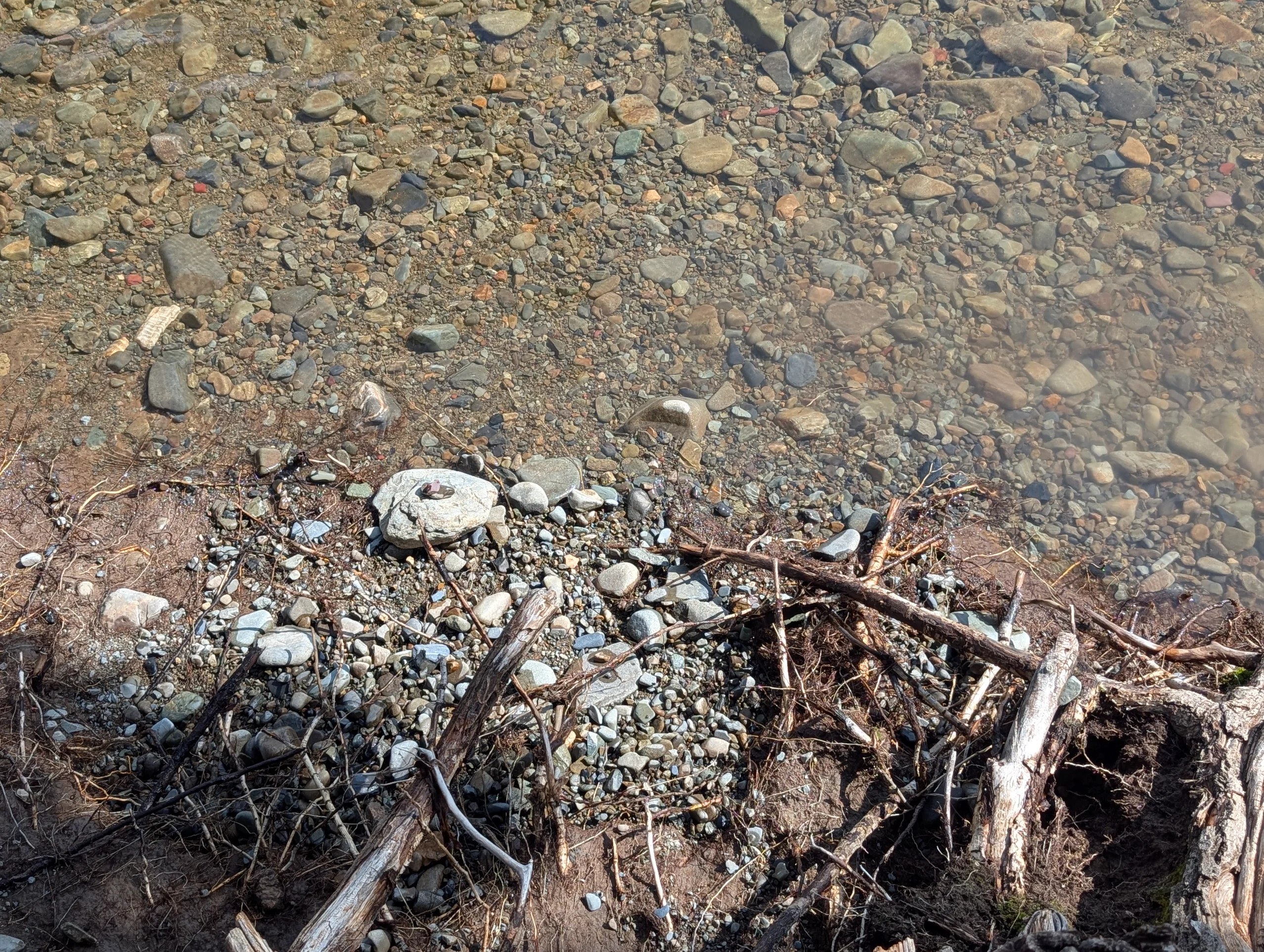
We marked the water level at both options we had to cross this river.
Racki talked to some locals who were living on that side of the river. They normally crossed the river at one particular spot in a very specific way, but they said at the moment it was not possible because the water level and current were higher than usual.
We checked their way to cross that river, but to do that one, we would have to first take an easy crossing to a stone island in the river and then face the current coming from the side before turning completely against it.
I was not happy with that option either.
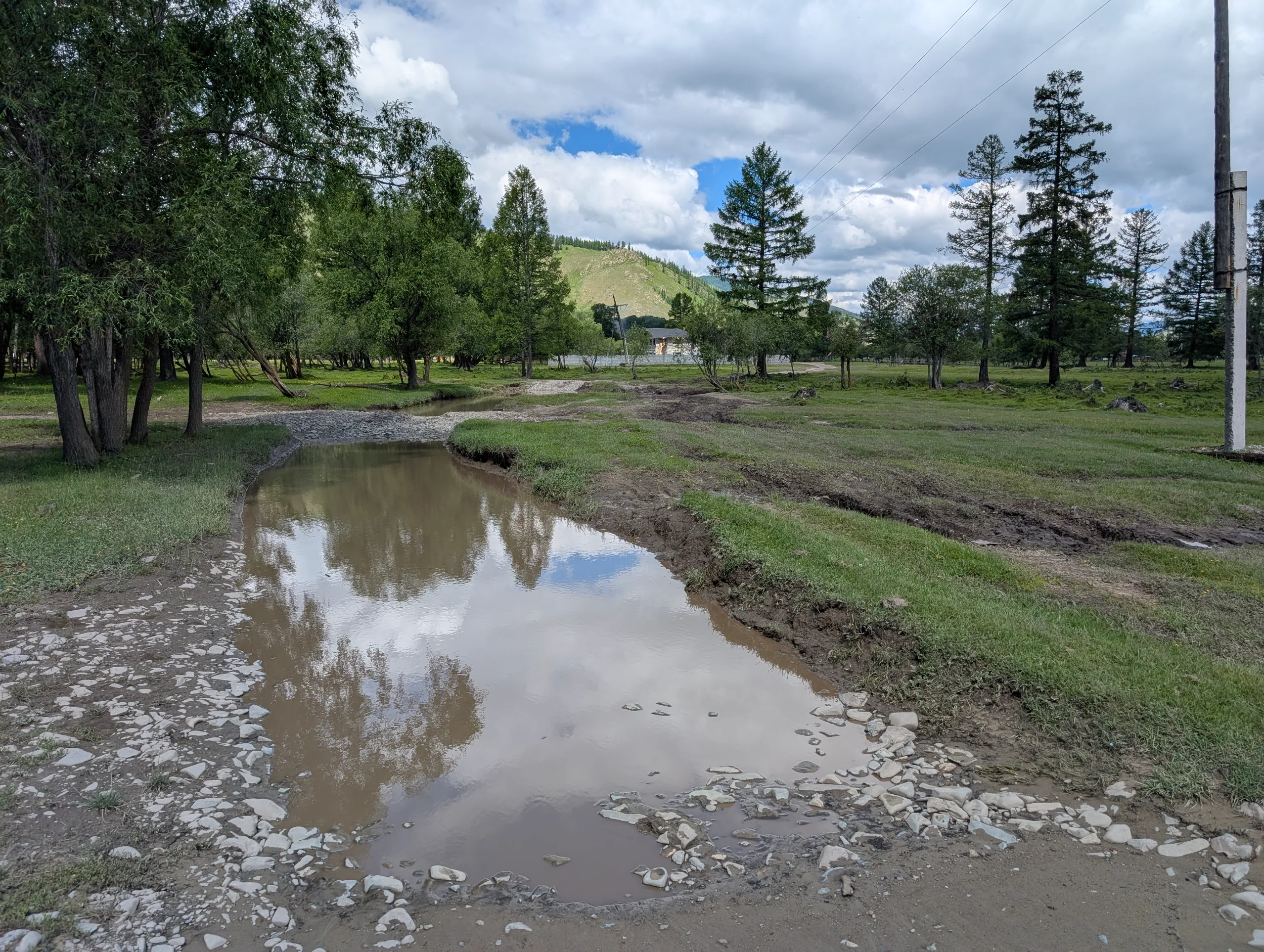
We waited a couple of days, and when the water level was at least no higher than when we crossed the river the first time, we started our mission to cross the river at the longer crossing. First we had to go through a couple of muddy sections, smaller crossings, and easy parts.
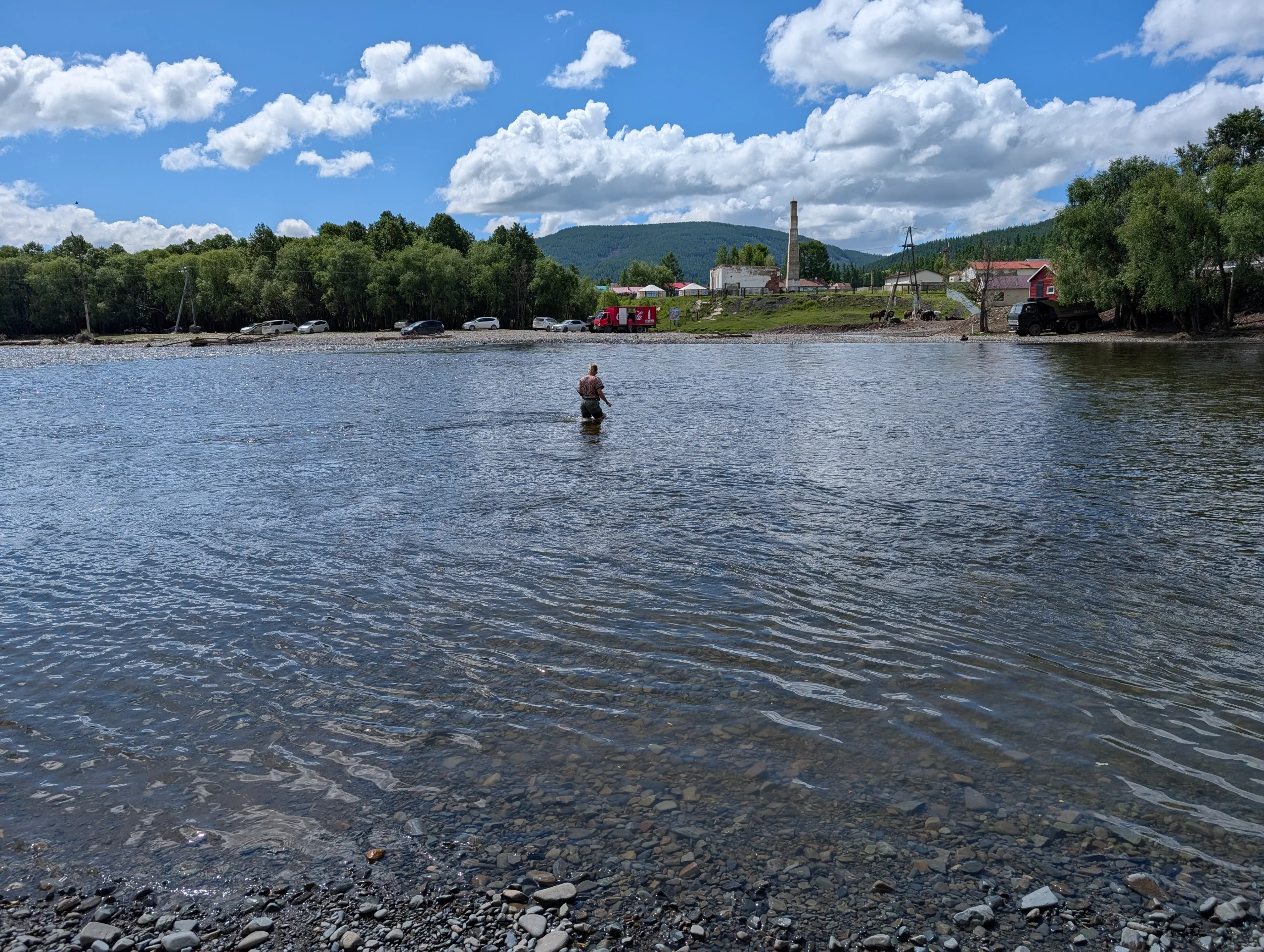
Then we reached the real crossing. It looked so long… and deep… Racki checked it for the last time, and we decided that we would take the path through the river that the locals were taking, not the one we thought might be better.
Racki was positive about the crossing, while I felt stressed and exhausted, though I gained some hope as we started the crossing. And it all went very well. It was deep, and Rosinante lost some momentum in the process, but it was not too bad, and we were so happy to have made it back!
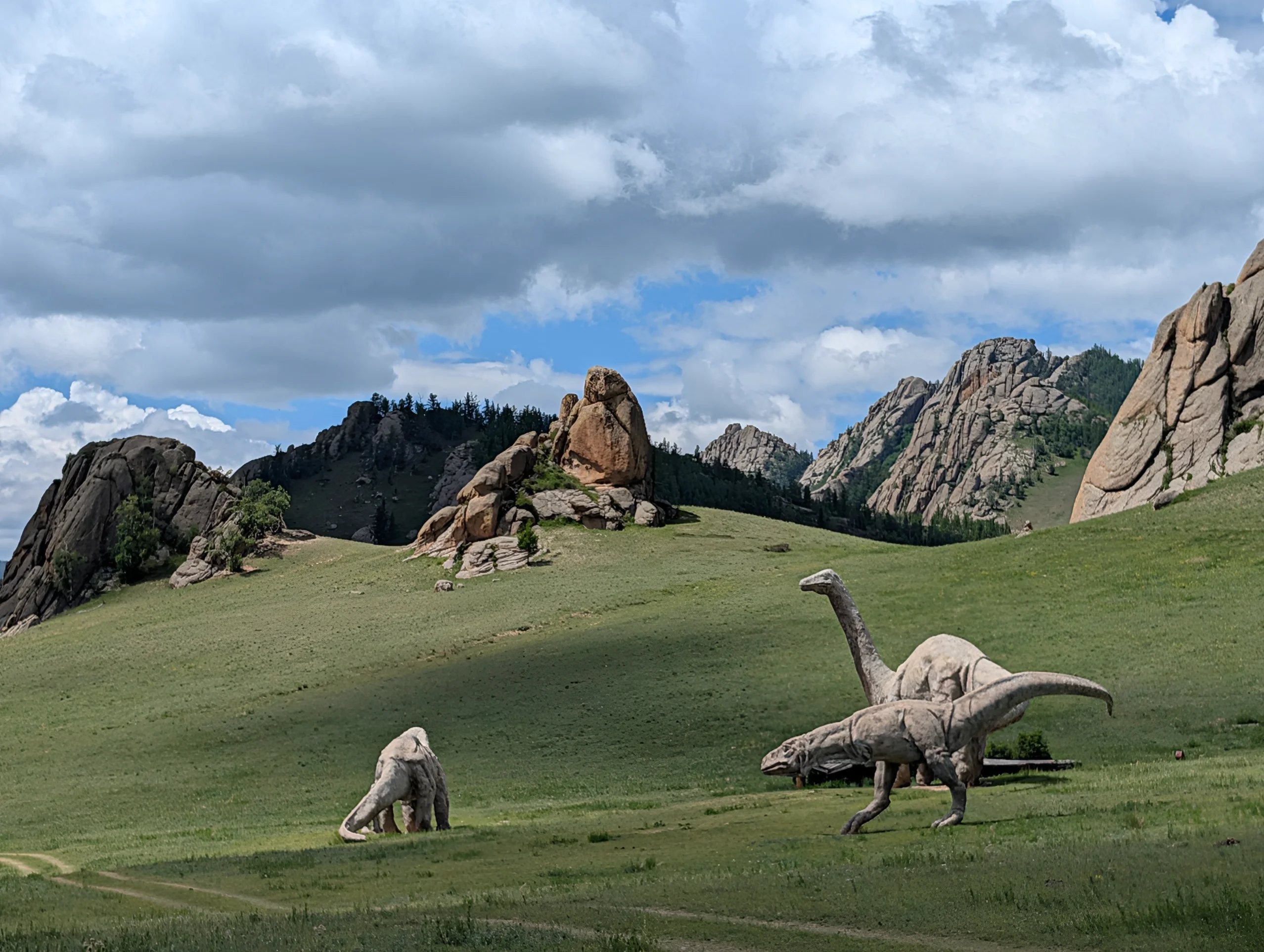
On our way back to Ulaanbaatar, we came across this dinosaur park.
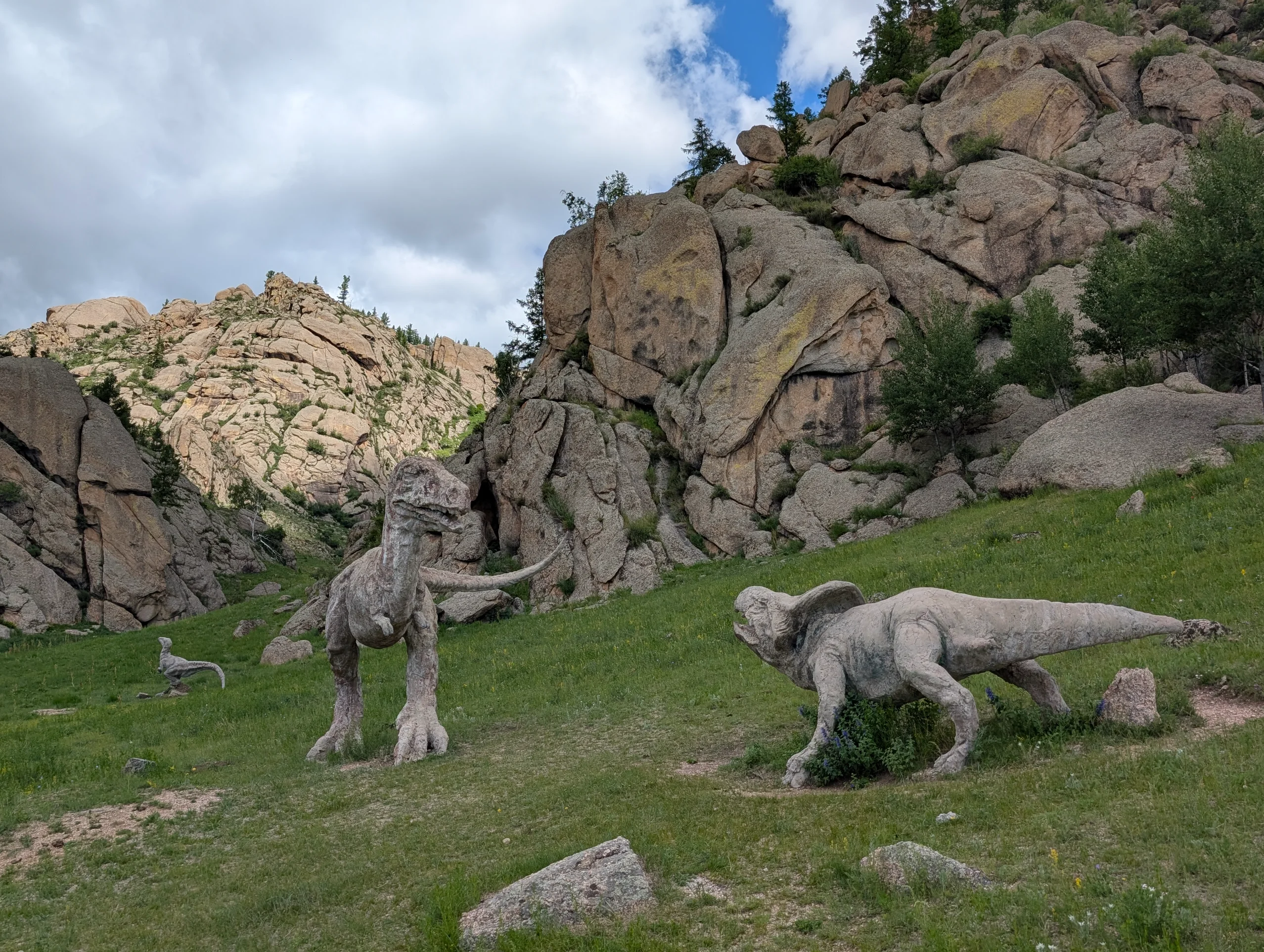
It had been a yurt camp, but the camp itself was closed and run-down.
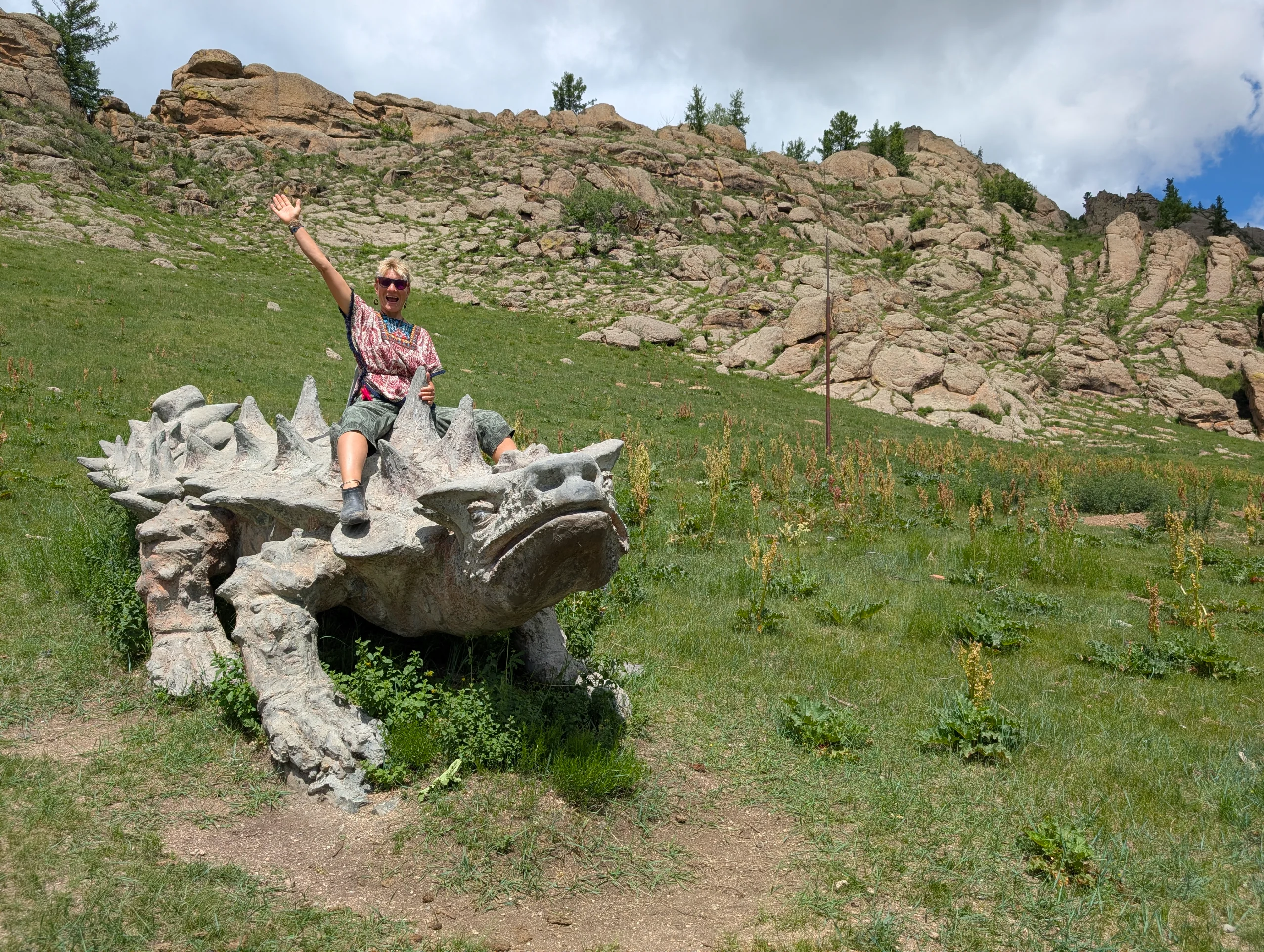
But I loved these dinosaur statues.
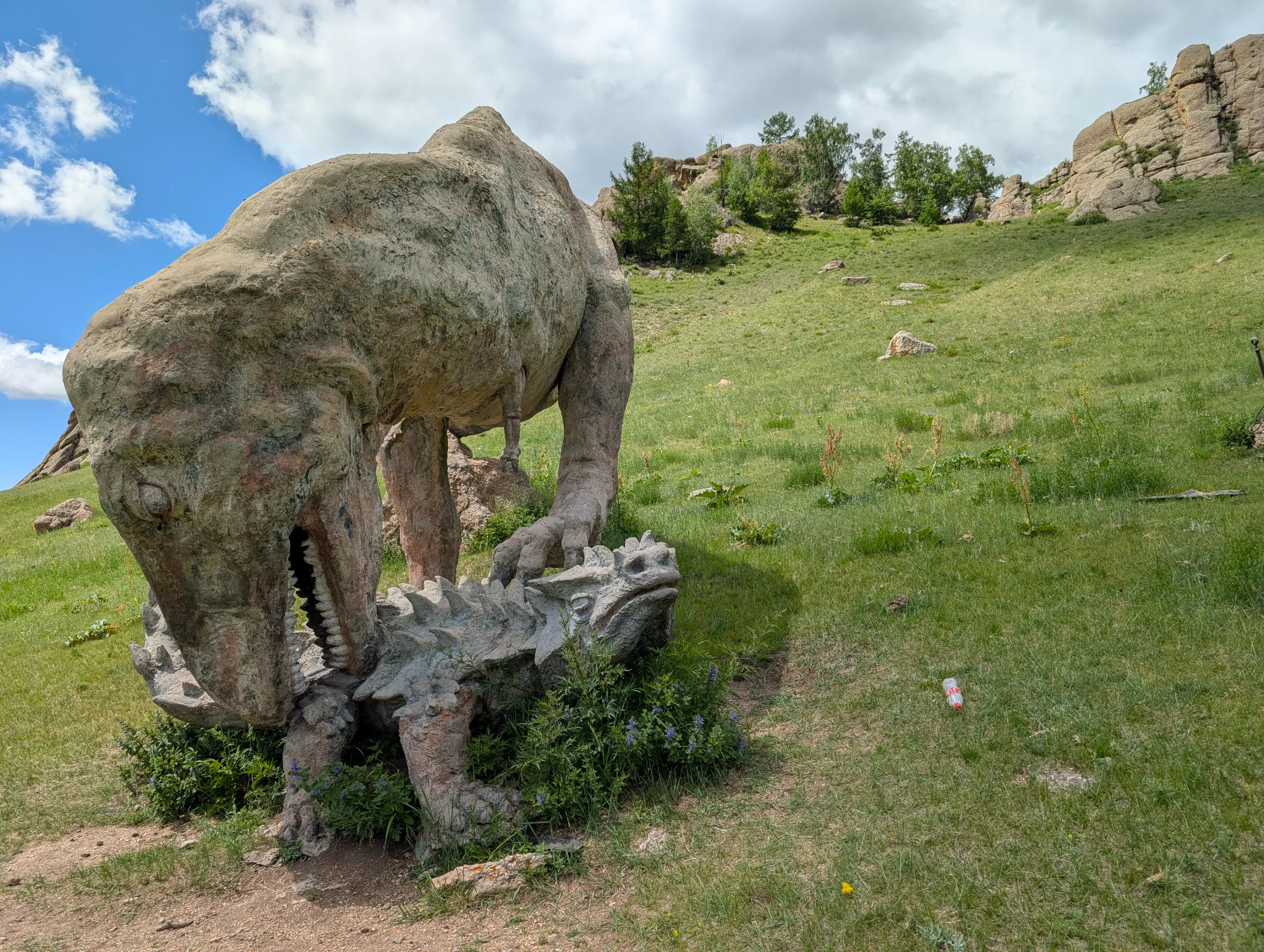
Mostly because they just fit so well into the scenery.
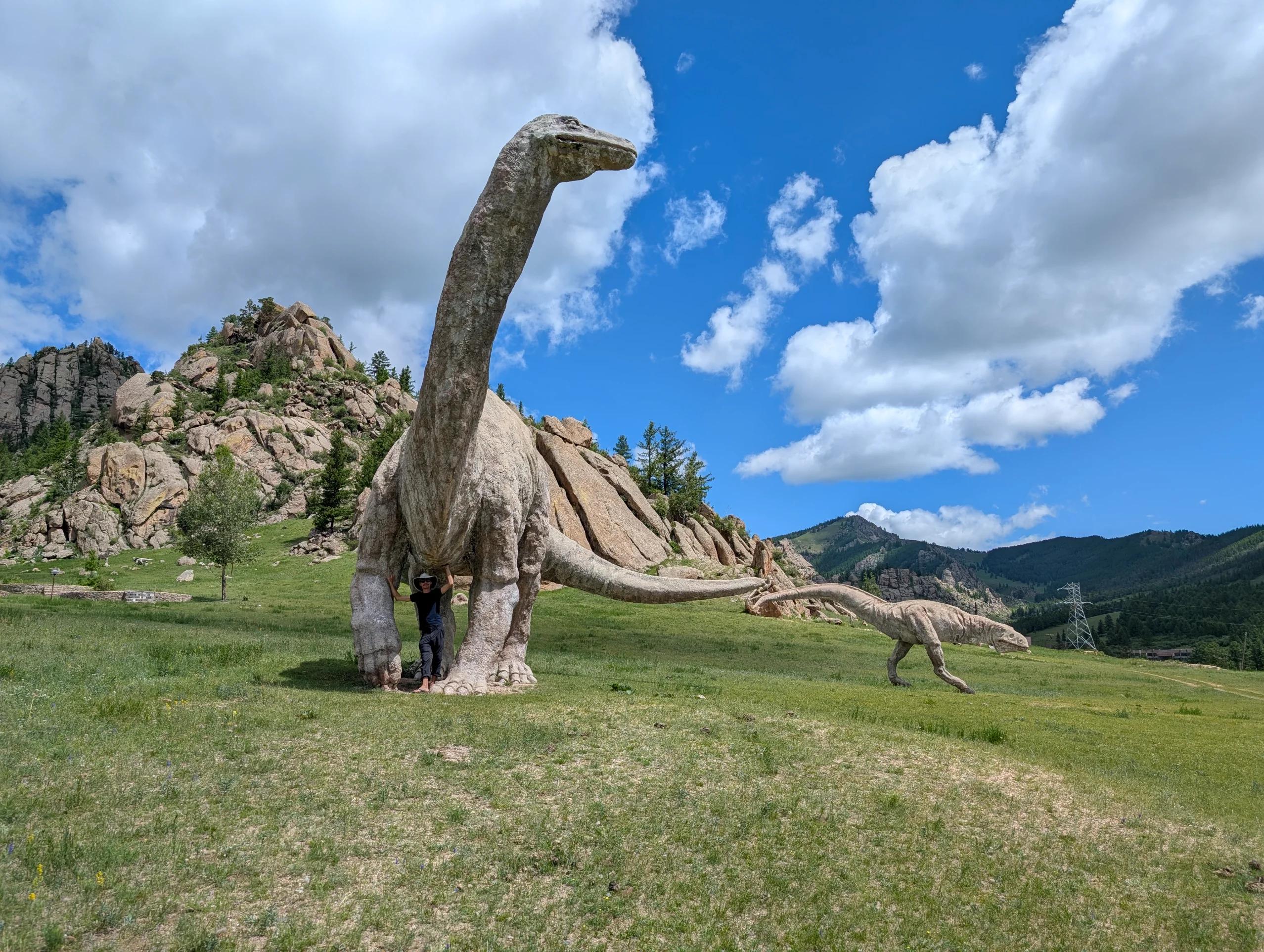
And of course, I always love dinosaurs. They are my family.
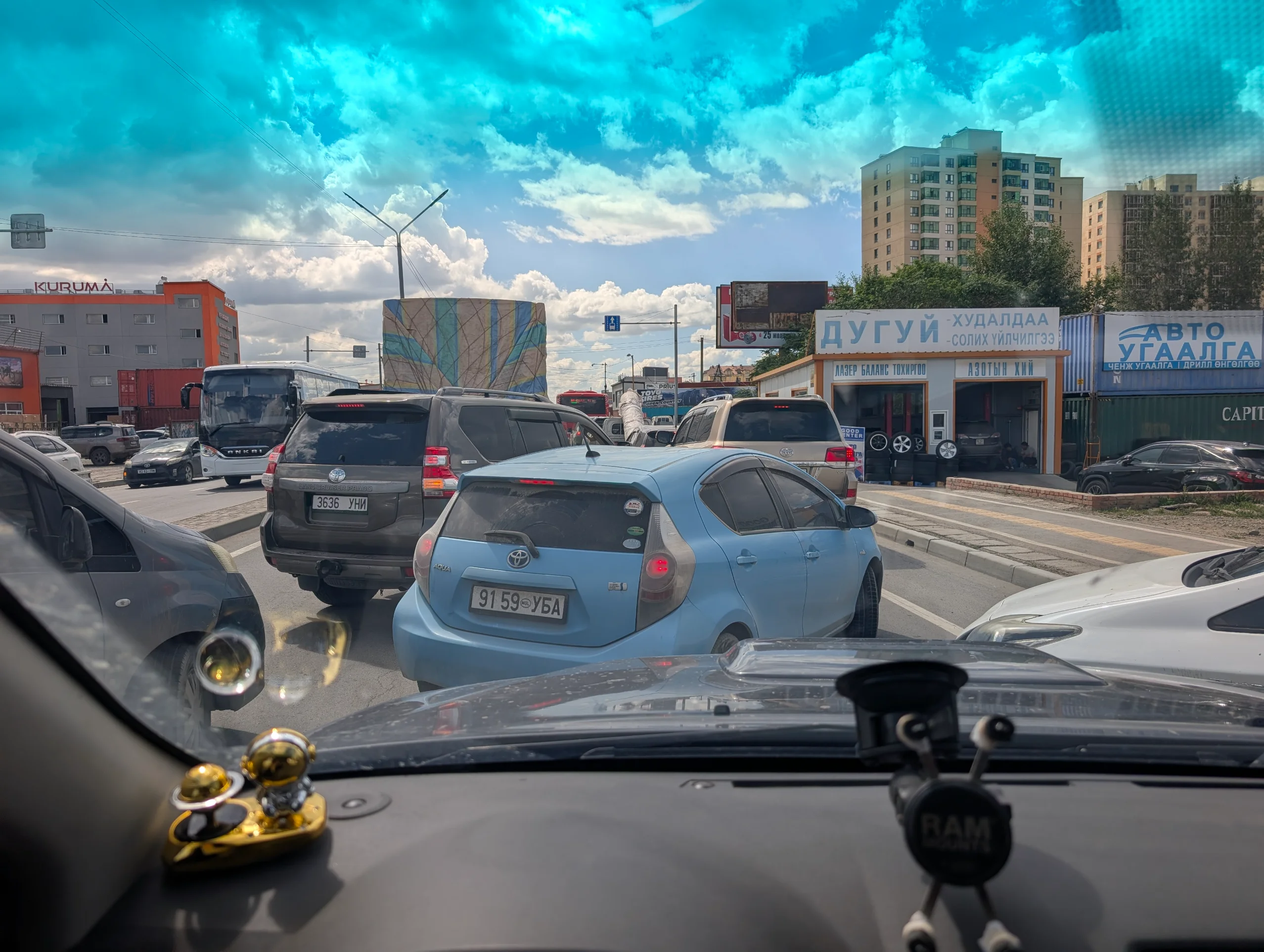
And then we were back in Ulaanbaatar—which had already become one of those places I felt happy about only when leaving it.
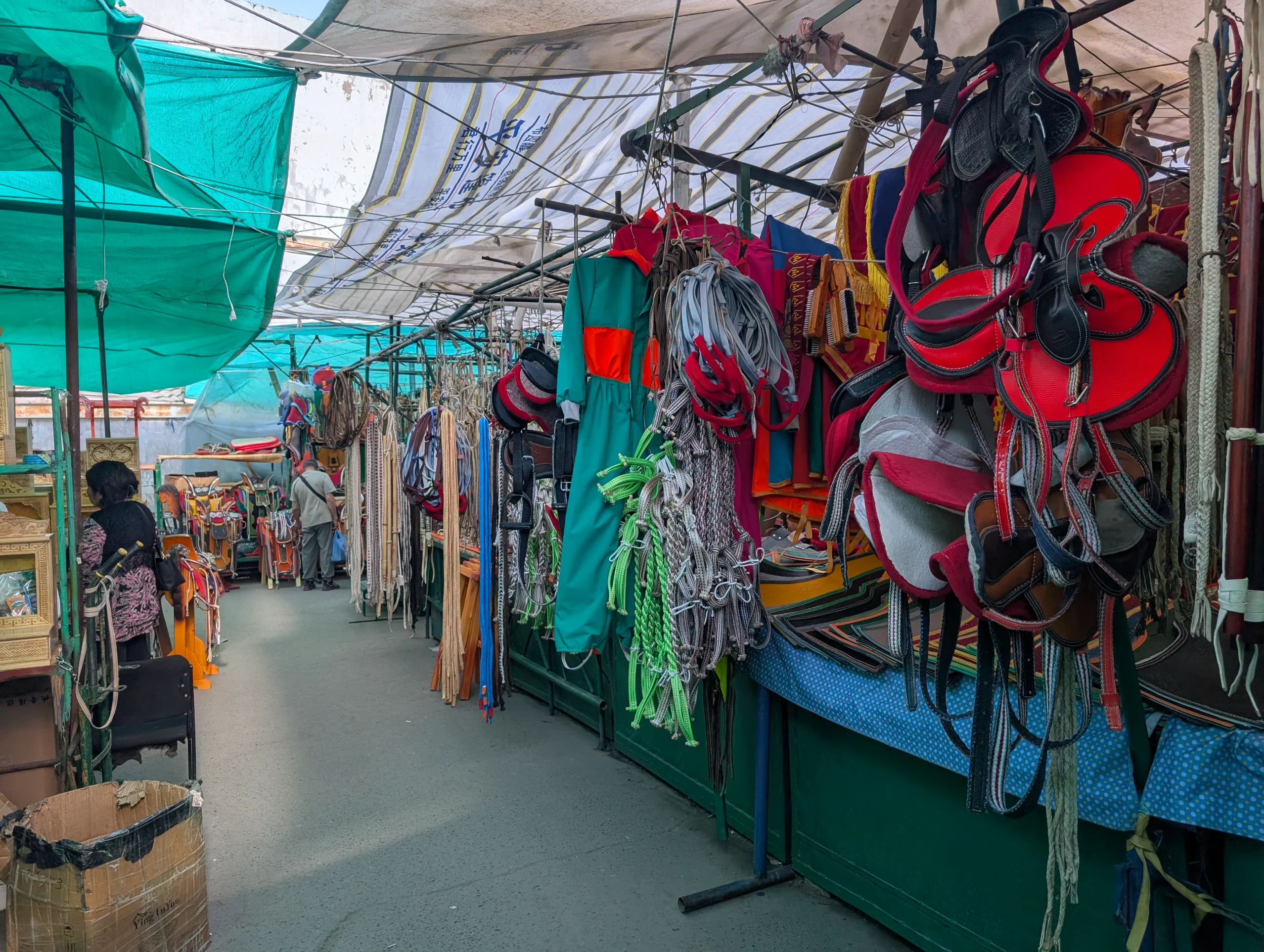
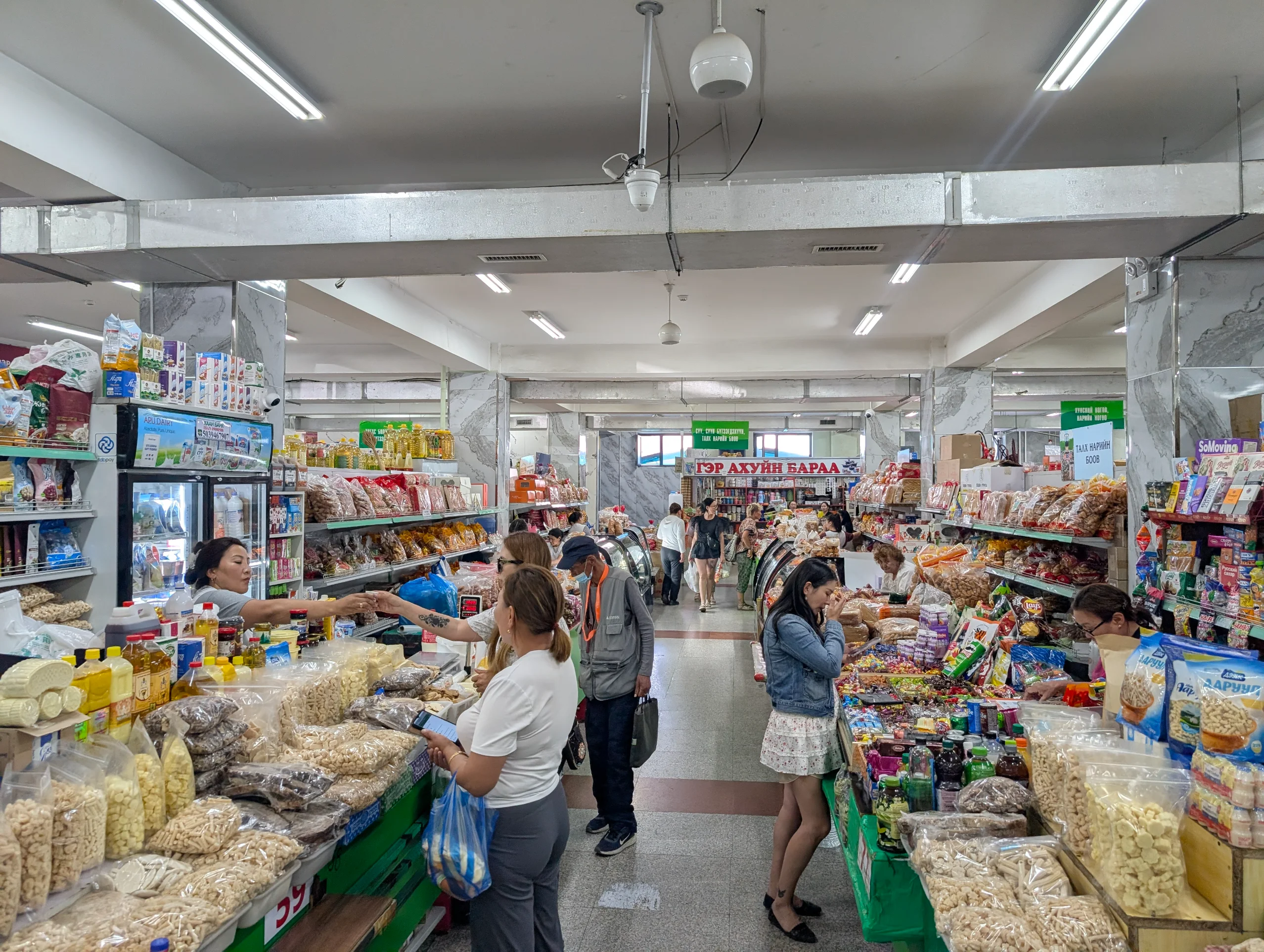
We visited the black market, which was very interesting and super diverse. You could buy anything at that place: horse stuff…
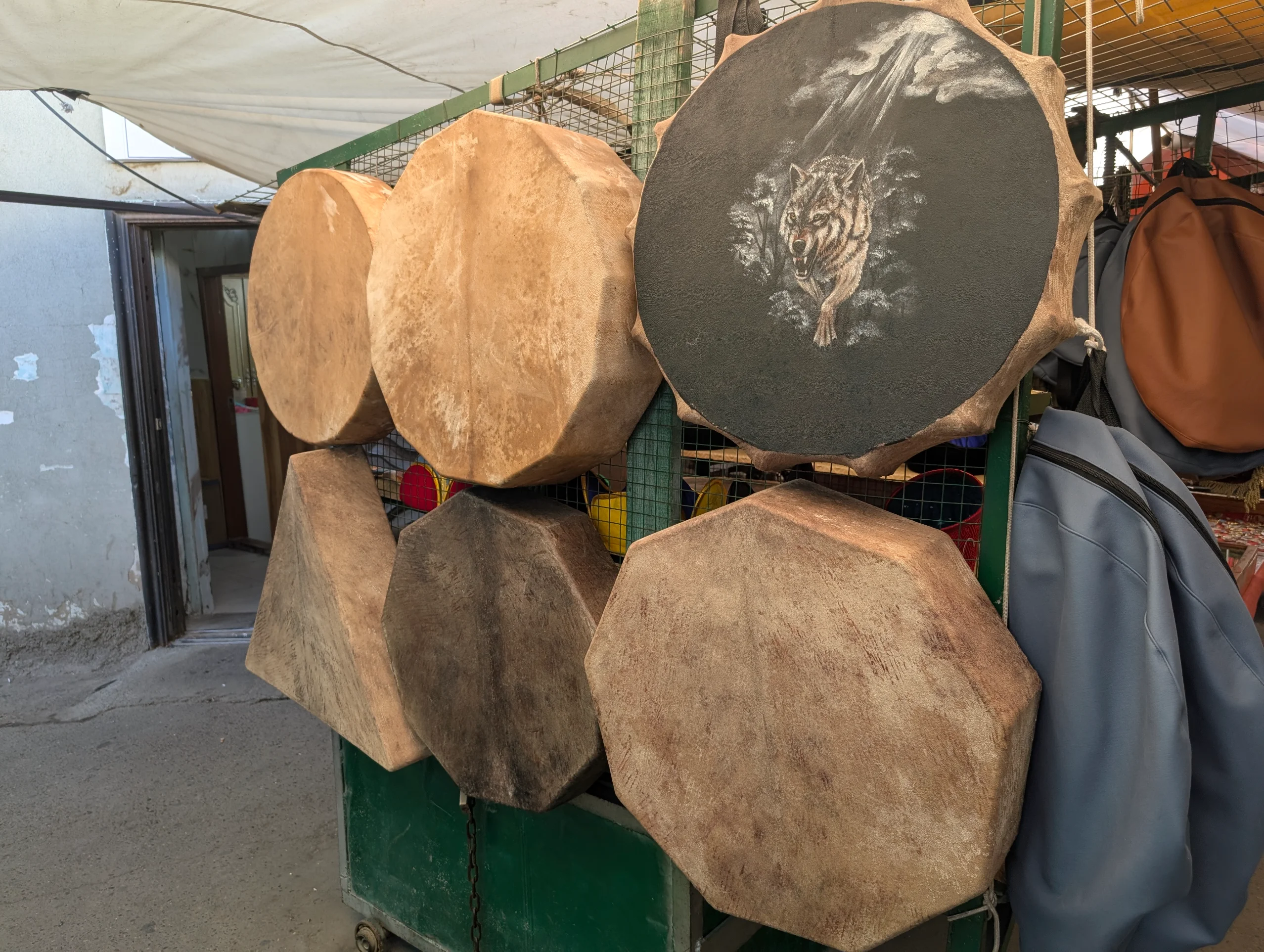
…shamanic stuff…
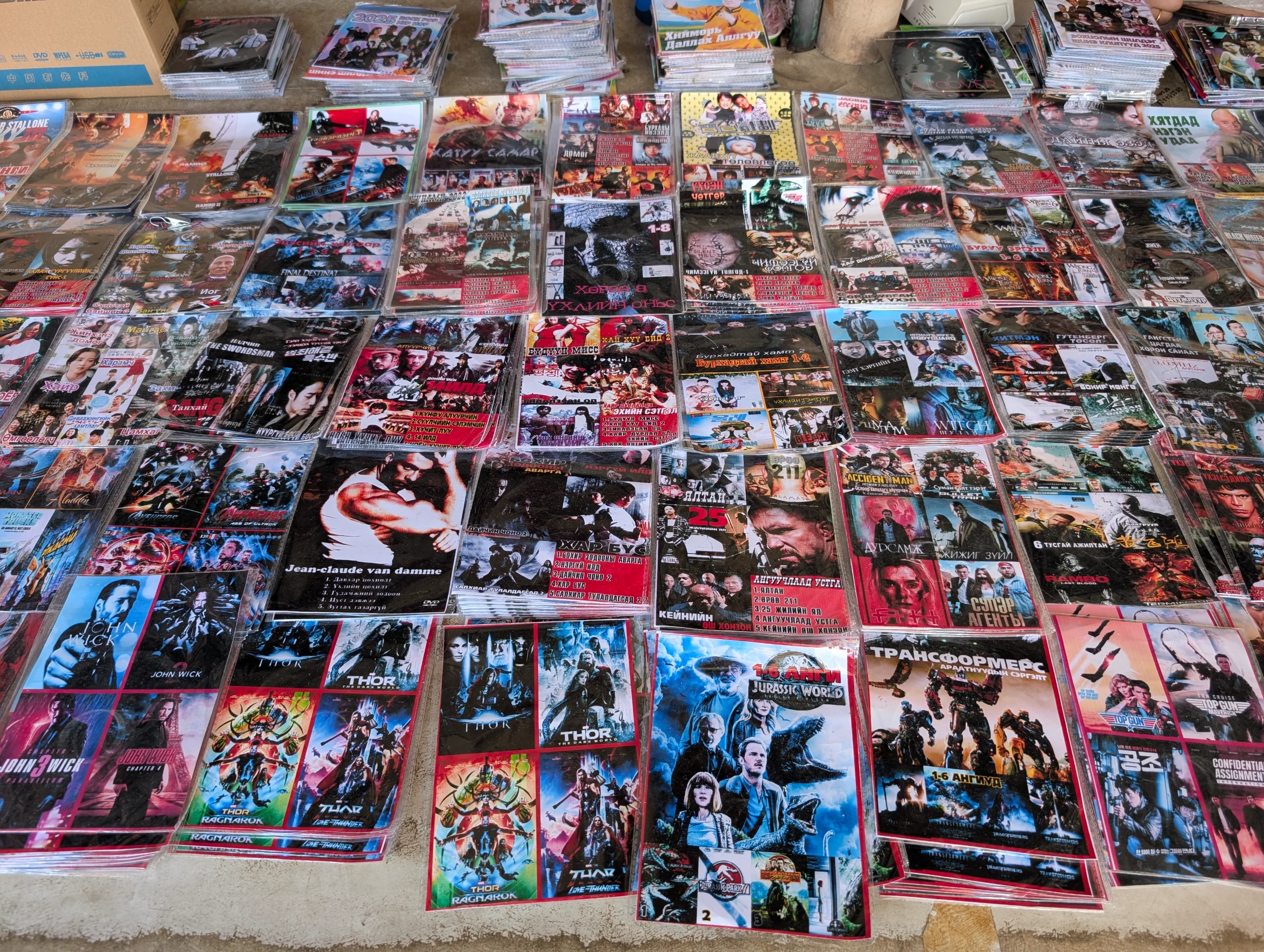
…DVDs, and so much more.
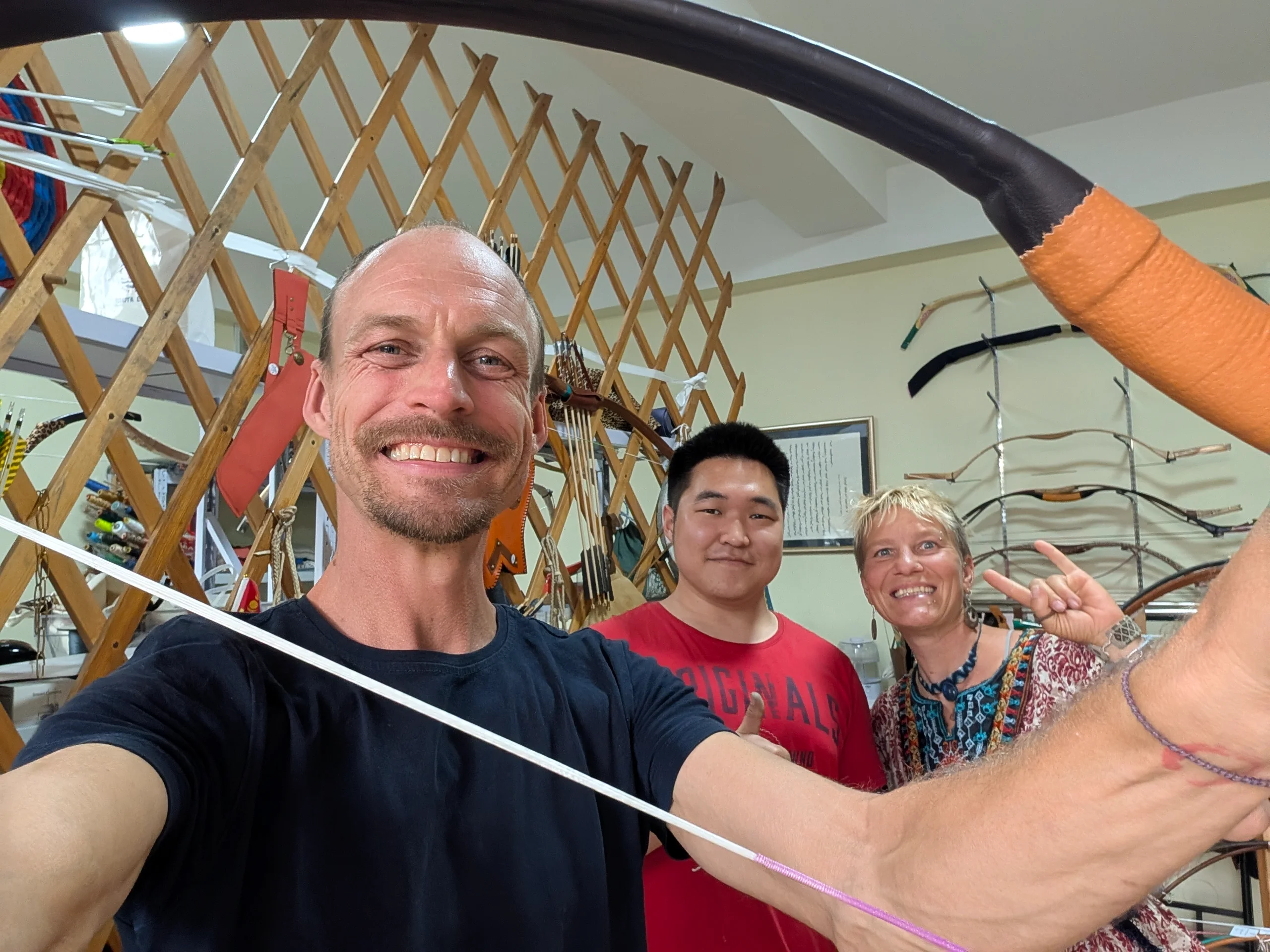
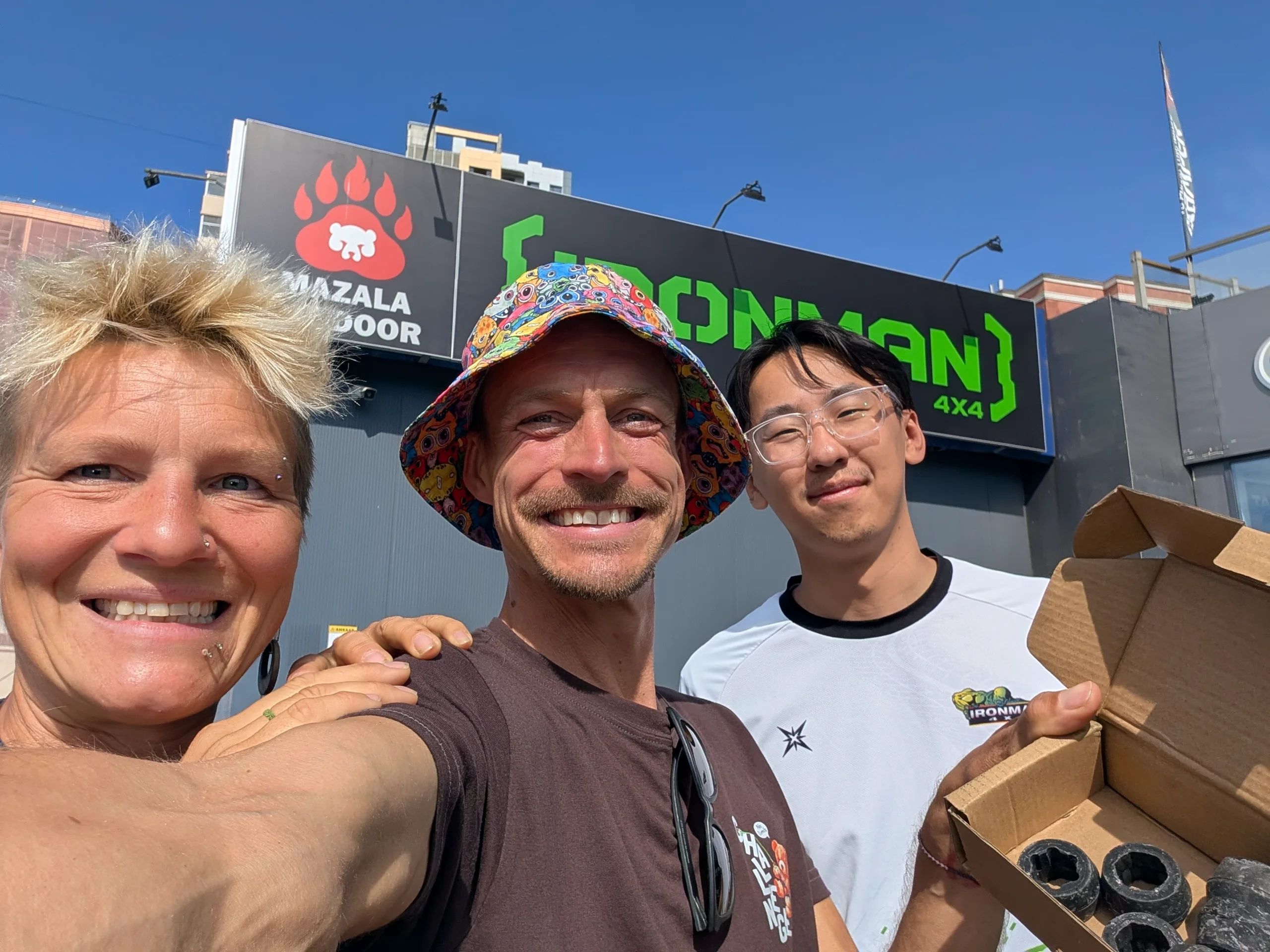
And then Racki and I felt like we deserved something nice. When I found an archery shop on Google Maps, we went to it, and it turned out to be super nice! A great shop with nice, happy, and friendly staff, and handmade Mongolian bows and arrows. So we bought a nice set!
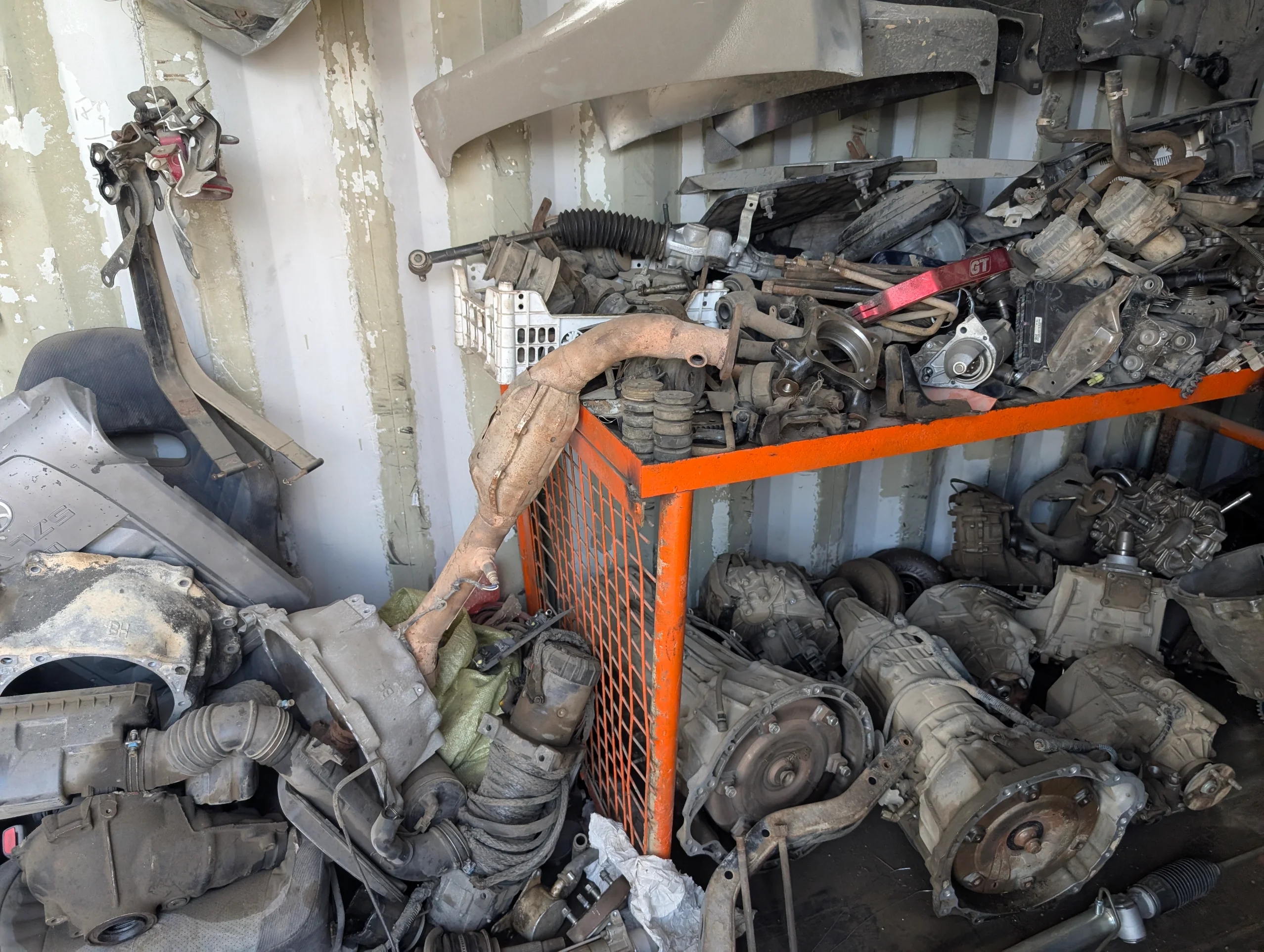
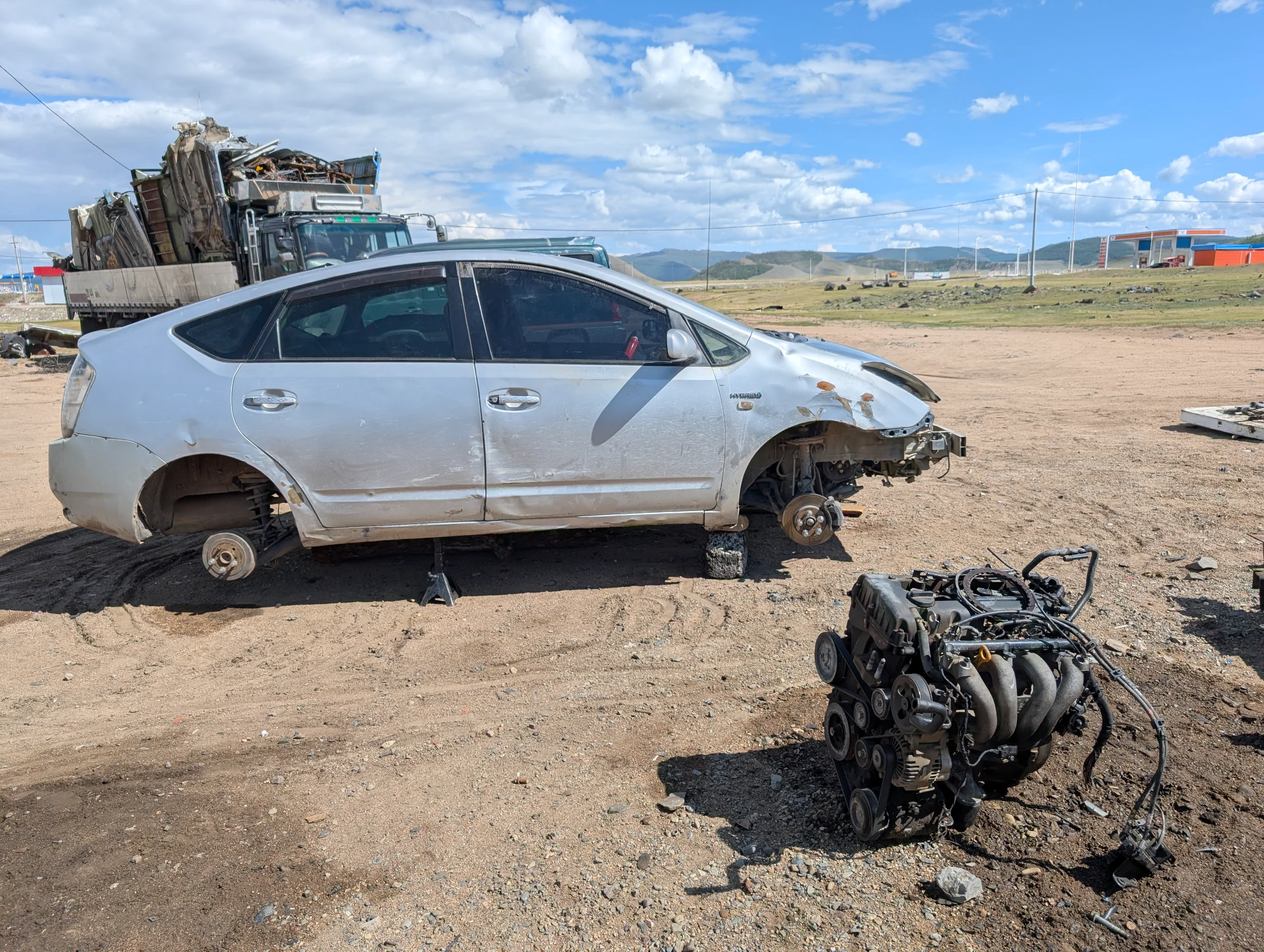
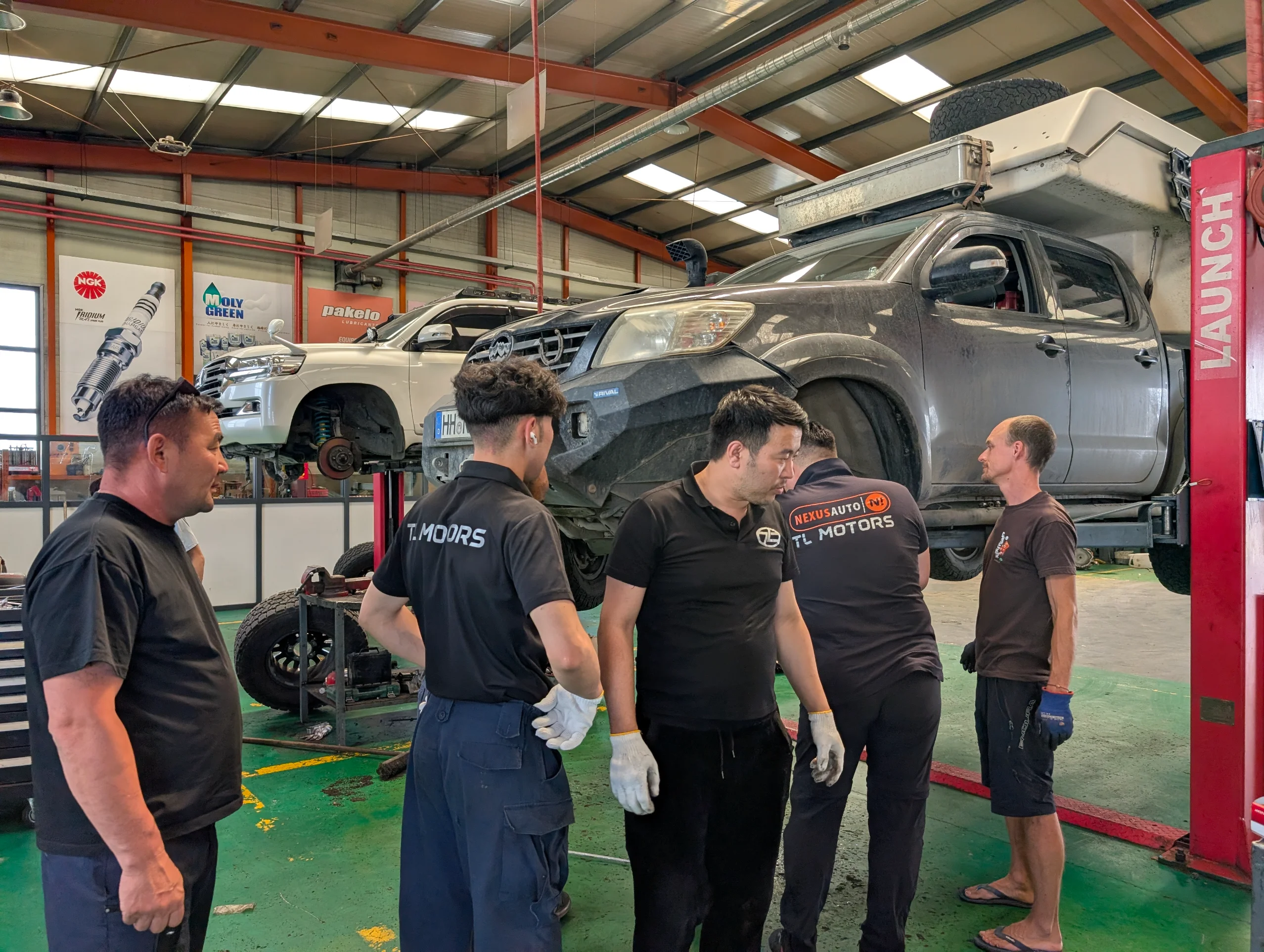
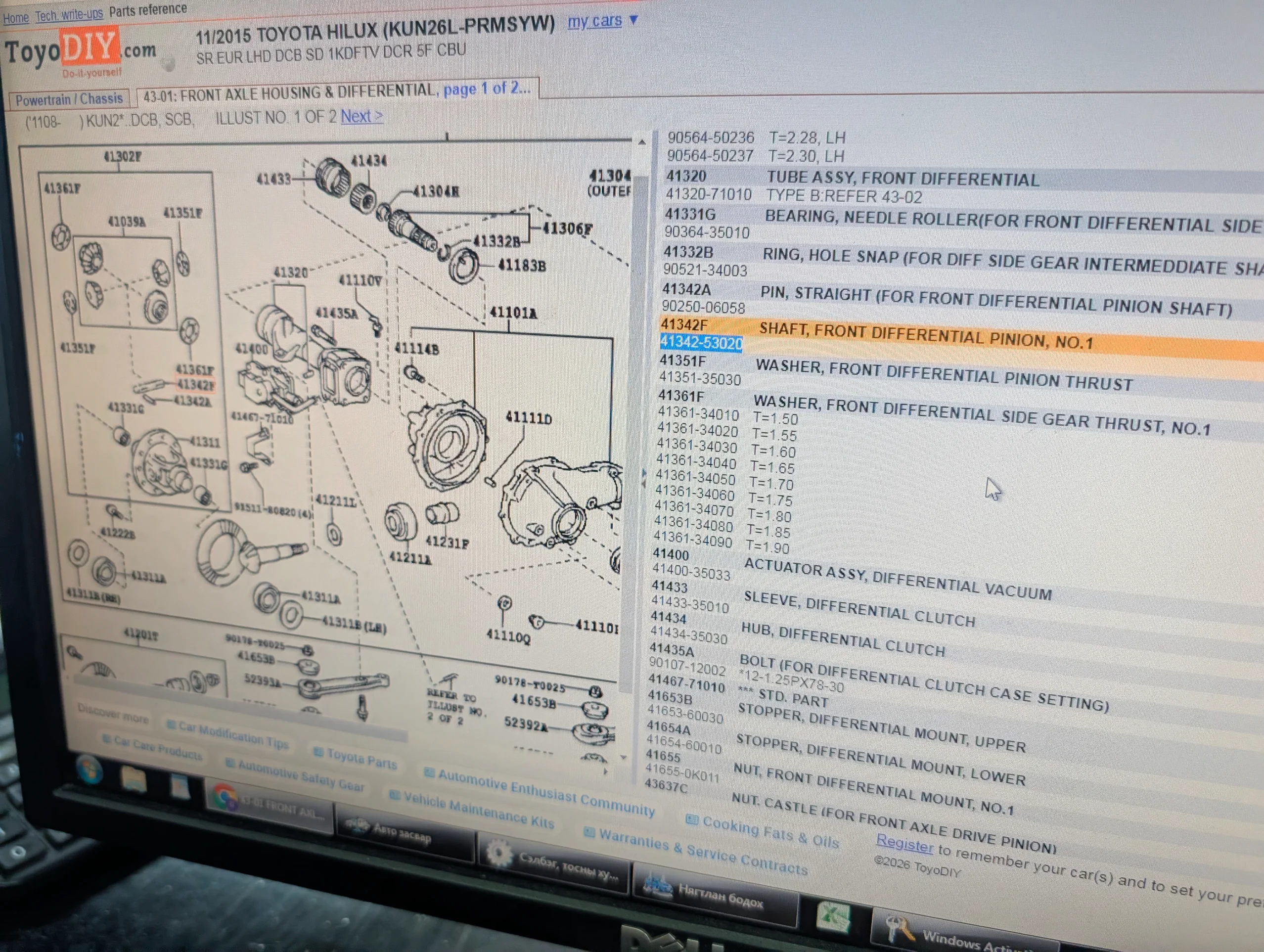
And then we continued dealing with the differential topic! We communicated with and met other mechanics, along with some people who seemed to just want to talk… At one point, we had Rosinante at a garage a friend had recommended. A handful of mechanics checked the issue; all were confident that they would be able to fix it somehow, and all were of the opinion that getting spare parts would take weeks, if it were possible at all. But they were all pretty positive and especially praised the skills of one Russian mechanic on their team. Then the boss of the garage came and told us that he didn’t want a job like this at his garage because nobody knew what the exact problem was, and because of the spare parts situation and the big Naadam Festival that was about to start in a week.
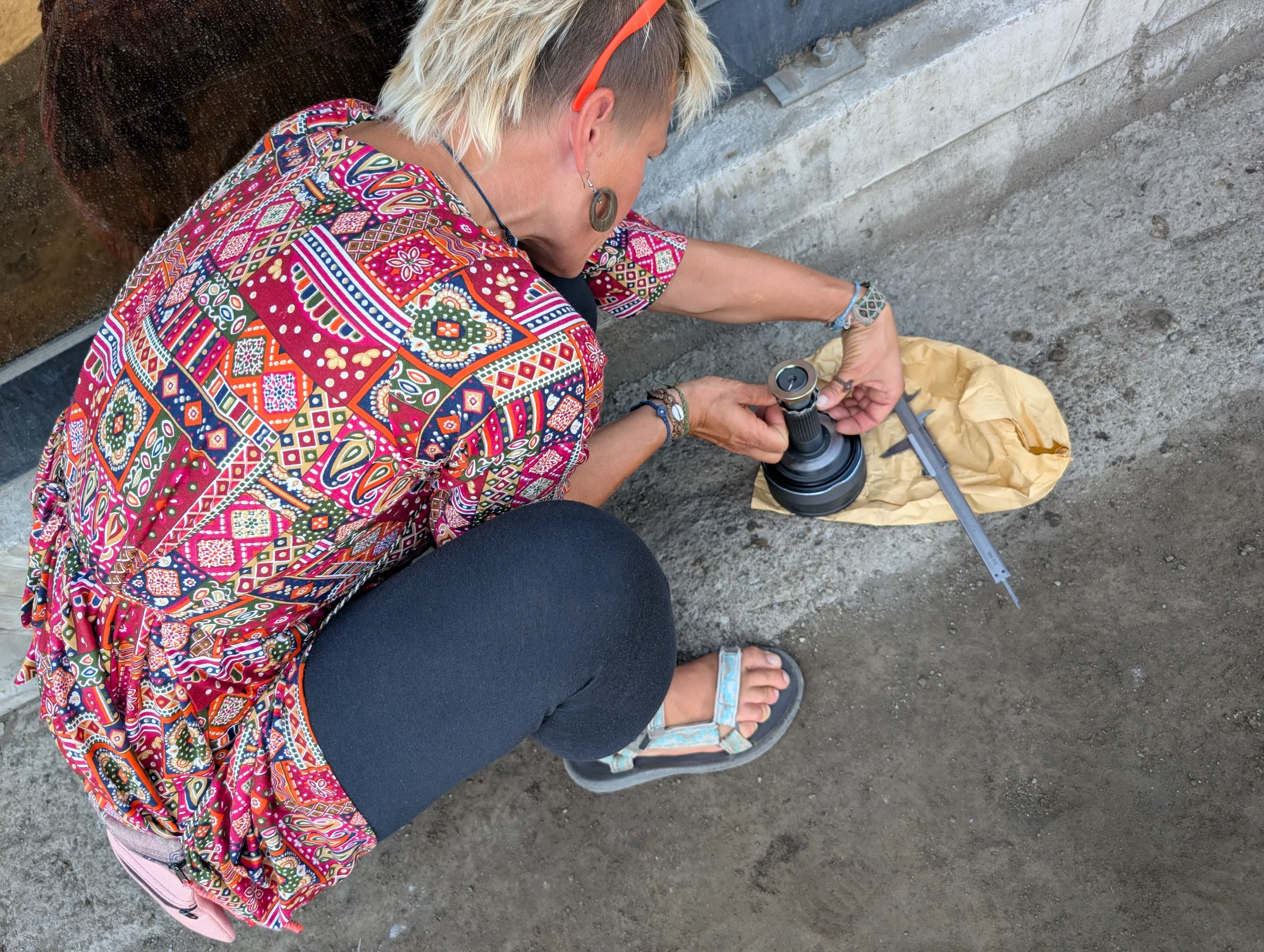
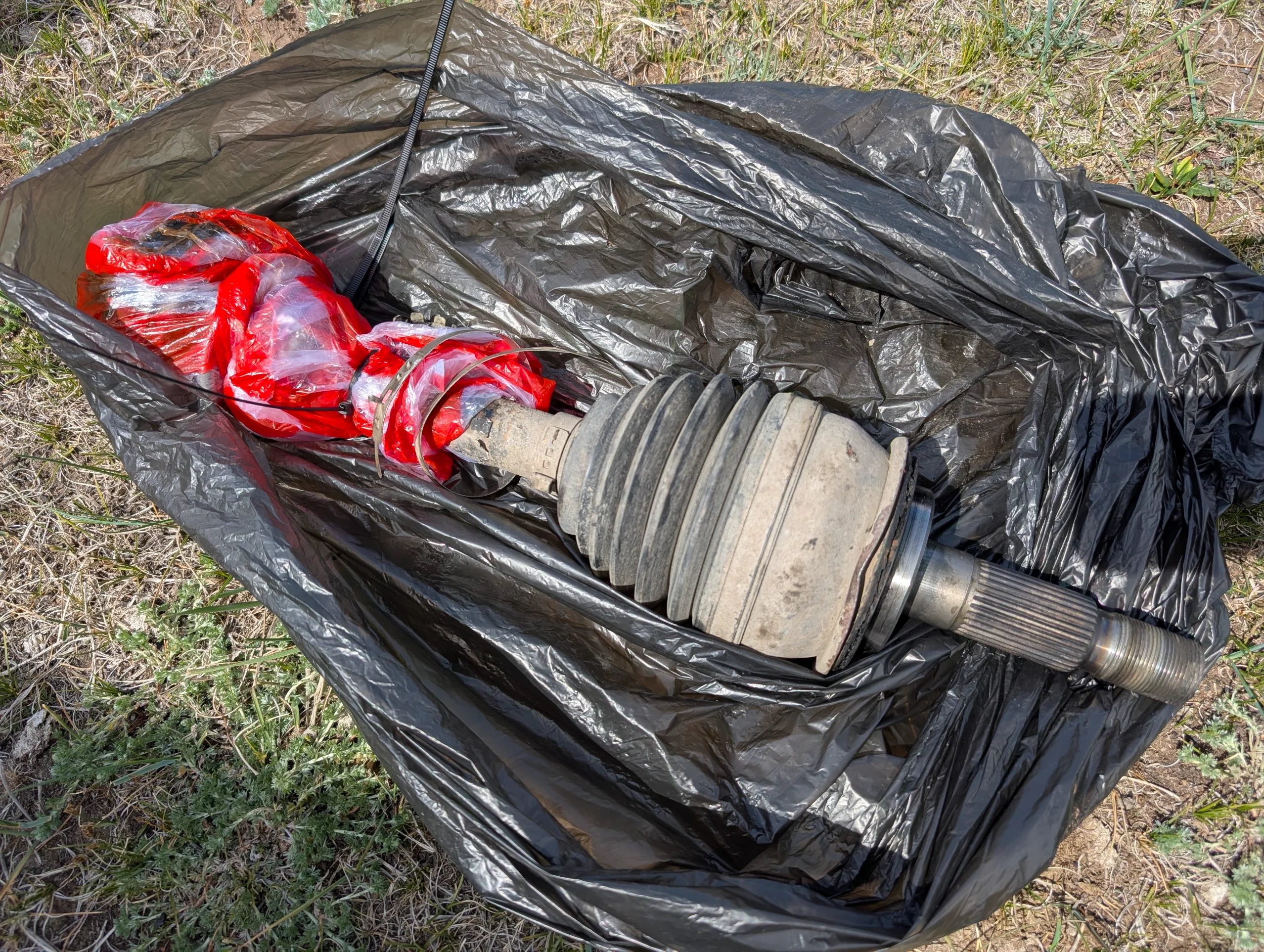
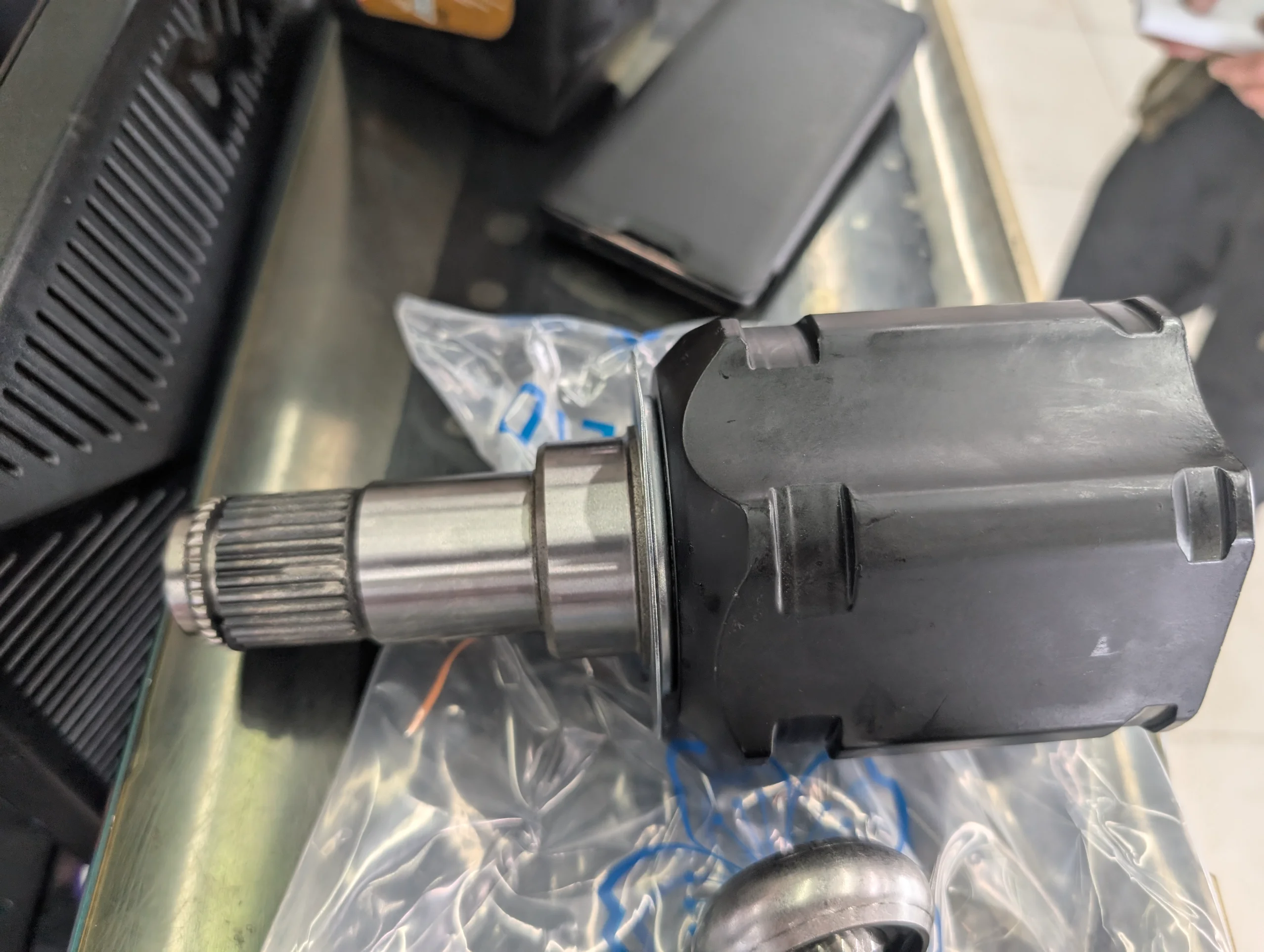
So we decided to not have anything done to Rosinante’s differential anymore! We went to another car garage, and after measuring used parts, they organized a cheap outer CV joint for us. Since nobody knew how bad our differential was, our plan was to take this spare part with us; if the differential got worse, we would use it to detach the side with the play from the wheel in a way that might not kill us.
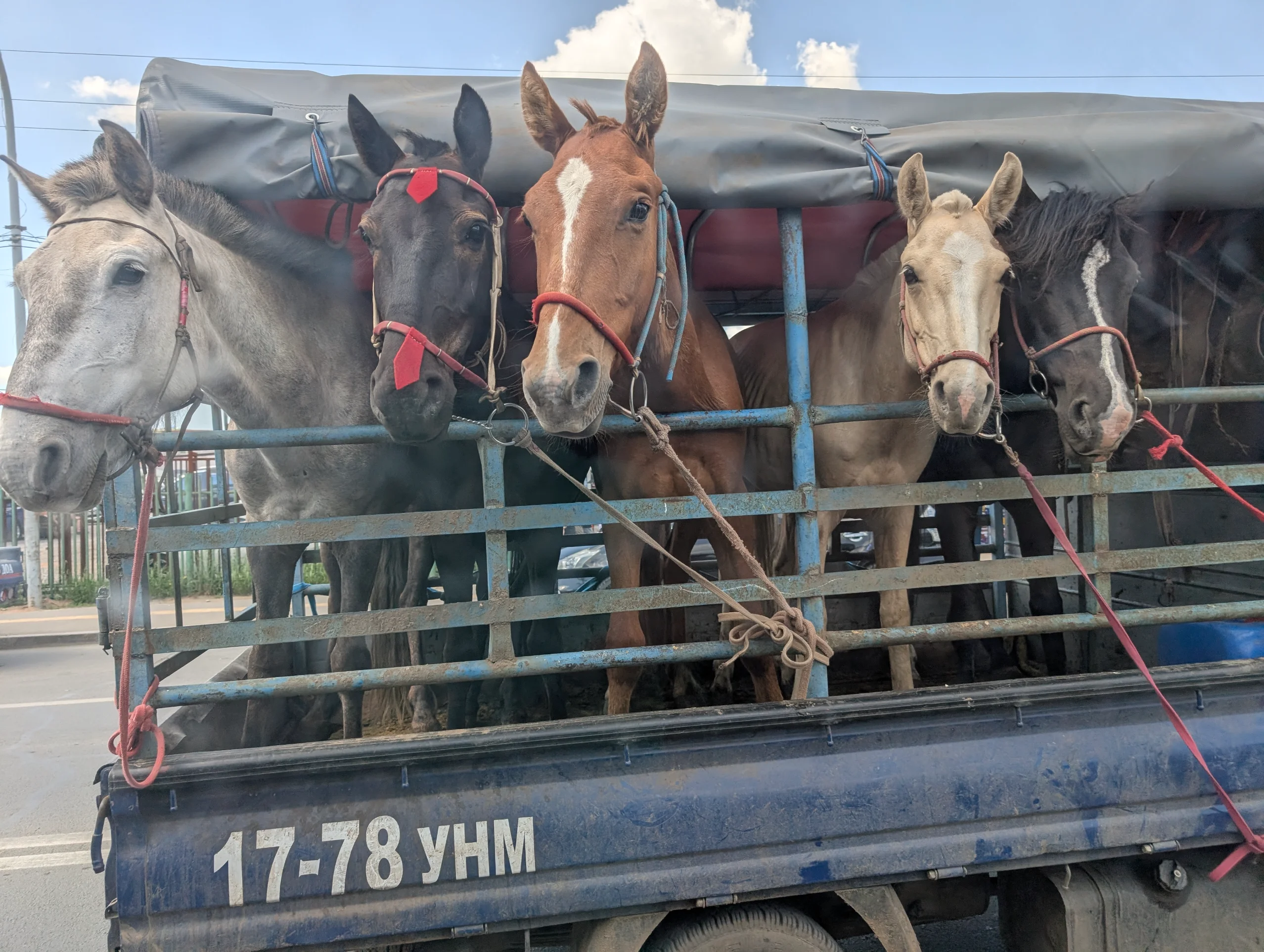
Horses on a mini truck. The nice side of life…
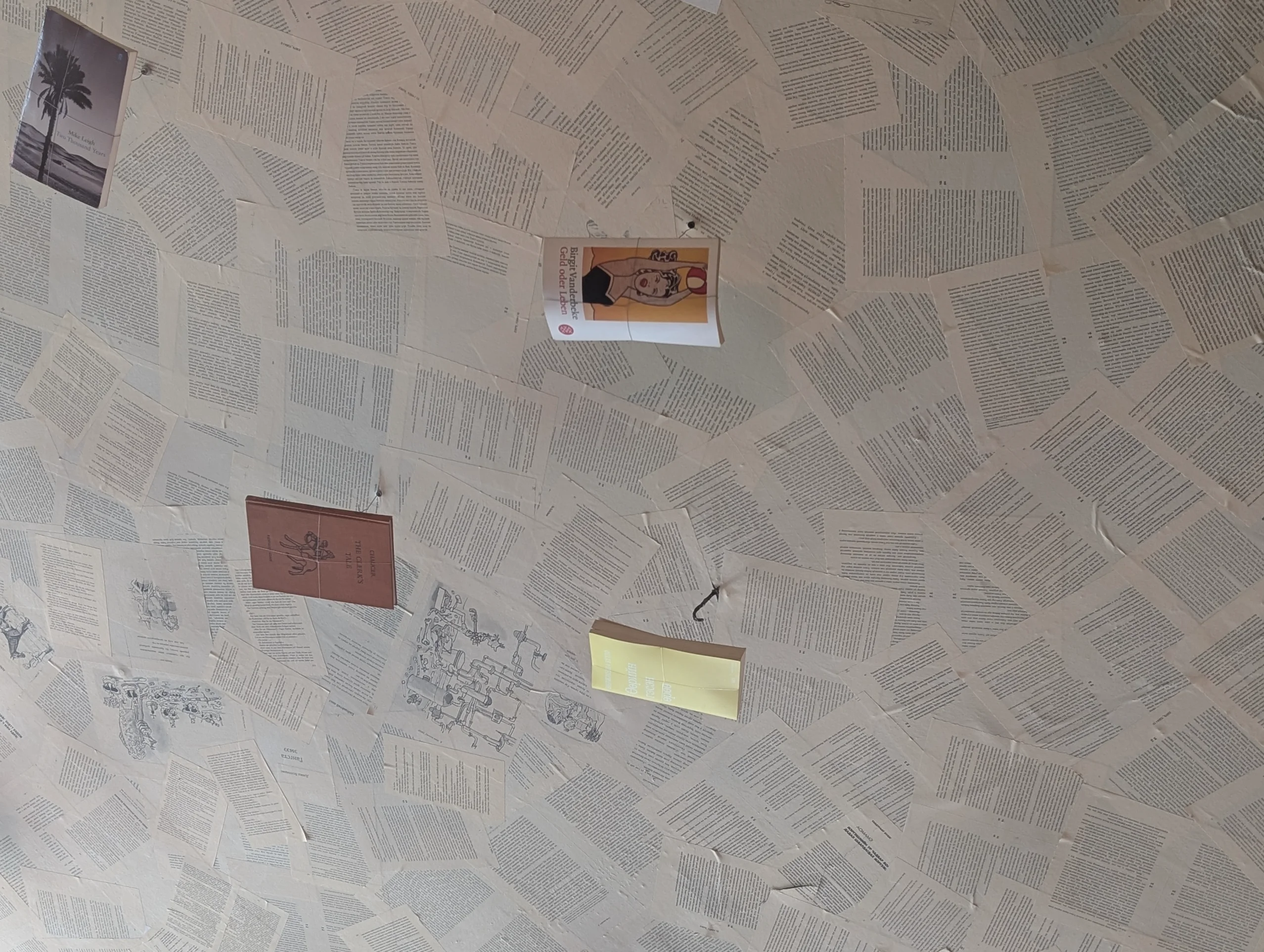
And then it was time to pick up our visas for China from the Chinese consulate in Ulaanbaatar. We had started the process online weeks ago and had paid the fees at a Chinese bank, so the next step was to bring our passports and get our visas. We went to the Chinese consulate and handed the lady at the counter our passports. But instead of telling us to wait a few minutes, she told us that we would be able to pick up our passports next week, after the Naadam Festival.
I personally hoped to leave this city as soon as possible and never come back. And now we had to stay, or spend some more time on shitty Mongolian tracks… I was not happy at all.
Together with our friends Merel and Leon, we spent some time in a coffee shop, but for me it was not easy. All the stress I felt—the differential, Mongolia—and now we would have to return to Ulaanbaatar again…
We went to a good camp spot close to a river where we had stayed before. It was a famous picnic spot for locals, but we had found a nice, calm spot.
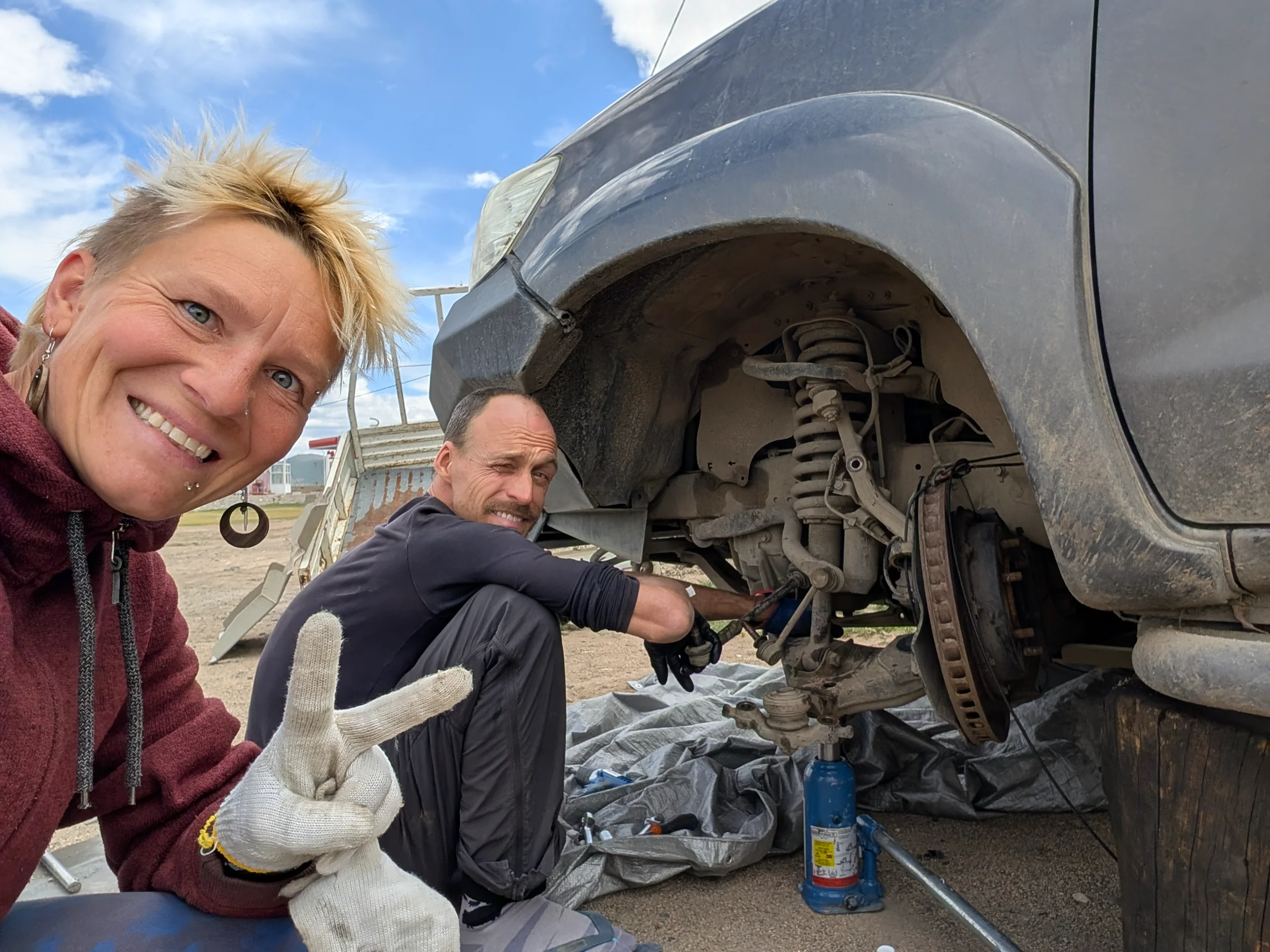
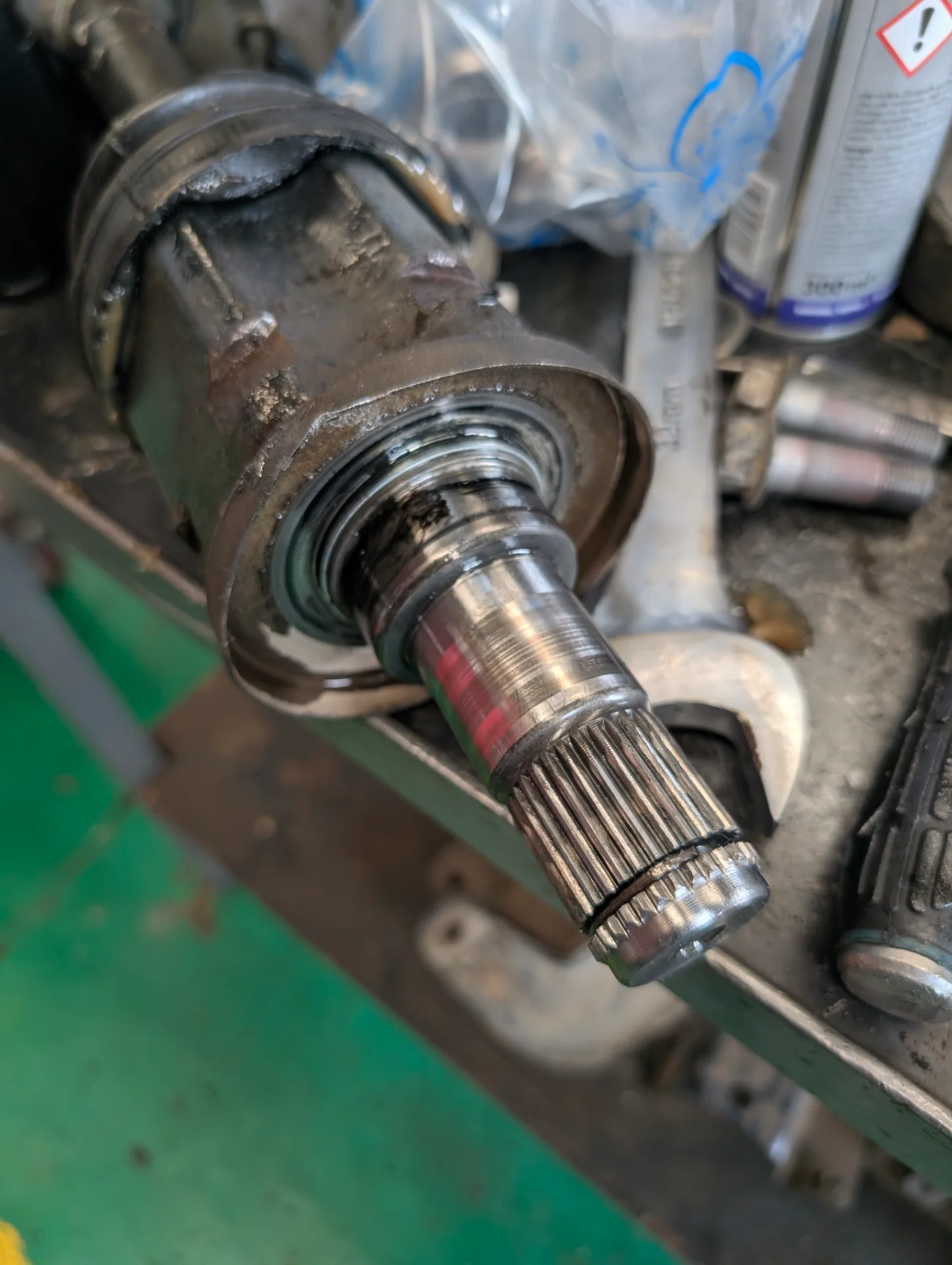
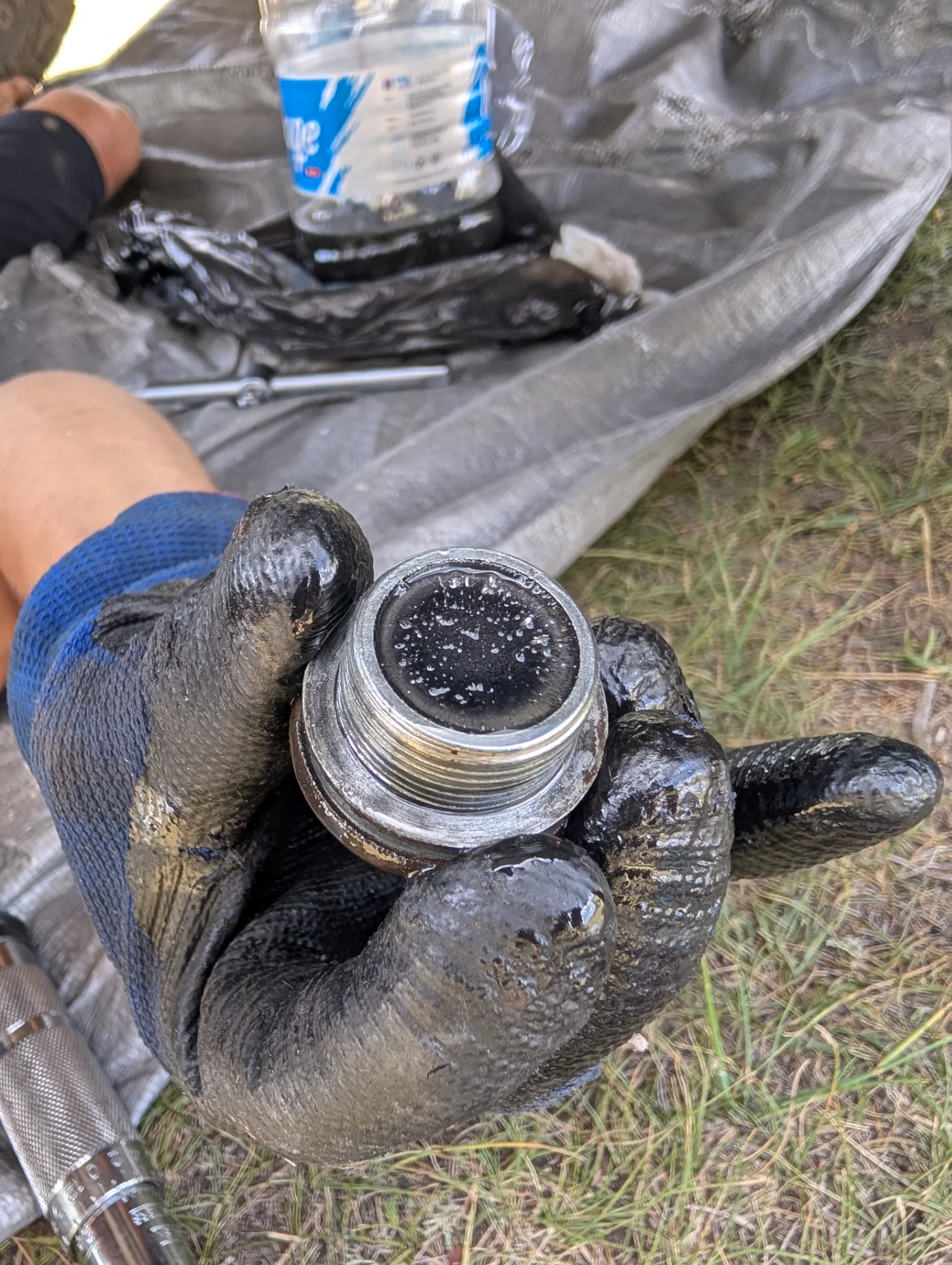
We checked the front differential oil to see if there were a lot of metal pieces in it—something none of the mechanics had done so far.
After encountering an absolutely drunken Mongolian guy who was missing half an ear and bleeding heavily, we…
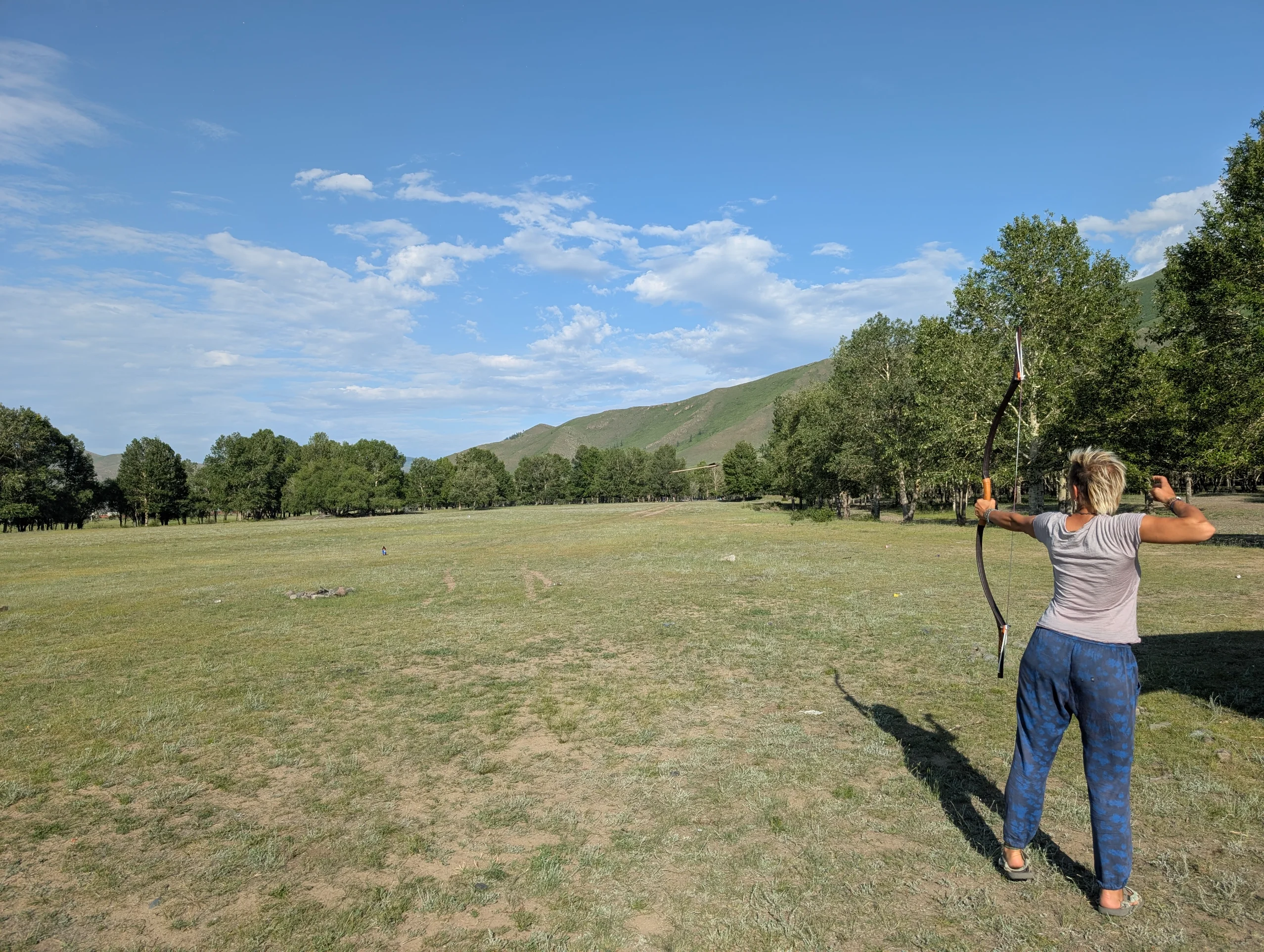
…practiced shooting our bow and fell in love with it instantly. It felt so nice. We were very happy to have David Bowie (the name of the bow) on our team.
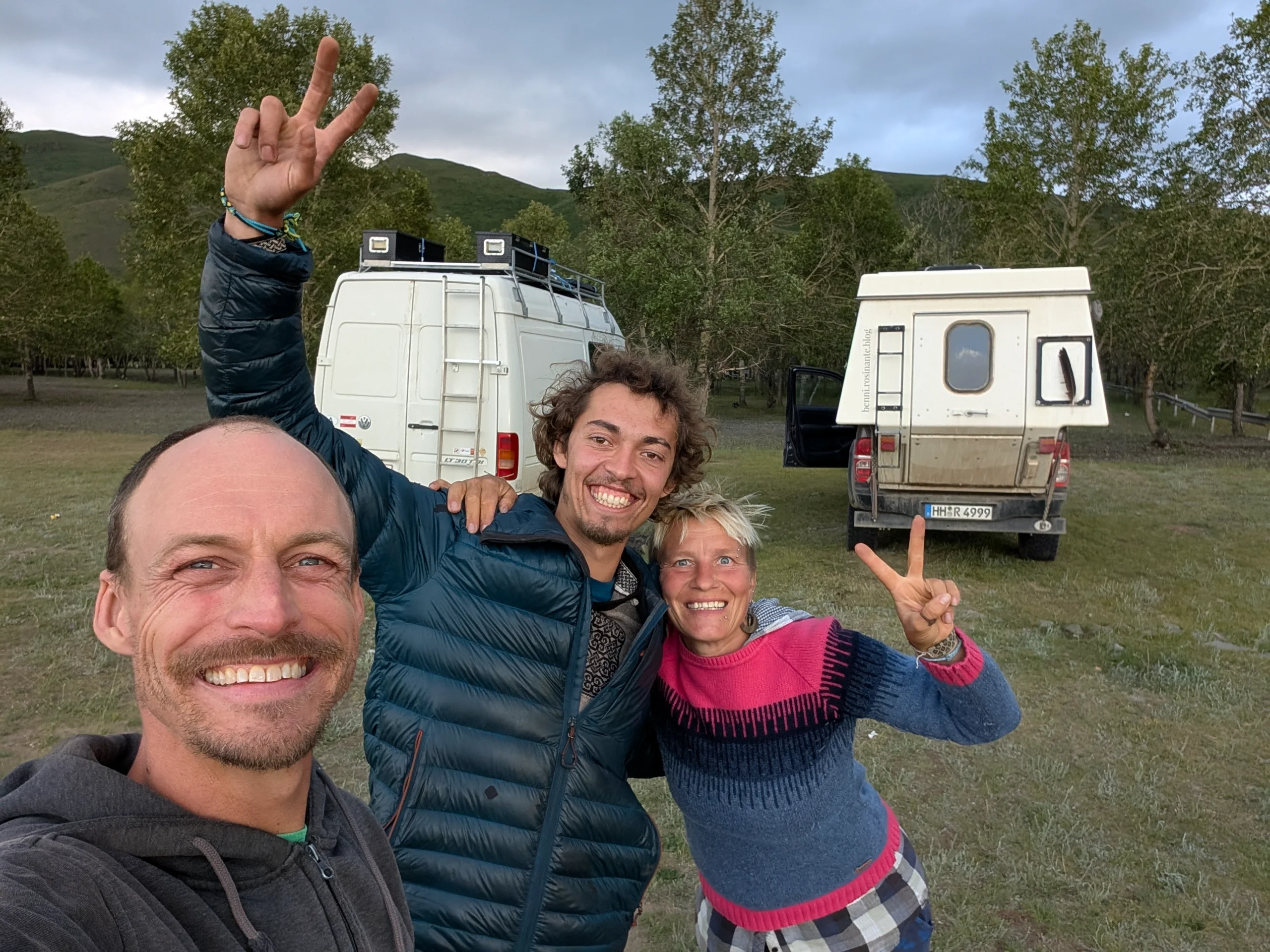
And we met Lucki again! A very good friend whom we had met in Kazakhstan before and who had experienced a lot of car troubles in Mongolia as well. His stories were much more dramatic than ours: engine failure, and after months of organizing and repairing the car in Mongolia, his girlfriend went too fast on a Mongolian track and broke the car again.
But he was a very skilled mechanic and did everything on his own. We asked him to check our front differential, and he said he would be worried if it were his car. But Racki and I stuck with our decision to have nothing done in Mongolia, hoping for a better spare parts situation in Laos, since we had heard that there were no Hiluxes in China.
And Luki told us that the very skilled Russian mechanic from one of the garages where we had been got arrested in Russia while trying a border run to reset his visa days. So we were even happier that we didn’t have that garage open our front differential.
We had a nice day with Lucki, and then finally, we left Ulaanbaatar again, only to return in a couple of weeks…