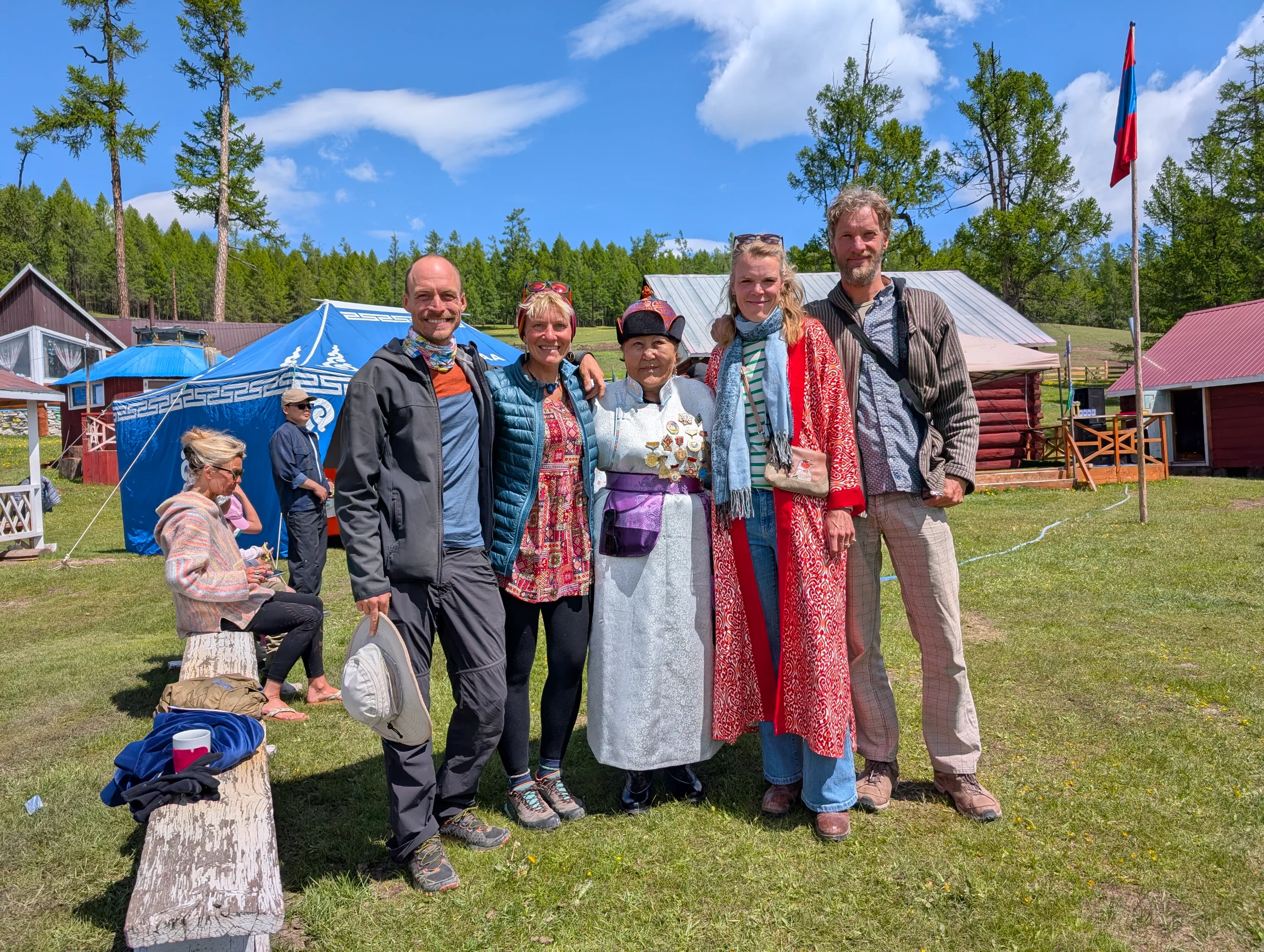
After we’d brought our friend Zdenko to the bus station of Murun, we returned to the west shore of Khuvsgul Lake to join the Shaman festival. When we arrived at the festival, there was not much going on, but we were patient and slowly things started to happen. We met again with one of the oldest active shamans in Mongolia who has a long shamanic lineage. For the festival, she wore lots of medals on her dress.
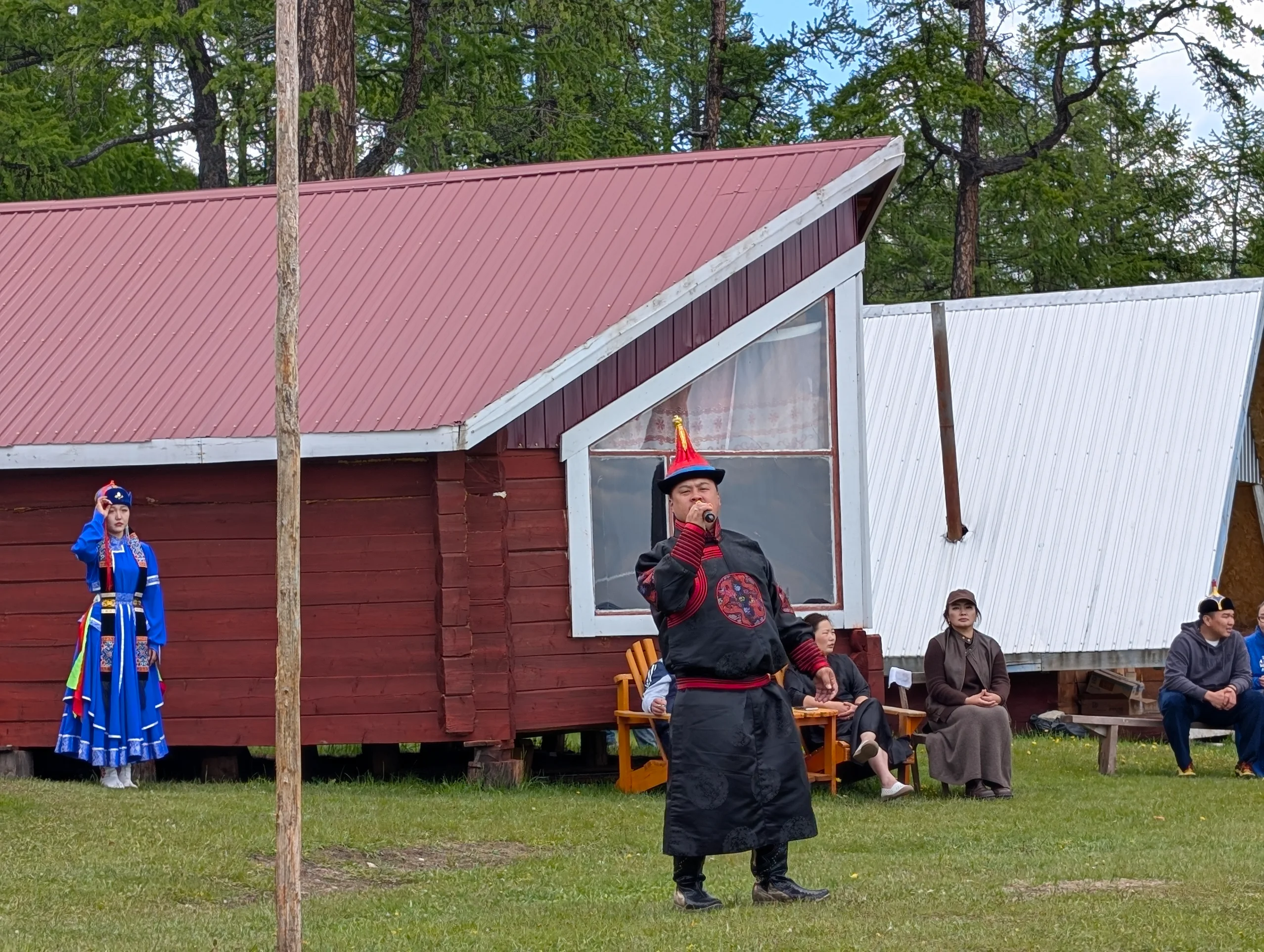
There was a lot to see and hear. Singers…
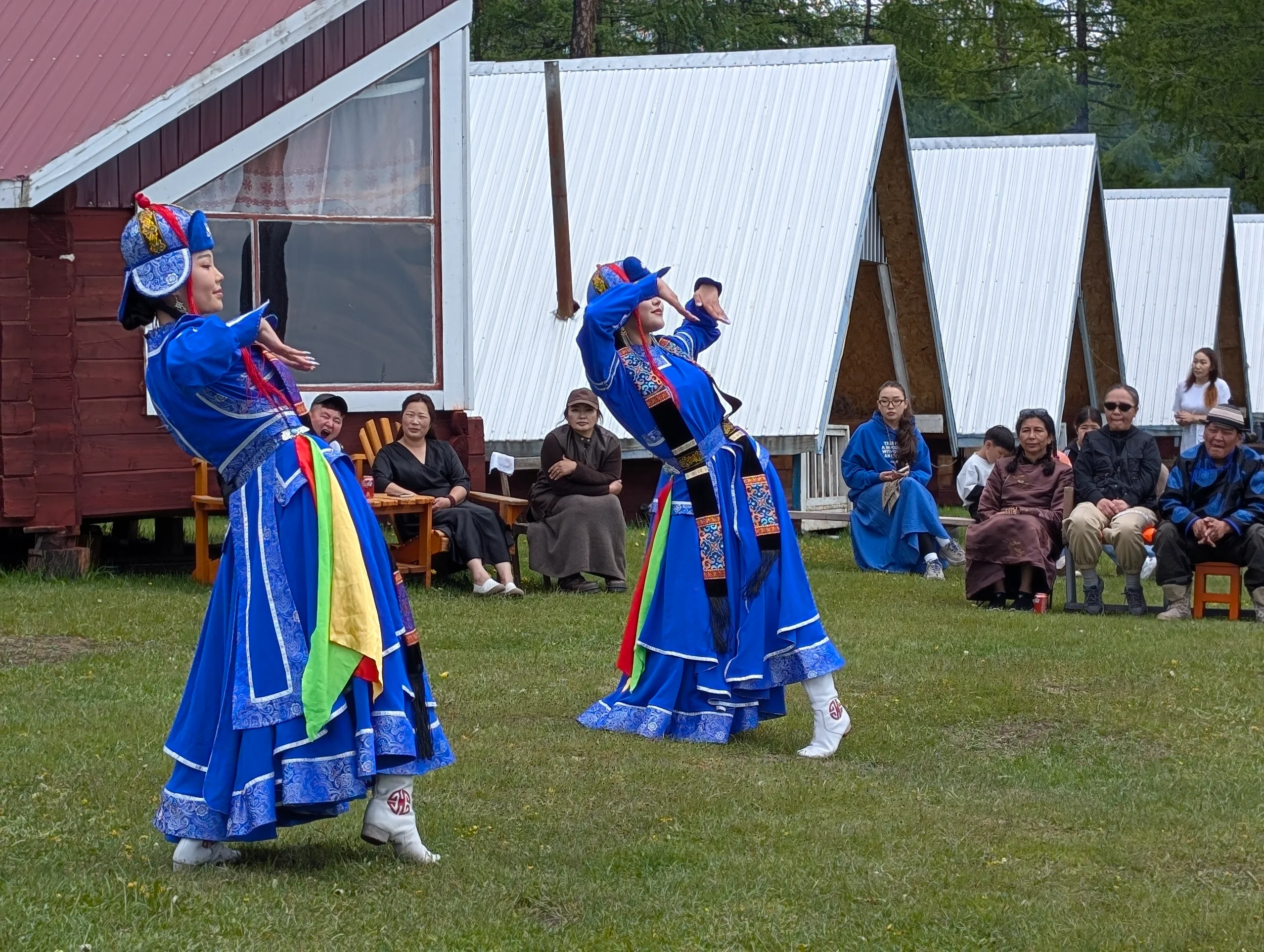
…dancers…
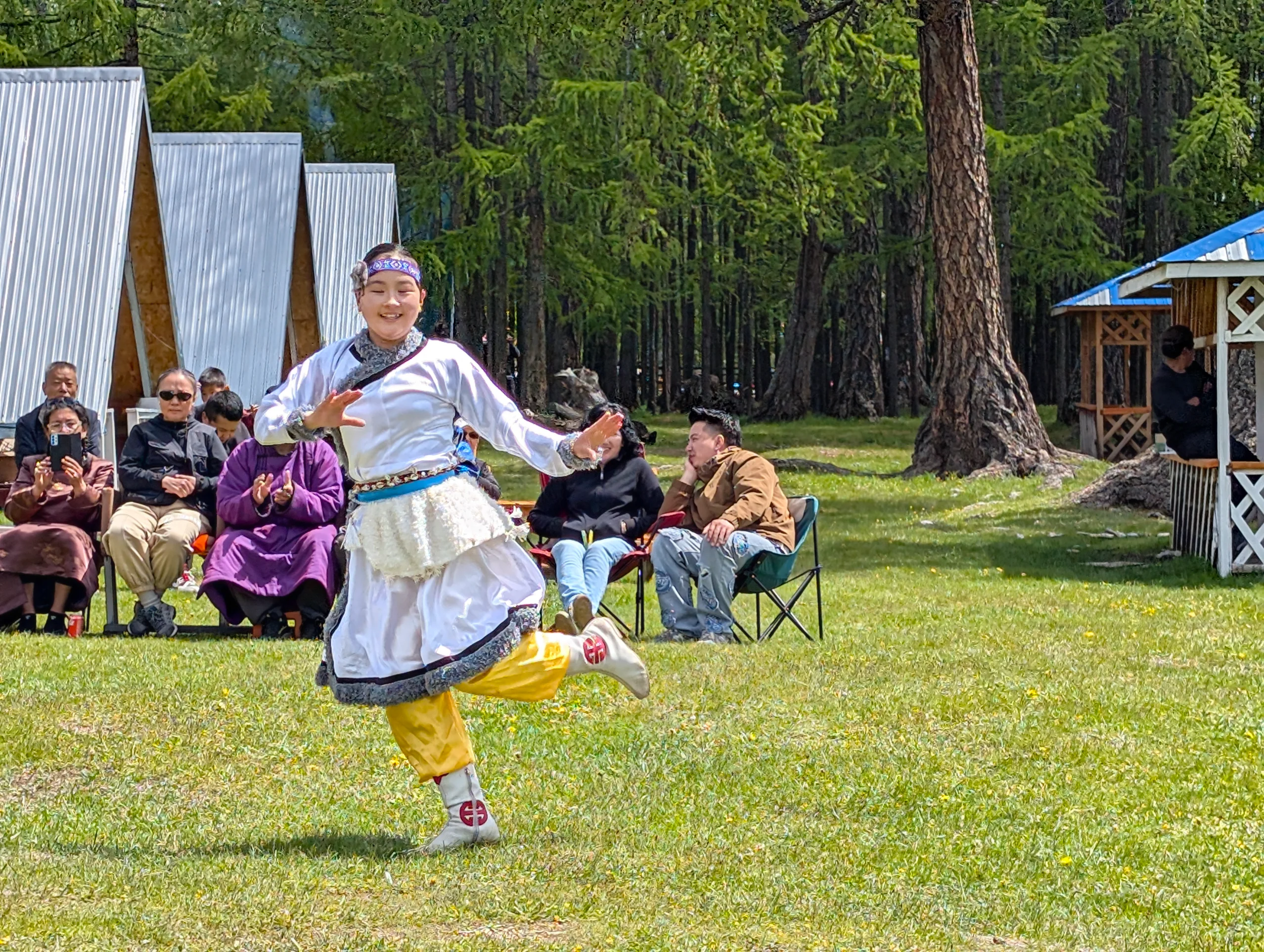
…having fun and giving a nice and interesting performance.
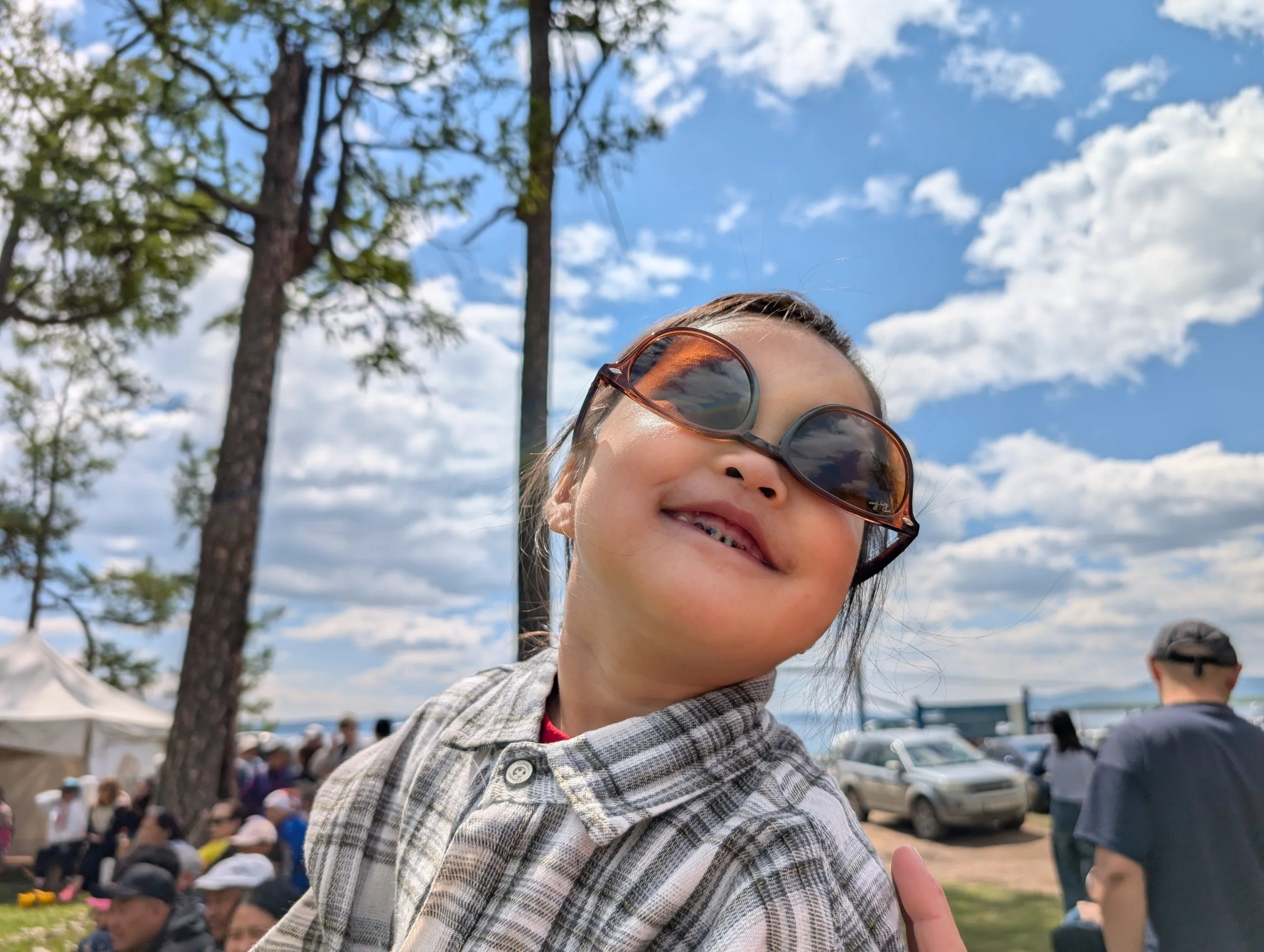
We talked a bit with the locals and had a good time witnessing the Mongolian festivities.
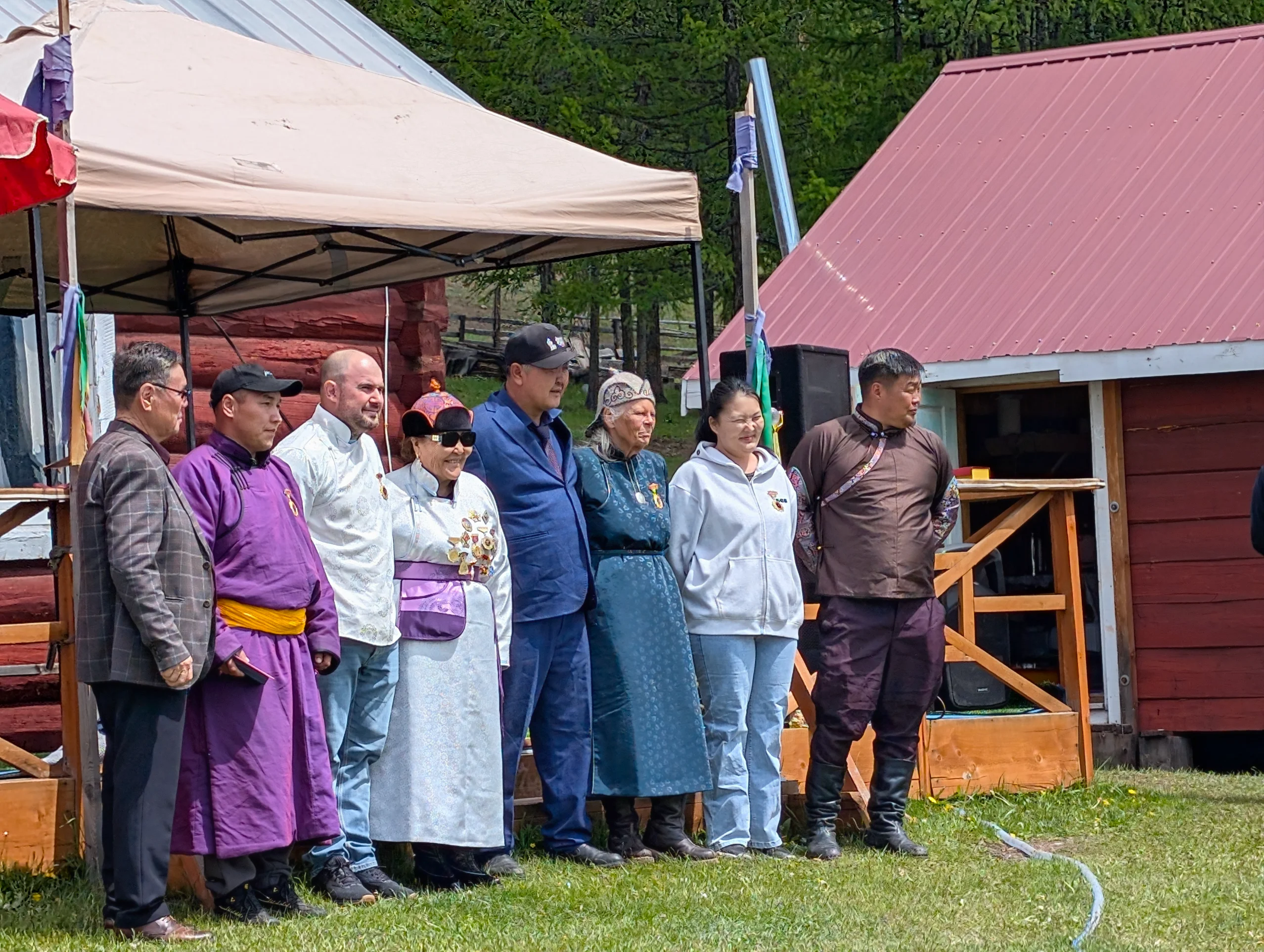
There were a lot of speeches in which locals and foreigners were praised and thanked. The elderly woman with the grey hat was from Switzerland and was one of the first foreigners who had met the shamans at Khuvsgul Lake decades ago. Back then, she had followed a vision which led her to the shaman people.
A lot had changed since then, and it was interesting to learn about the history of these people. Since the Swiss lady had been with the shamans, she had become a student and gotten into the shamanic rituals, beliefs, etc. Before that, she had already been with the natives of North America for years.
About thirty years ago, there had been no artificially produced stuff in that region around Khuvsgul Lake. The locals produced and manufactured everything on their own. No plastic, no materials that would not rot. When plastic arrived, the locals did not know anything about it, and the Swiss lady had a hard time explaining to them that plastic would never rot. The locals could not understand that at all, and only when she told them that plastic would hurt their horses did the locals understand, take it seriously, and mostly stop throwing plastic into the environment.
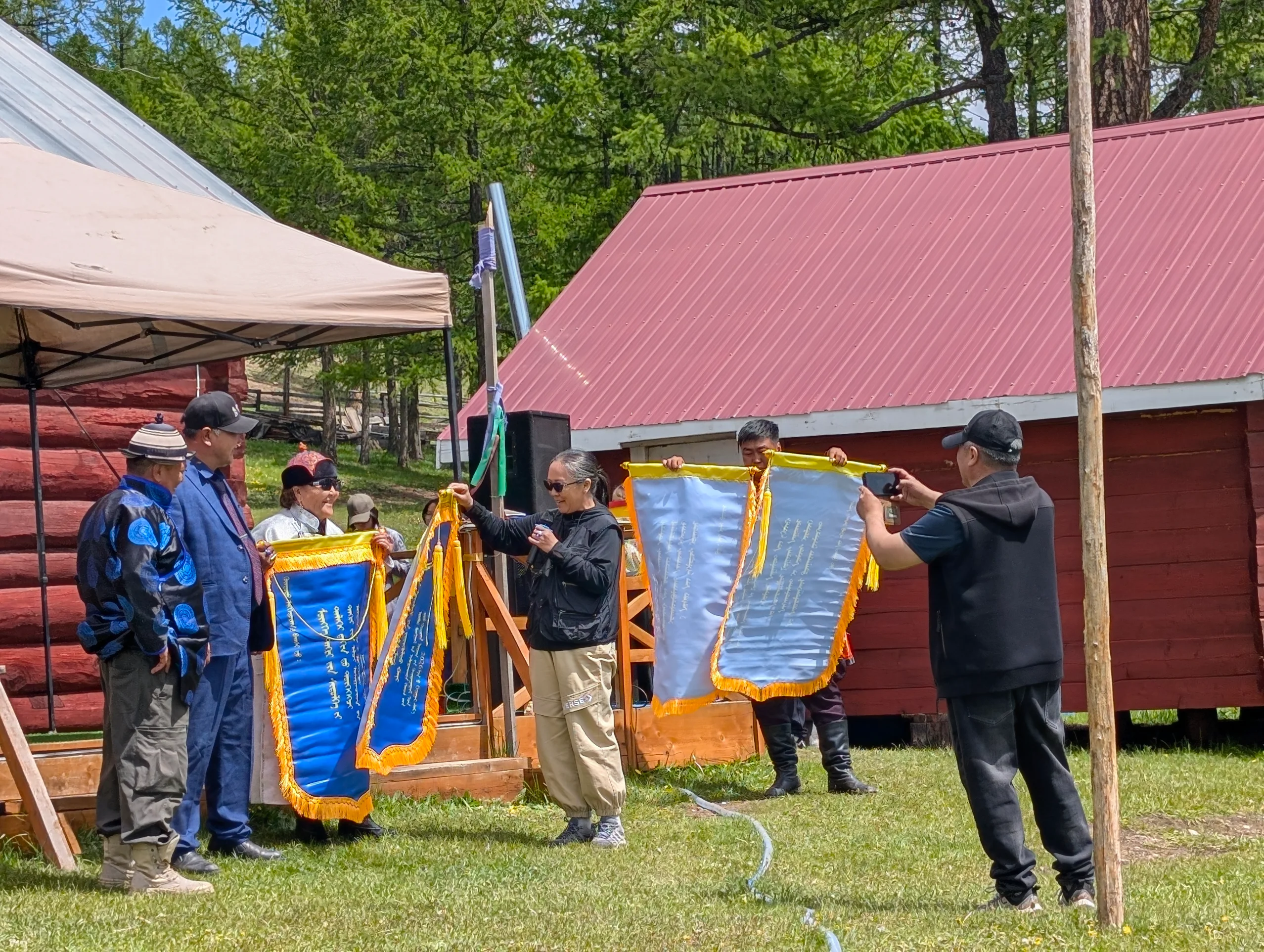
The connection between the Mongolian shamans grew, and the foreigners visiting them spread their beliefs, rituals, and ways of life to Europe. There was some financial support as well, and at the festival, a lot of people got honored for their help.
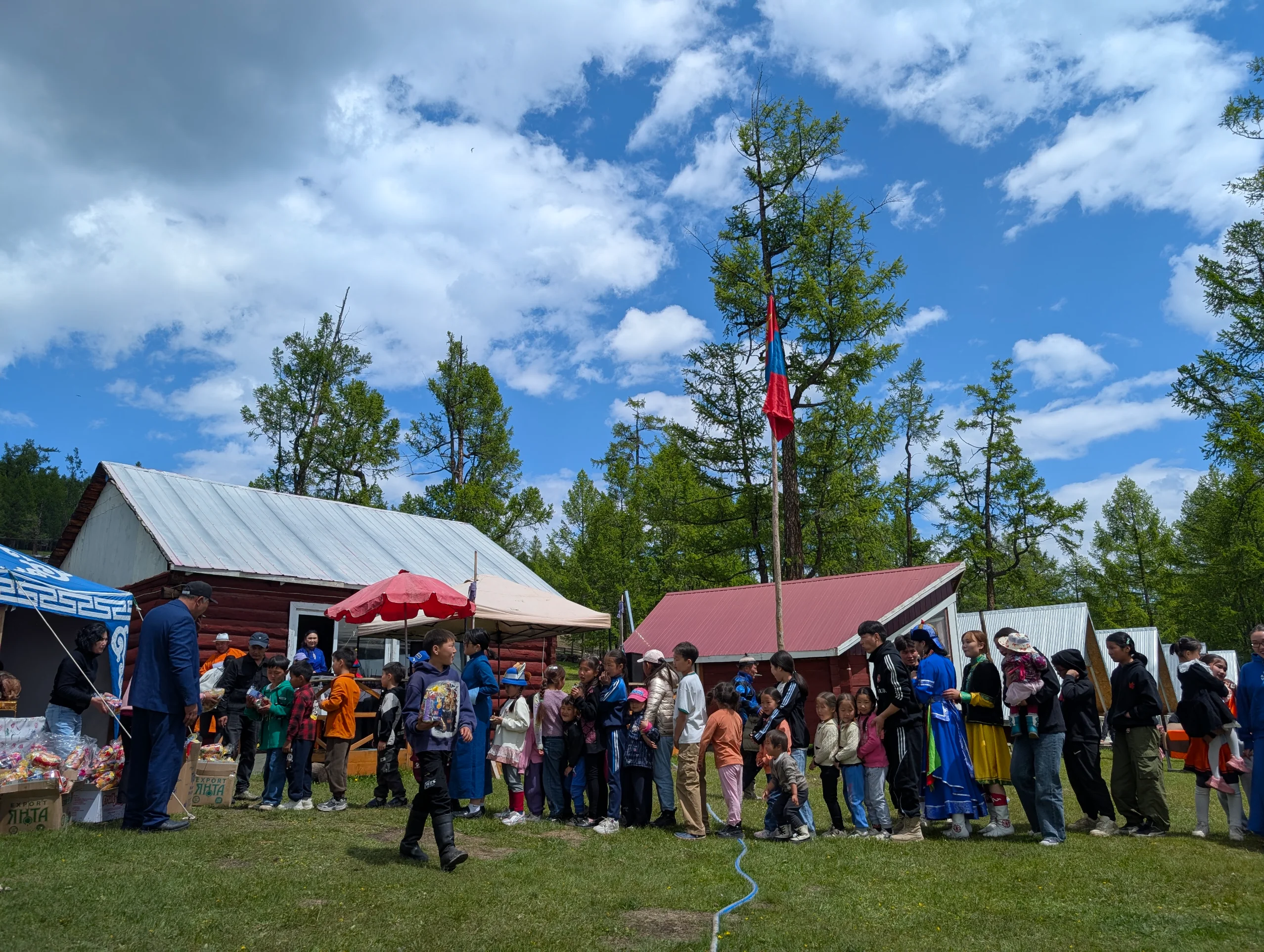
For the kids, there were lots of free sweets!
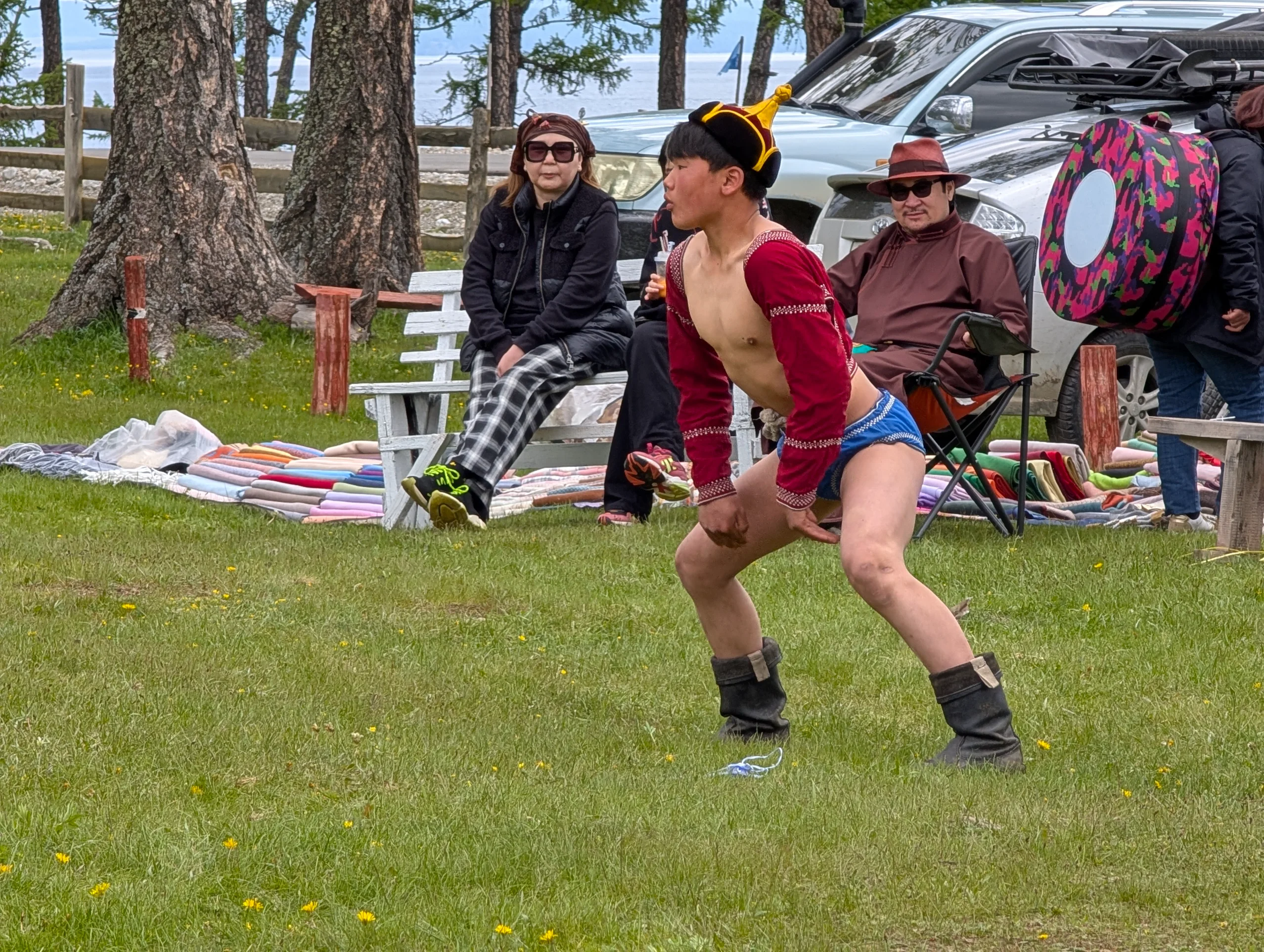
The festival continued with traditional wrestling, which was very interesting to see.
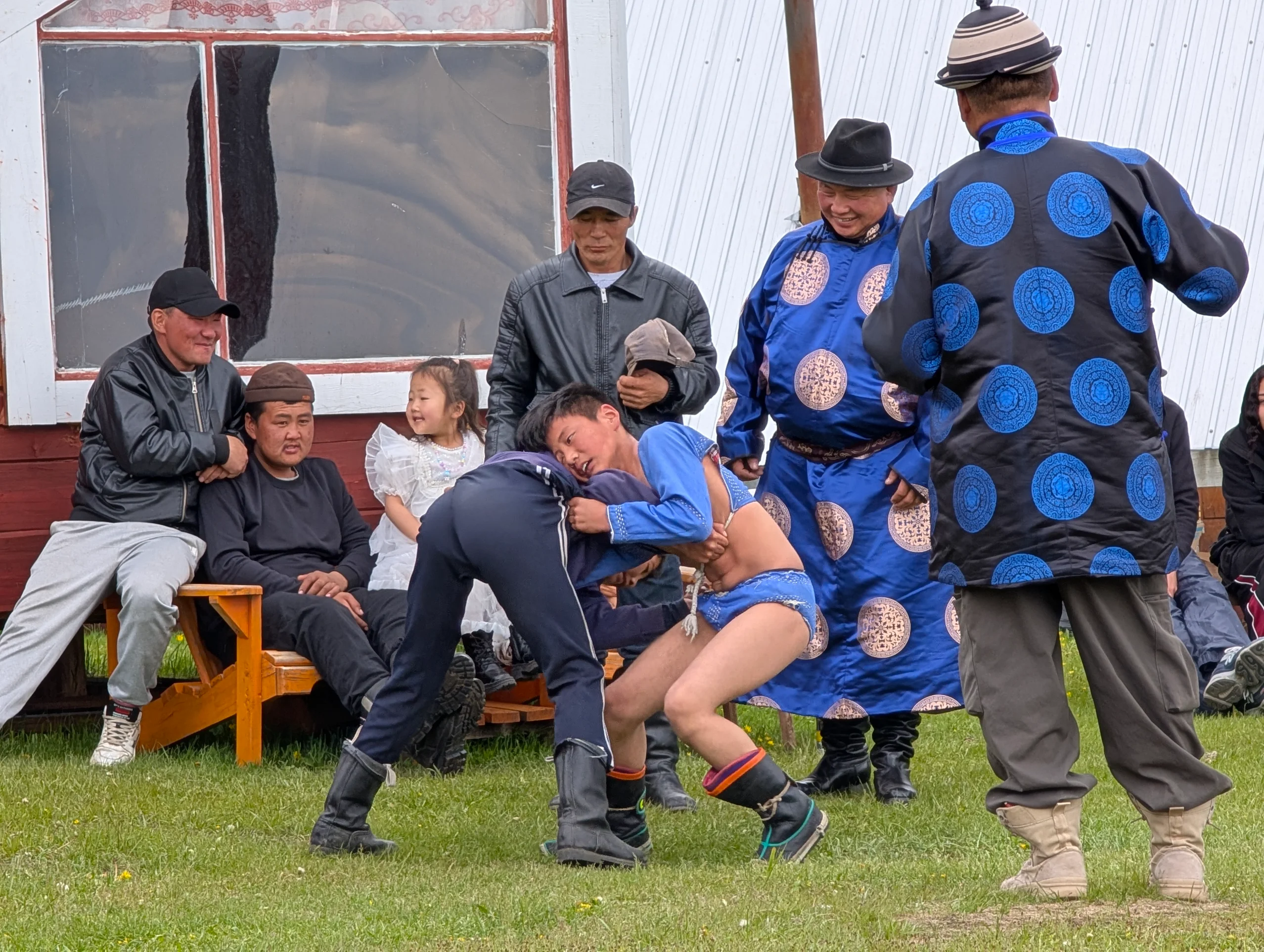
We only witnessed the youth wrestling because the schedule and locations where things were happening were often pretty unpredictable (even though there was an official schedule). But there were horse races and more as well.
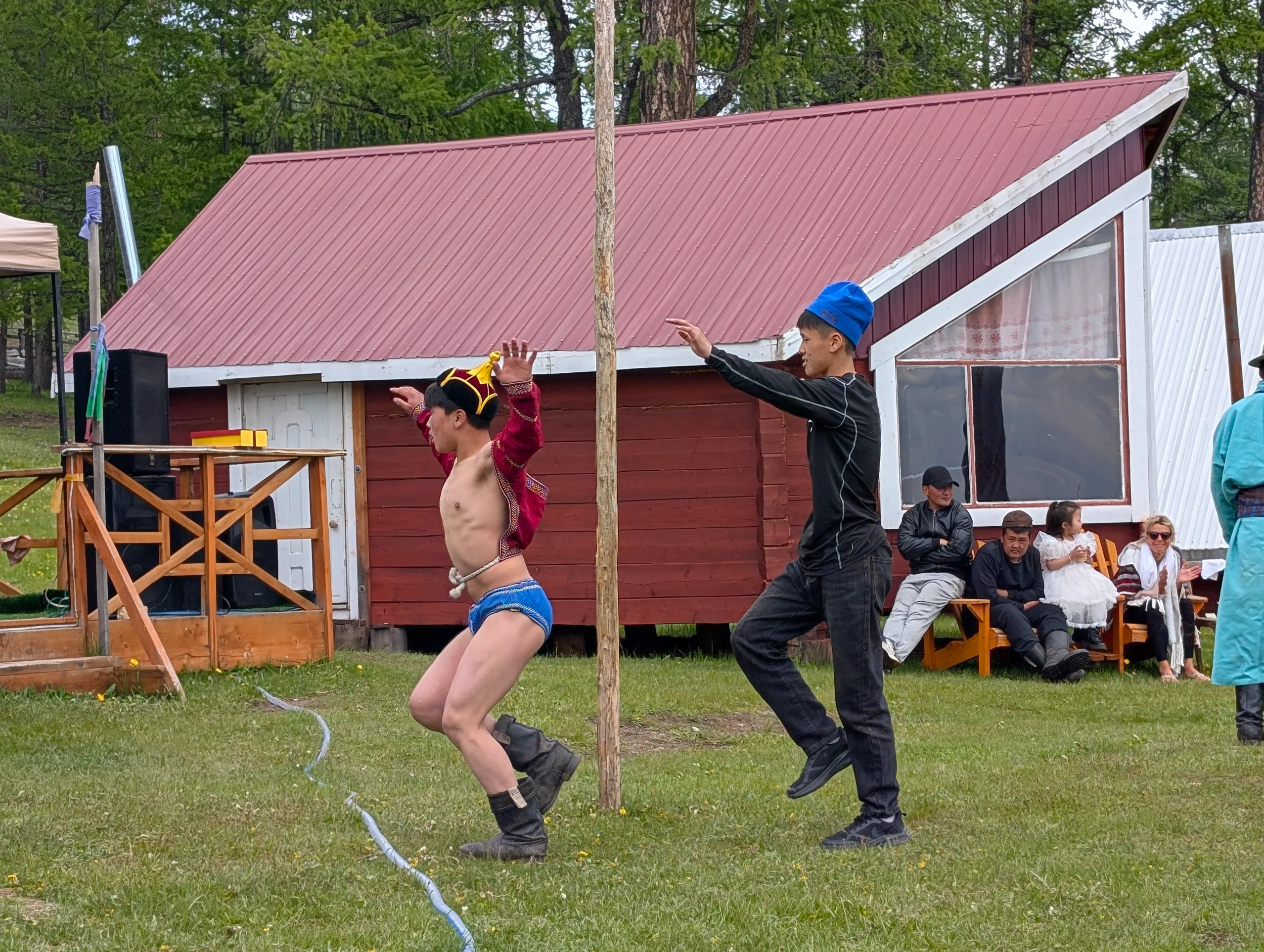
Before and after each fight, the fighters performed a short ritual which reminded us of a bird of prey flying around a pole in the ground. It gave the fighting a nice, cultural, less violent touch.
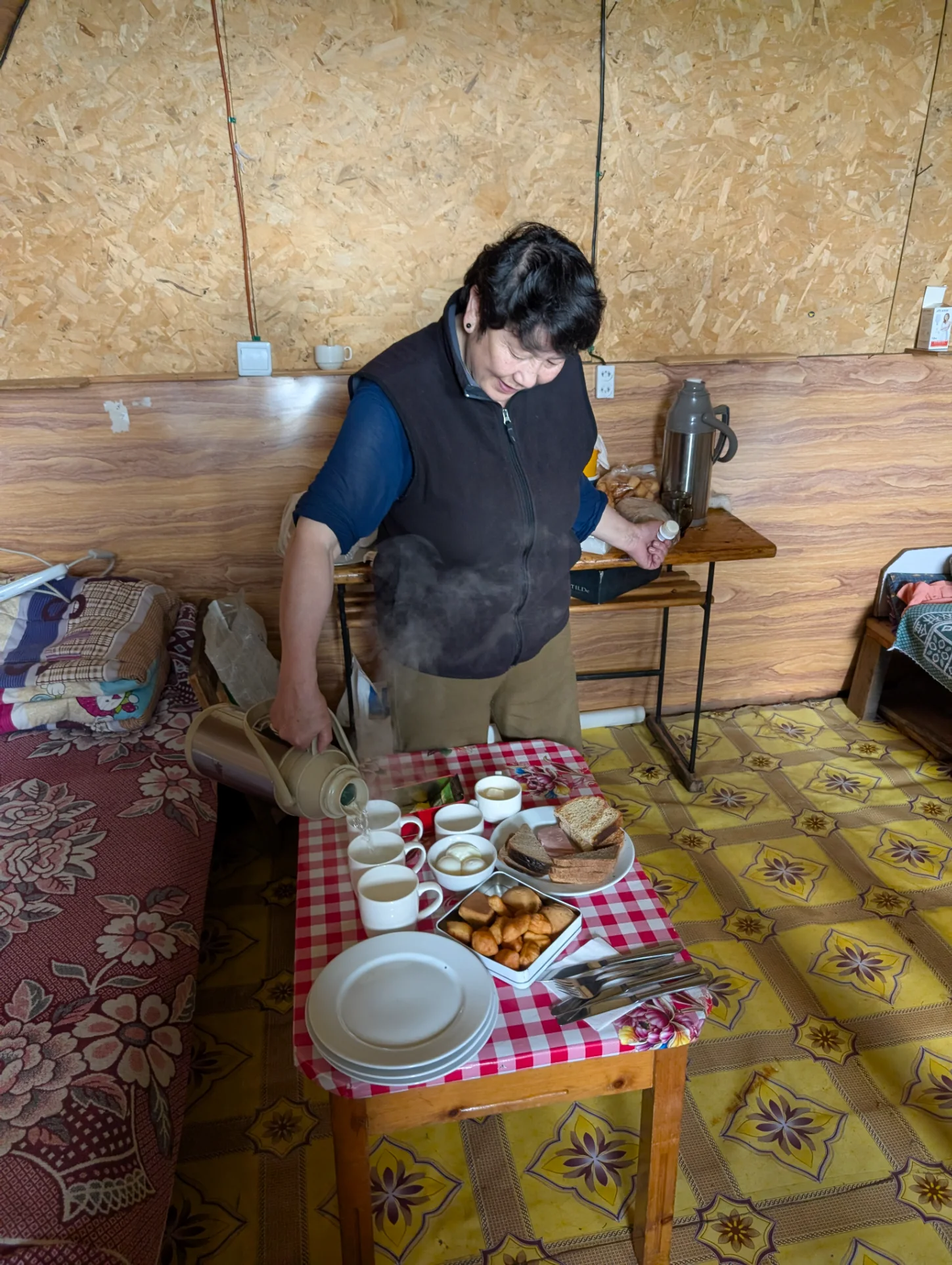
In between the festival activities, we hung around with our host and our friends Merel and Leon. All of us stayed in our cars at the yurt camp of our host. She was a very interesting Mongolian lady who had some trouble with her camp and a very honest way of communicating.
So we learned a lot about her life, Mongolia, her daughter studying in Germany, and lots more. I think it was very nice for our host to have us around, talk about what was going on in her life, and maybe have some input from very different people like us.
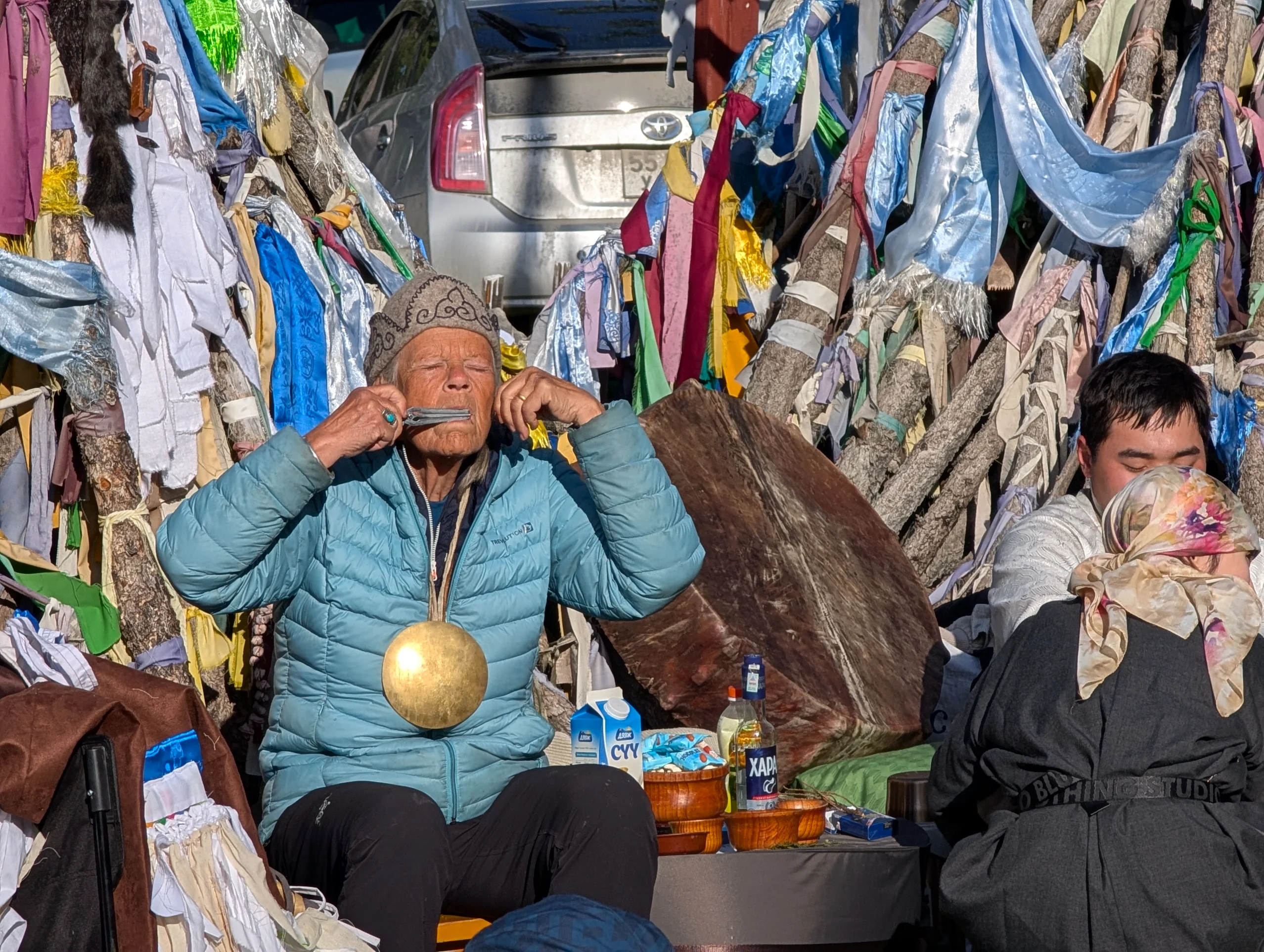
Our highlight was the shamanic ritual we witnessed one morning. We got up early so as not to miss anything, but in the end, the whole ritual started a bit late.
It was very fascinating. First, every participant built up a little personal space in front of the animal totem that stood for their birthdate. The personal space consisted of a small altar, milk, vodka, sweets, a drum, a shamanic costume, and several other things. Every participant had an assistant helping with everything.
Every participant sacrificed some of the stuff he brought with him at his altar. After that, everybody started meditating and playing the jaw harp to get into a trance-like state. The golden plate, this lady was wearing, was acting as a shield in the “trance world” which was supposed to protect her from bad ghosts.
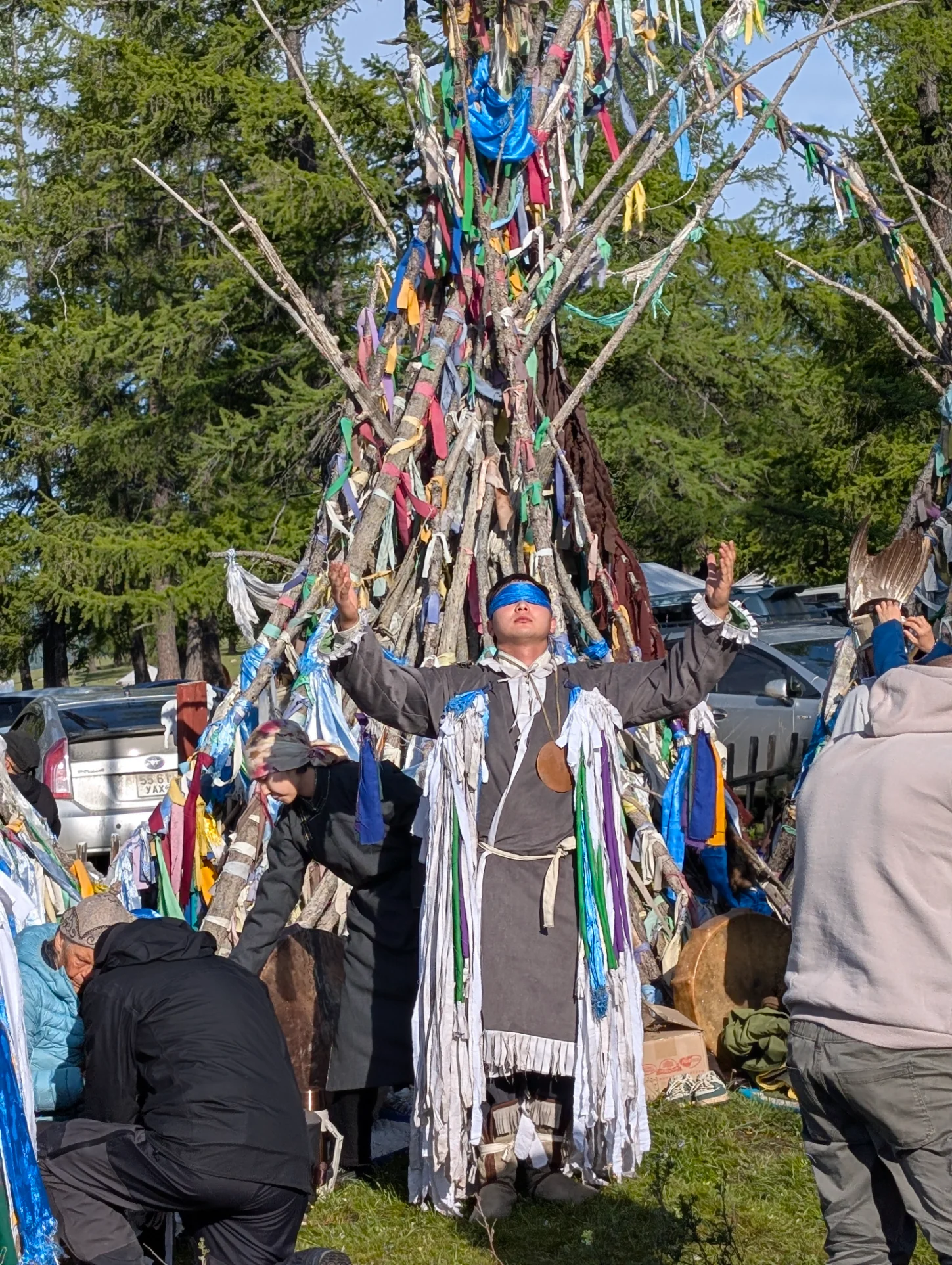
After that, the personal assistant of every participant helped to put on the shamanic costume which connected him to his “natural side/self”, blindfolded the participant, and sprayed some milk and vodka on him.
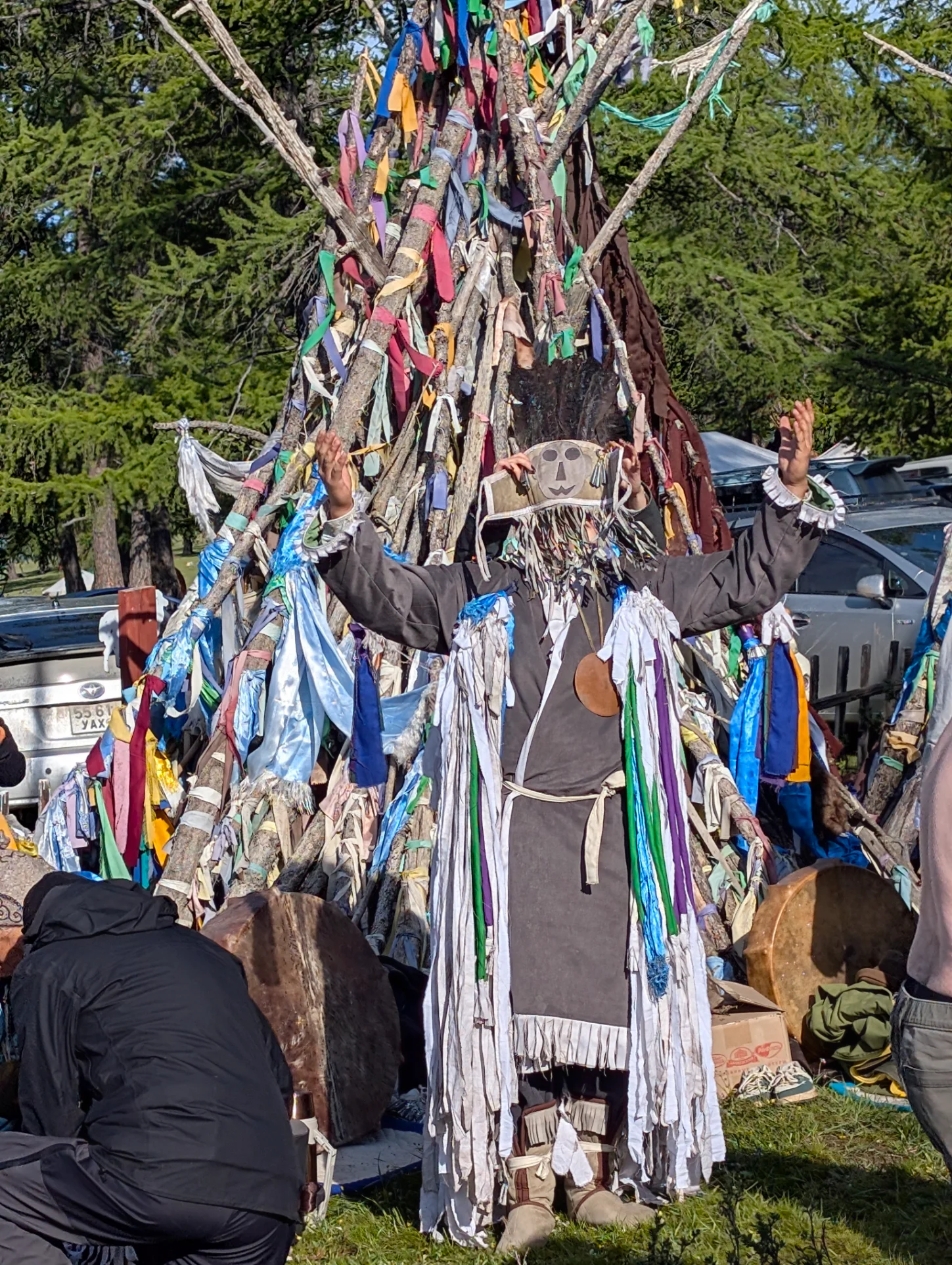
The next step was putting on a shamanic mask.
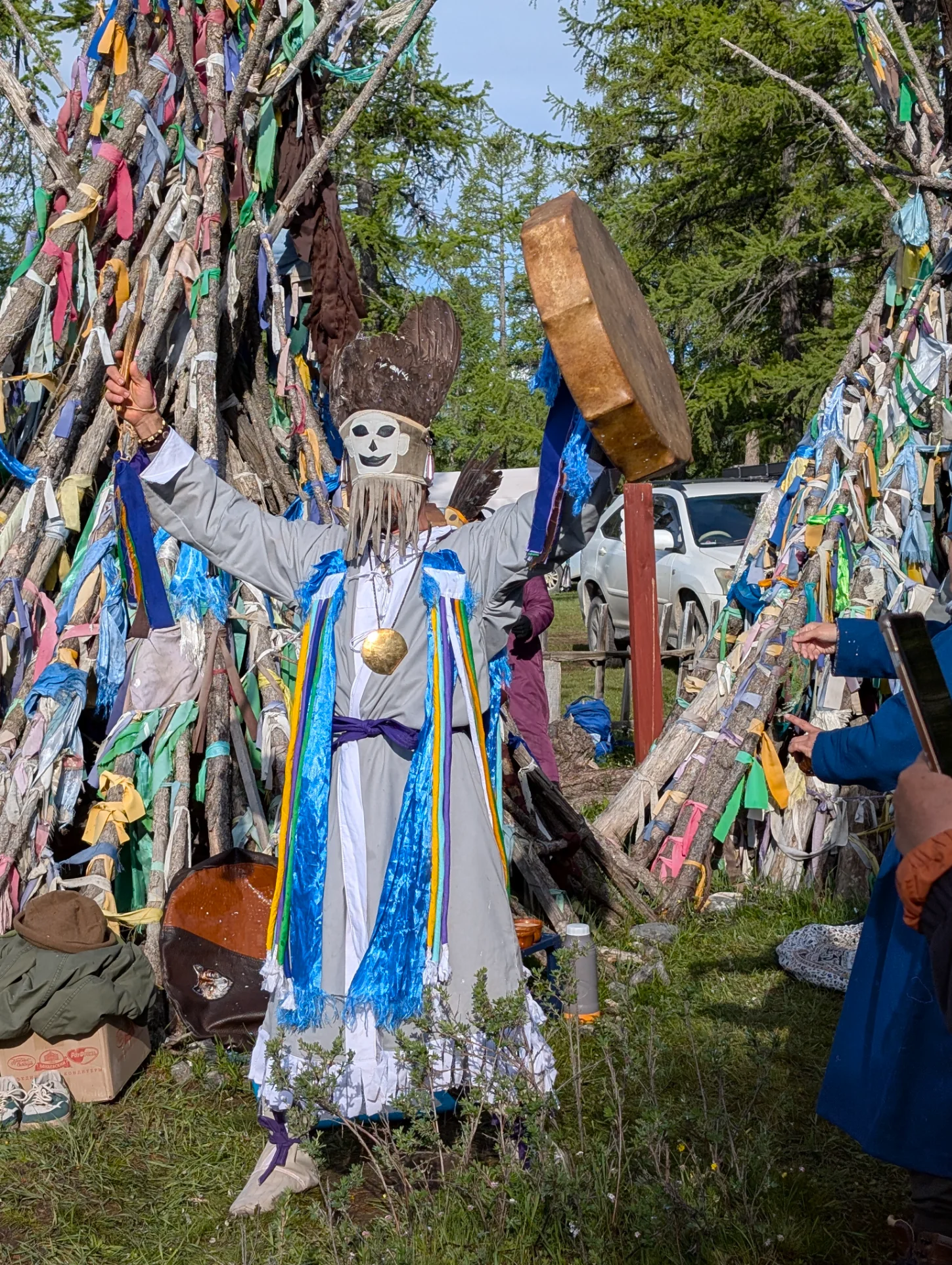
And after that, the energetic, trance drumming began, which, depending on the individual participant, got pretty intense. Some shamans needed assistance so as not to lose all connection to their environment.
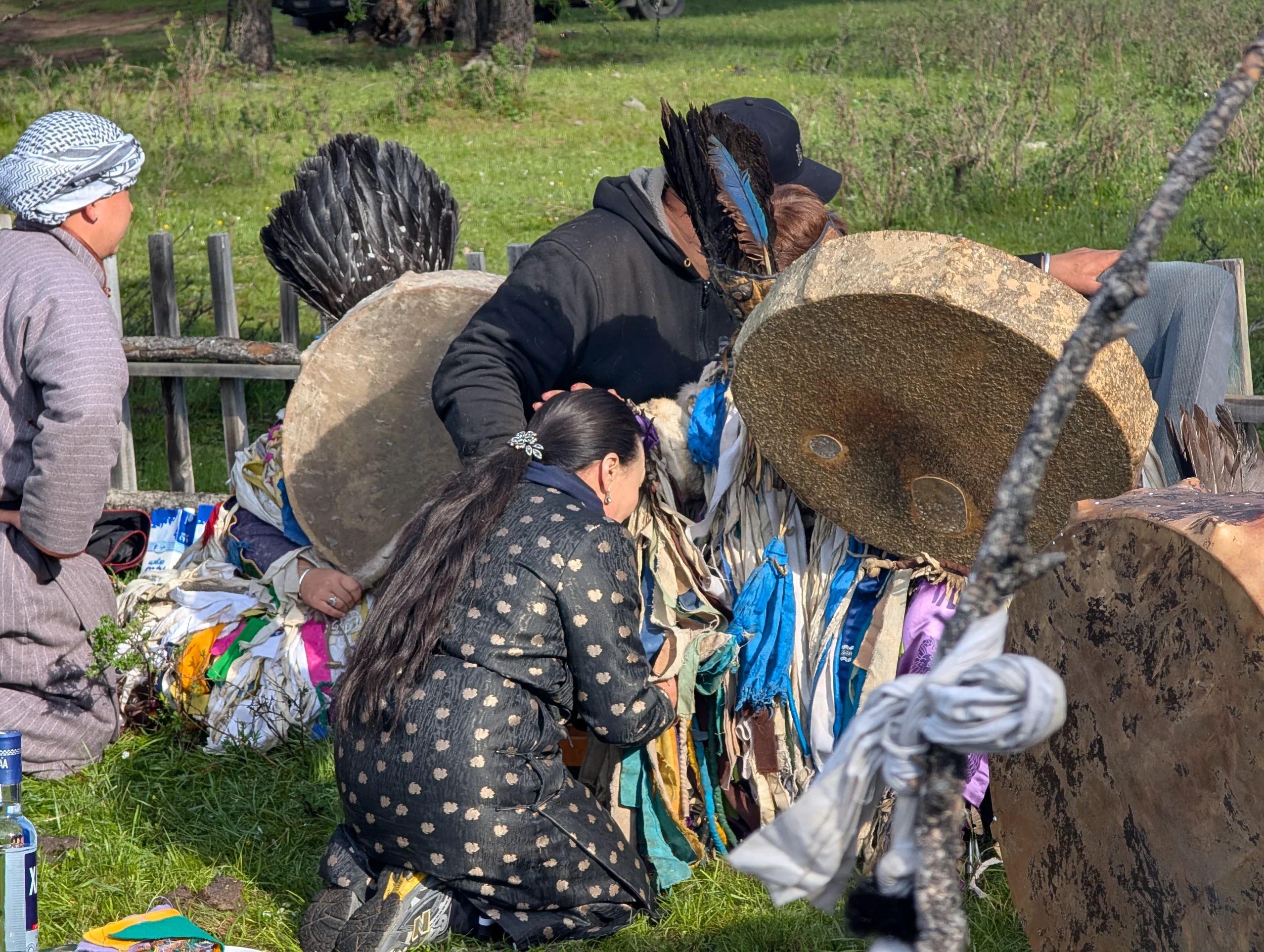
After the energetic part, they calmed down and told their assistants what they had seen, witnessed, and experienced in their trance states.
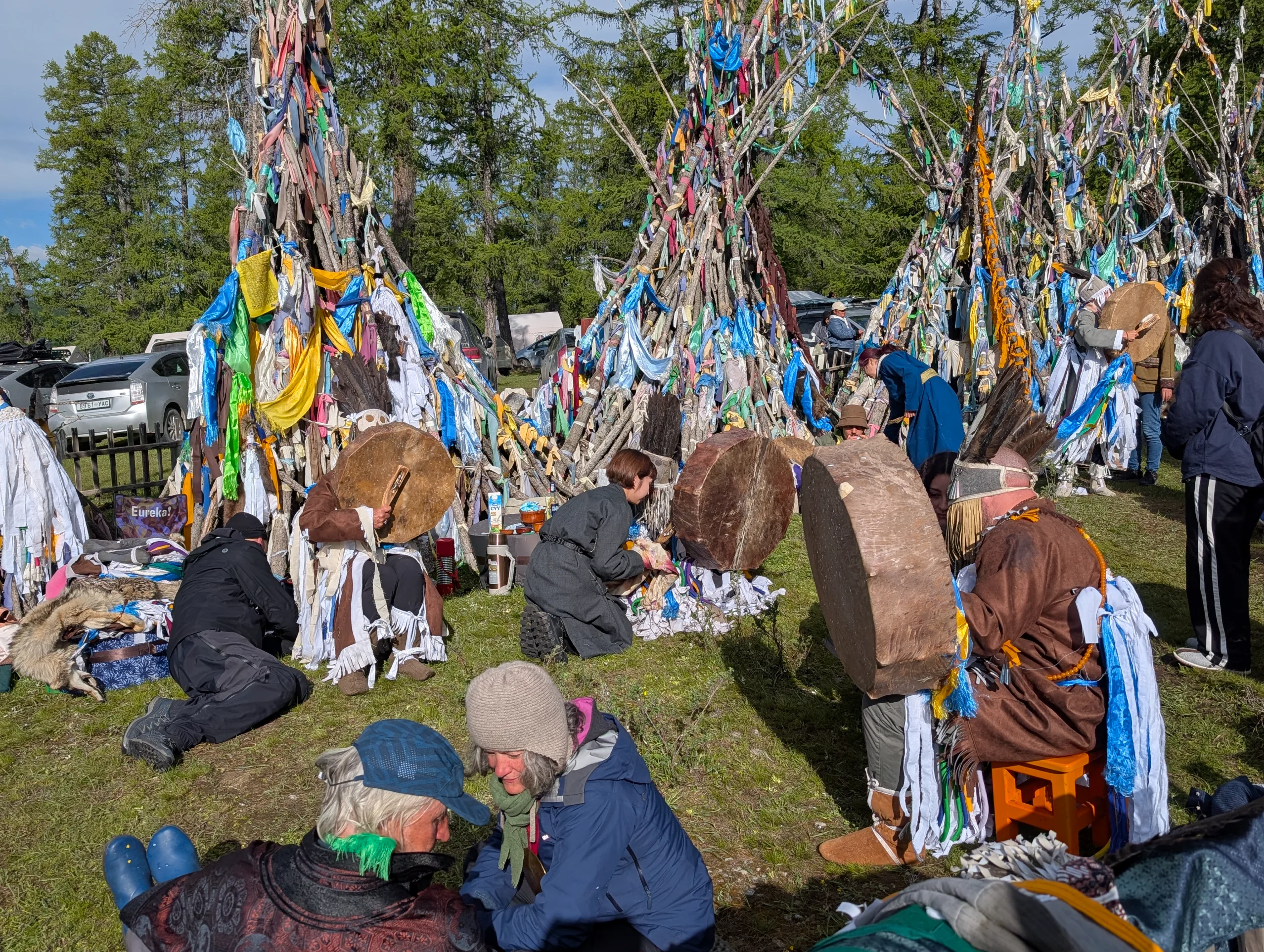
There was a lot of milk involved and it was a very nice ritual.
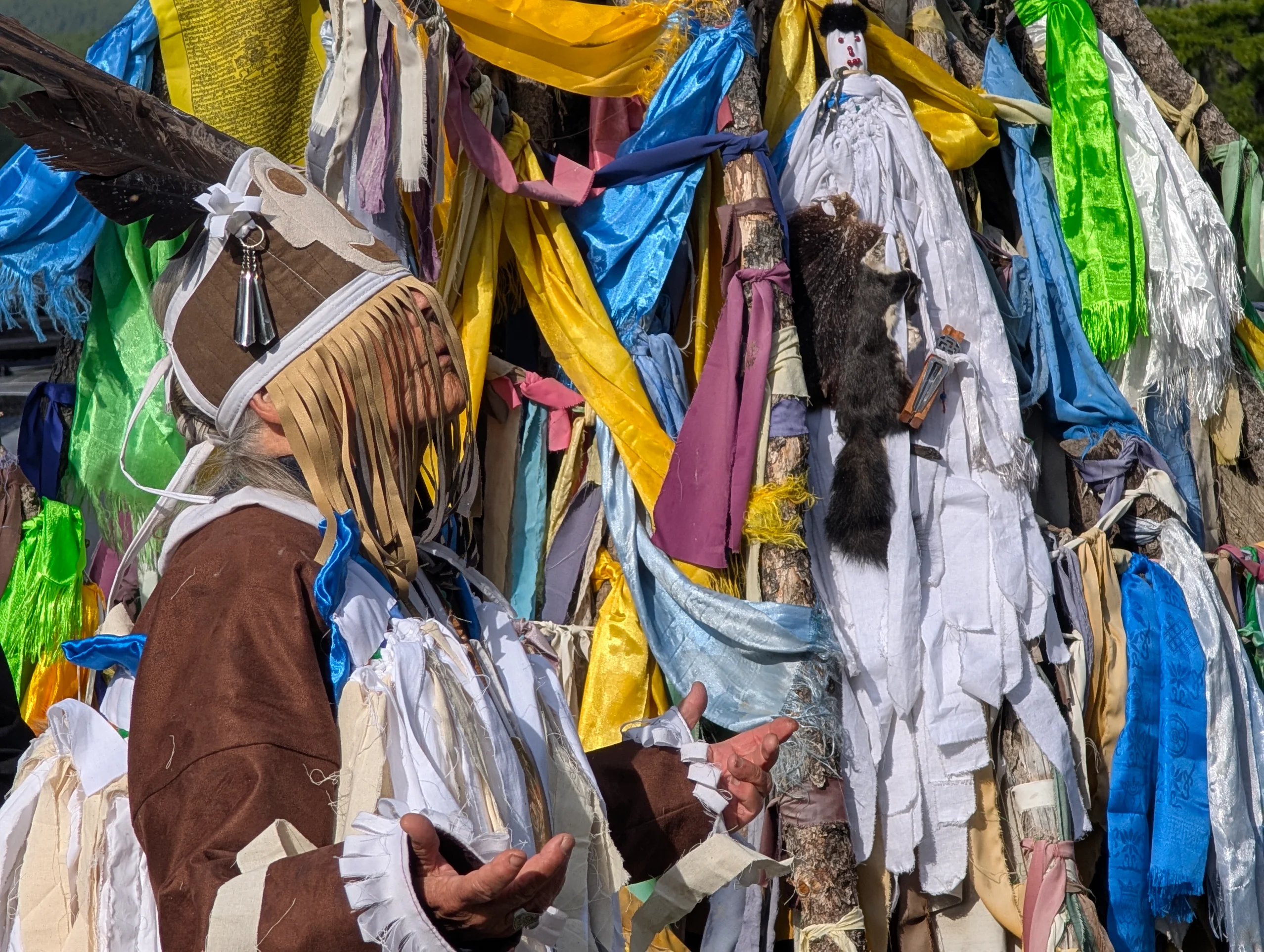
And I liked how these people got into it and how their beliefs brought them together. It seemed that they got something from it that connected them to their natural selves.
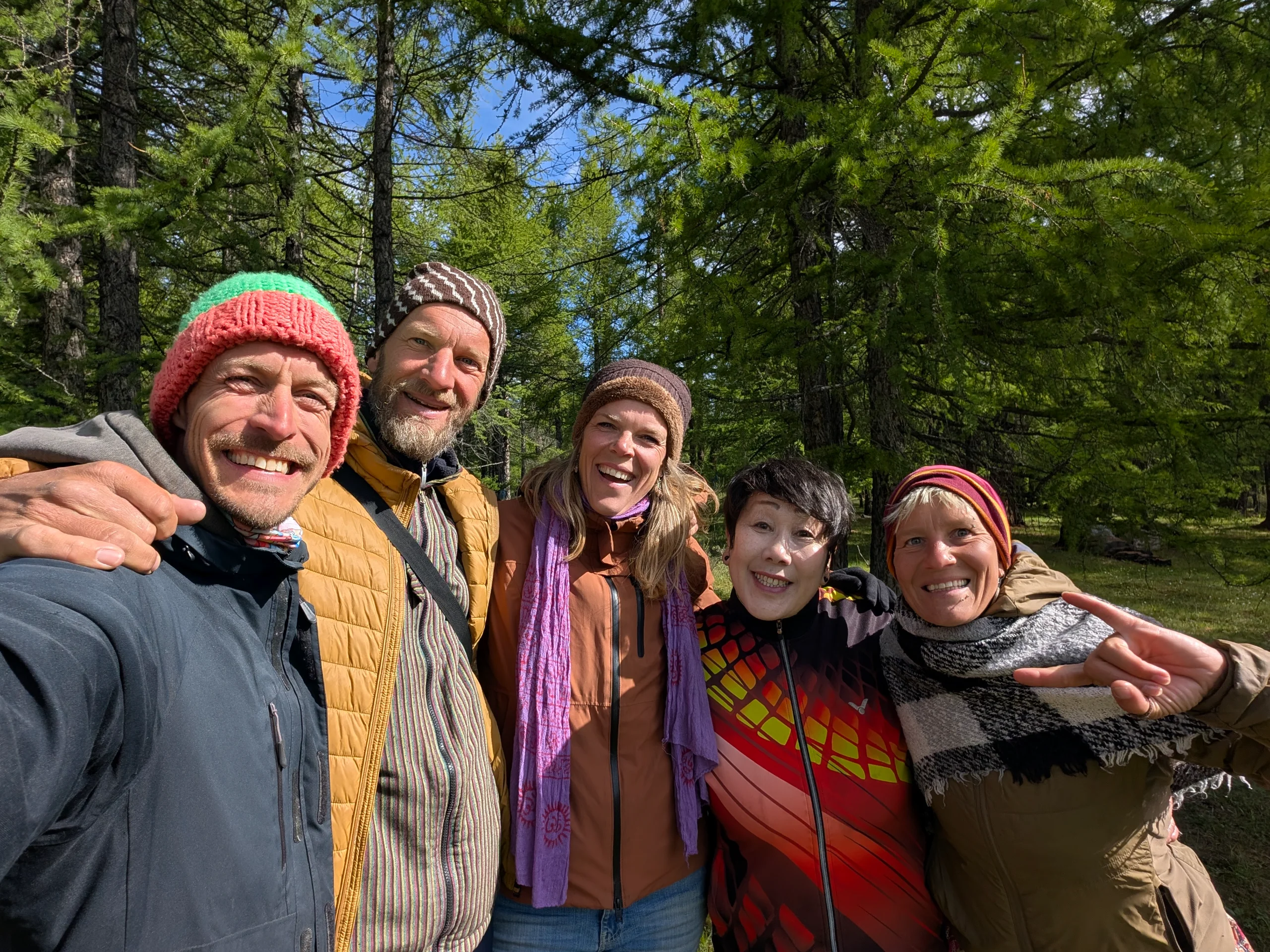
Once more we met our friendly host and then it was time to continue our journey with all the impressions we got from the shamanic festival.